
Braintree, MA · Norfolk County
Chimney Repair in Braintree, MA
Cracked crowns, spalling brick, failed flashing, damaged flue tiles - we trace every chimney problem to its root cause and repair it properly, so you fix it once instead of chasing symptoms every spring.
Most targeted chimney repairs in the Boston market run $400–$1,800 depending on access and scope, with crown and flashing work typically landing between $600 and $1,400 - we confirm exact numbers in a written estimate before any work begins.
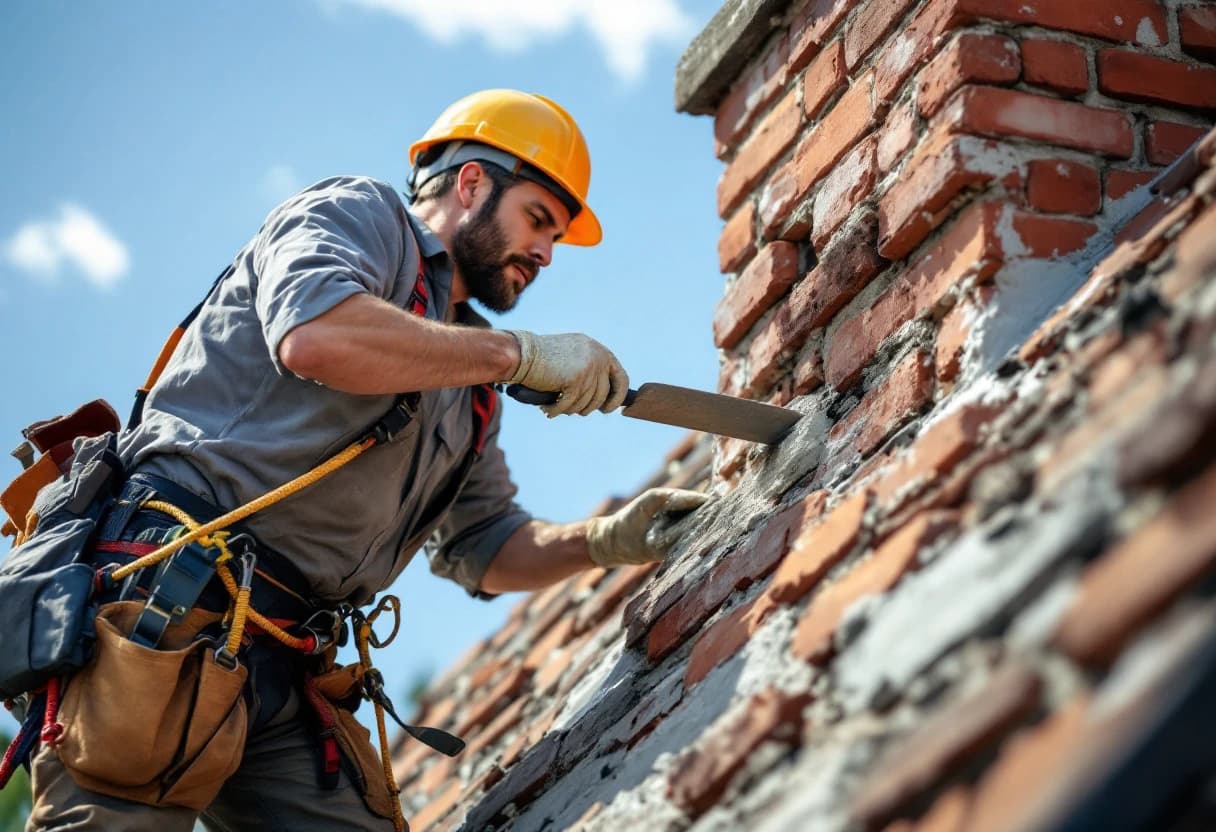
Upside Down Chimney Sweeps cares for fireplaces and flues across Norfolk County from our home base at 20 Sewall Street in Melrose, and Braintree sits squarely in the territory we know best. When our truck pulls into a Braintree driveway, the technician stepping out has seen hundreds of chimneys like yours: brick stacks on capes and colonials, terracotta-lined flues serving wood stoves, and masonry that has weathered more winters than most of us have. That familiarity matters. We do not guess at what a New England chimney needs; we inspect it, document what we find, and explain your options in plain English before any work begins. Whether you burn wood every night or light three fires a year, we are the neighbors to call.
No part of your house takes a harder beating than the chimney. It stands above the roofline in every nor'easter, catches wind-driven rain from all four sides, bakes in July sun, and then rides out forty-plus freeze-thaw cycles between November and April. Masonry is porous by nature: brick and mortar drink in water, and when that water freezes it expands roughly nine percent, wedging apart hairline cracks a little further with every cycle. That is why a chimney in Braintree that looked fine in September can show open mortar joints and flaking brick faces by the time the snow melts. Chimney damage is rarely sudden - it is cumulative, mechanical, and completely predictable once you know where to look.
Most chimney failures start in one of three places. The first is the crown, the concrete slab that caps the masonry at the top. Too many crowns were troweled out of leftover mortar with no overhang and no expansion gap around the flue tiles, so when the flue heats up and expands, it cracks the crown radially and lets water straight into the chimney core. The second is the mortar joints, which are designed to weather before the brick does. The third is the flashing, the layered metal system where chimney meets roof - when it was face-nailed and caulked instead of properly counter-stepped into the mortar joints, it is a leak waiting for its first hard rain.
The housing stock around Greater Boston makes chimney repair its own specialty. A large share of the homes we service were built between the 1880s and the 1950s, with soft lime-based mortar, unlined or clay-tile flues, and chimneys that have already outlived several roofs. Many of these flues were later converted from coal or oil to gas, and the cooler, wetter gas exhaust condenses inside an oversized masonry flue, forming acidic moisture that quietly eats mortar joints and tile from the inside out. Add coastal salt air east of Route 1 and the aggressive freeze-thaw swings we get inland, and you have chimneys that need a technician who understands old New England masonry, not just a tube of caulk.
Upside Down Chimney Sweeps is based at 20 Sewall Street in Melrose, and we repair chimneys across Braintree and the surrounding towns every week of the year. Our repair work starts with diagnosis, not guesswork: we follow NFPA 211 inspection practice, run a camera up the flue when the evidence calls for it, and document what we find with photos you can actually see. Then we explain the failure mechanism in plain language, give you a written scope and price, and fix the cause rather than smearing sealant over the symptom. If your chimney is leaking, shedding brick, or drafting poorly, call (781) 653-5644 and we will get eyes on it quickly.
What Our Chimney Repair Service Covers
1Crown Repair and Recasting
The crown sheds water away from the chimney core, and when it cracks, everything below it gets wet. For minor crazing we clean, fill, and coat the crown with a flexible elastomeric crown sealant that stays waterproof through freeze-thaw movement. For crowns that are broken, undersized, or poured flat with no overhang, we cast a proper new crown in concrete: sloped to shed water, projecting past the brick with a drip edge, and isolated from the flue tiles with a bond-break expansion joint so thermal movement cannot crack it again.
2Flashing Repair and Counter-Flashing
Flashing failures cause more "mystery leaks" than any other chimney defect, and they are often misdiagnosed as roof problems. We rebuild the system the correct way: step flashing woven into each shingle course against the chimney, then counter-flashing cut into a reglet ground into the mortar joints and lapped down over the steps. Water running down the brick face passes over metal, never behind it. On wide chimneys on the low side of a roof, we can also add a cricket to divert water and snow load around the stack.
3Spalling Brick Replacement
When the fired face of a brick pops off - spalling - the softer core underneath absorbs water even faster, and the damage accelerates. We cut out spalled and shattered brick individually, source replacement brick that matches the original in size, color, and hardness, and lay them in mortar matched to the existing wall. This matters in Braintree, where many chimneys were built with older, softer brick; setting hard modern brick and Portland-rich mortar into a soft old chimney concentrates stress and causes the surrounding original masonry to fail next.
4Firebox and Smoke Chamber Repair
Inside the fireplace, we repair cracked firebrick and deteriorated refractory mortar joints in the firebox, where temperatures demand materials rated for direct flame contact. Above it, we parge rough, corbelled smoke chambers with insulating refractory mortar to create the smooth, sealed funnel NFPA 211 calls for. An unparged smoke chamber leaks heat and combustion gases into the surrounding structure and catches creosote on every ledge. This is one of the most commonly flagged defects in older Massachusetts fireplaces, and one of the most important to correct.
5Damper and Cap Repair or Replacement
A rusted-open throat damper pours heated indoor air up the flue all winter; a rusted-shut one makes the fireplace unusable. We repair or replace throat dampers, and where the original is beyond saving we install top-sealing dampers that close the flue at the crown with a silicone gasket - tighter than any throat damper. We also repair or replace chimney caps, the stainless covers that keep rain, snow, squirrels, and nesting birds out of an open flue. A missing cap is the cheapest problem to fix and the most expensive to ignore.
6Flue Tile and Liner Repairs
Cracked or shifted clay flue tiles let heat and combustion gases reach the wood framing around the chimney, which is exactly the failure path in many chimney-related house fires. After a camera scan locates the damage, we advise honestly: isolated joint deterioration can sometimes be resurfaced, but cracked tiles typically call for relining with a UL-listed stainless steel liner sized to the appliance. We install insulated stainless systems for wood, oil, and gas flues, restoring a continuous, code-compliant path from appliance to chimney top.
Why Chimney Repair Matters for Braintree Homes
Chimney repair is fire and carbon monoxide safety before it is anything else. The flue exists to carry combustion gases - including carbon monoxide - past your living space and out of the house, and to keep flue heat away from framing lumber. Cracked tiles, open mortar joints, and gaps in the smoke chamber break that containment. A flue fire in a compromised chimney can push flame through a crack into a wall cavity, and a blocked or leaking flue can push CO back into bedrooms. These are the specific failure modes NFPA 211 inspections exist to catch, and the reason we treat every repair as a safety repair first.
Water is the second reason, and in New England it is relentless. Once water gets past a cracked crown or failed flashing, it does not stay in the chimney: it wicks into ceilings, rots roof decking, rusts dampers and fireboxes, dissolves the interior mortar that holds the stack together, and stains plaster two floors down. Every freeze-thaw cycle converts that moisture into mechanical force inside the masonry. A chimney that leaks through one Braintree winter has measurably less mortar holding it together the next - deterioration compounds like interest.
Finally, timing controls cost. Chimney problems follow a predictable escalation: a crown coating this year becomes a crown recast in three years, becomes repointing the top courses in six, becomes a partial rebuild in ten. The early interventions cost hundreds; the late ones cost many thousands, plus staging, plus the interior water damage along the way. Catching repairs early - ideally at an annual inspection per NFPA 211 - is the single best financial decision a fireplace-owning homeowner can make. We would rather seal your crown for a modest fee today than rebuild your chimney later.
Spring is when winter sends Braintree homeowners the bill. As temperatures stabilize, the damage done by months of freeze-thaw cycling becomes visible: hairline crown cracks that widened, mortar joints that crumble at a touch, brick faces flaked off onto the roof, and white mineral staining called efflorescence, which is a chimney's way of announcing that water is moving through its masonry and leaving dissolved salts behind on the surface. None of these symptoms improves on its own, and all of them worsen faster once water has an established path. A spring inspection catches the winter's damage at its cheapest stage, and leaves the whole summer, the best season for masonry work, to repair it properly.
Signs You Need Chimney Repair in Braintree
- White, chalky staining (efflorescence) on the brick, which means water is moving through the masonry and carrying salts to the surface.
- Brick faces flaking, popping, or collecting as chips in the yard or on the roof - classic freeze-thaw spalling.
- A ceiling or wall stain near the chimney that appears during wind-driven rain, the signature of failed flashing.
- Cracks, gaps, or missing chunks visible in the crown when you look at the chimney top from the ground or a photo.
- Crumbling or recessed mortar joints you can rake out with a fingertip.
- Pieces of clay tile or gray flue debris landing in the fireplace or on the smoke shelf.
- A damper that is rusted, hard to operate, or no longer seals - often a sign water has been entering from above.
- A musty, campfire, or damp-masonry odor from the fireplace, especially in humid summer weather.
- Smoke entering the room, or a fireplace that has become noticeably harder to start and keep drafting.
- Rust streaks on the chimney exterior or on the firebox floor, meaning a cap, chase cover, or flashing component is corroding.
How the Job Goes, Step by Step
1Inspection and Diagnosis
We start with a thorough evaluation following NFPA 211 practice - the exterior masonry, crown, flashing, attic penetration, firebox, and damper, with a camera scan of the flue whenever symptoms suggest interior damage. Chimney problems usually have one root cause and several symptoms, and treating a symptom wastes your money. We photograph everything so you see exactly what we see before any repair is proposed.
2Written Scope and Estimate
You get a written, itemized scope: what failed, why it failed, what we recommend, and what each line costs. We separate must-do safety items from should-do preventive work so you can prioritize honestly. No vague allowances and no pressure - the estimate is explained in plain language, and we are happy to walk through the photos with you on site or by phone at (781) 653-5644.
3Materials and Matching
Before repair day we source materials matched to your chimney: brick in the right size and hardness, mortar blended to match the original in strength and color, refractory products rated for flue temperatures, and stainless components sized to your appliance. On older homes in Braintree this matching step is what separates an invisible, durable repair from an obvious patch that fails at its edges.
4Repair Execution
We stage safely, protect the roof and landscaping, and complete the repair to the standard we would want on our own homes - joints cut to sound material, flashing counter-stepped into mortar, crowns cast with overhang and bond break, liners installed per the manufacturer's UL listing. Most single-issue repairs are finished in one visit; larger scopes get a clear schedule up front.
5Verification and Cleanup
Leak repairs get water-tested where conditions allow, dampers are cycled, and draft is checked before we call the job done. We haul away all debris and leave the roof and yard the way we found them. You receive after photos of the completed work - including the parts on the roof you will never see up close - so you know what you paid for.
6Documentation and Prevention Plan
Every repair closes with written documentation for your records, useful for insurance and for resale disclosure. We also give you a straightforward prevention plan: what to watch for, whether waterproofing or a cap upgrade makes sense, and when your next inspection is due per NFPA 211's annual guidance. Our goal is that the repair you just paid for is the last one for a long time.
Local Knowledge: Chimney Repair in Braintree
Braintree's neighborhoods are a South Shore cross-section: older colonials and Victorians near the town center and East Braintree, thick belts of postwar capes and ranches in the Highlands and around Sunset Lake, and newer infill throughout. Most homes carry a single brick chimney serving heat and often a fireplace. The postwar stock is now aging into crown, cap, and repointing work all at once.
Braintree's Highlands neighborhoods sit on some of the higher ground on the inner South Shore, catching coastal storm winds as they push in off Massachusetts Bay. The town's mix of commuter families and long-tenured owners means plenty of homes where the chimney has not been opened or inspected in decades, which keeps first-time inspections interesting.
We regularly handle chimney repair calls in Braintree and the surrounding towns of Quincy, Weymouth, Randolph, Holbrook — so scheduling is fast and our pricing reflects local conditions, not guesswork.
A spring inspection is one of the smartest appointments on the chimney calendar. Burning season is finished, so the technician sees the flue at its dirtiest, and your sweep clears a full winter's creosote before it spends a humid summer hardening and generating the sour, smoky odor chimneys can develop in warm weather. Winter's freeze-thaw damage is fresh and visible, from crown cracks to failed mortar joints, and identifying it in April means repairs can be scheduled calmly rather than crammed into fall. Masonry work itself also wants warm weather, since mortar cures properly only above certain temperatures. Spring diagnosis, summer repair, fall enjoyment: that sequence is the whole strategy, and it starts with one appointment.
Why Choose Upside Down Chimney Sweeps
We built this company on the belief that chimney work should follow written standards, not folklore. Our sweeping and inspection procedures track NFPA 211, the National Fire Protection Association's standard for chimneys, fireplaces, and vents, along with the best practices promoted by the Chimney Safety Institute of America. That means we do not eyeball a flue and pronounce it fine; we examine accessible portions methodically, note the condition of liners, crowns, caps, and flashing, and classify creosote honestly by stage. Standards protect you in a second way, too: when we recommend a repair, we can point to the specific condition and the specific guidance behind the recommendation, so you are never asked to take an expensive claim on faith.
Chimney Repair FAQs — Braintree, MA
How do I know if my chimney needs repair or if it can wait?
Why is my chimney leaking when the roof was just replaced?
What is spalling and why does it happen so much in Massachusetts?
Can you just seal or waterproof the chimney instead of repairing it?
Are chimney repairs covered by homeowners insurance?
How long do chimney repairs take, and can they be done in winter?
What is the difference between a Level 1 and Level 2 inspection?
Why should I choose a local company for chimney repair?
Book Chimney Repair in Braintree
Here is our closing pitch, such as it is: no pressure, just an honest look. Call Upside Down Chimney Sweeps at (781) 653-5644 and schedule an inspection for your Braintree home. We will examine the chimney from top to bottom, show you photographs of what we find, and give you a written assessment with a clear estimate for any recommended work. Then the decisions are yours, made on evidence, on your timeline, with no obligation beyond the visit itself. If you want a second opinion, we welcome the comparison; our documentation travels well. That is the whole offer. We think it is how chimney service ought to work, and we would be glad to prove it at your house.
Book Chimney Repair in Braintree
Our Melrose shop is 16 miles away — scheduling in Braintree is fast. Call (781) 653-5644.
Mon–Sat: 7:00 AM – 7:00 PM · Emergency service available