
Greater Boston & Eastern Massachusetts
Chimney Cleaning & Sweeping
Thorough, dust-free chimney sweeping for wood, oil, and gas flues, performed to NFPA 211 standards with a photo condition report on every visit.
Most standard open-fireplace sweeps in the Boston market typically run $189–$349, with wood stove and insert flues usually landing between $249 and $429 depending on access and buildup.
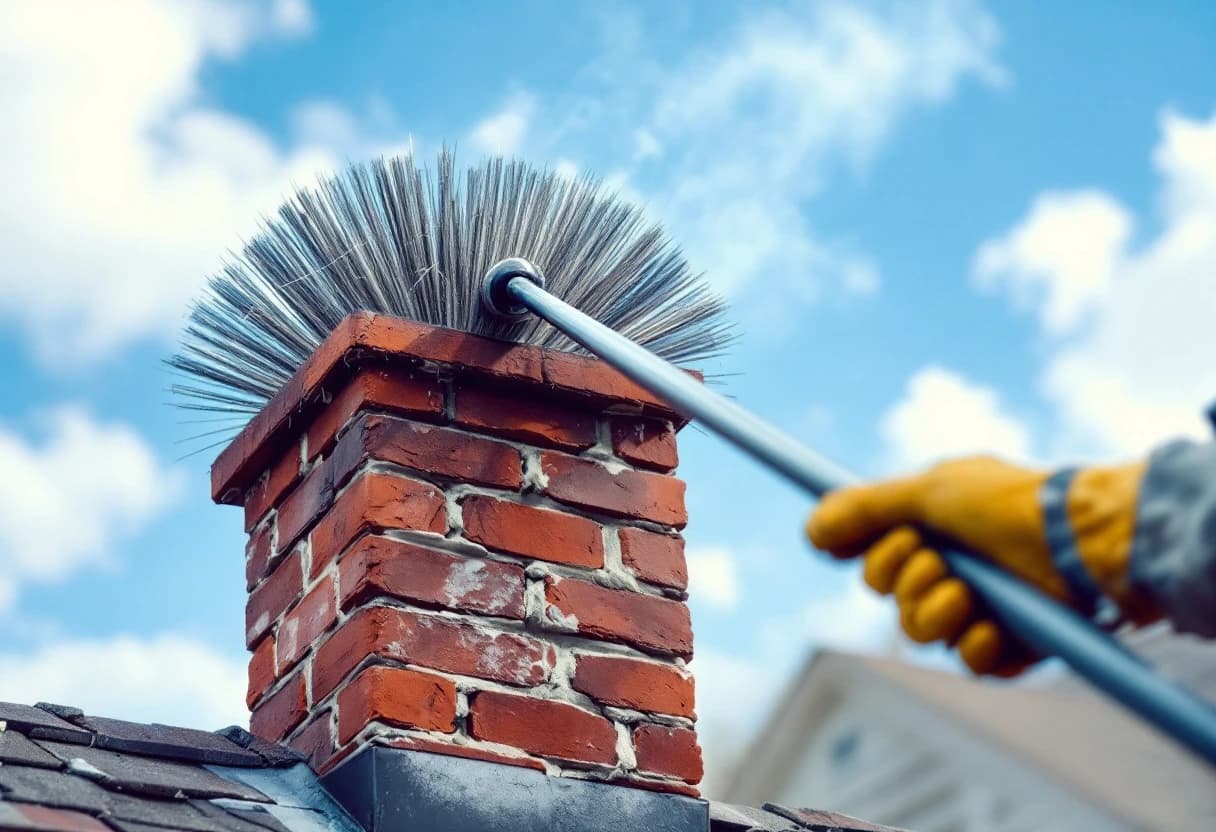
If you are typing "chimney cleaning near me" into a search bar, you are probably also bracing for the bill. Here is the honest version: chimney work follows a predictable cost curve. Caught early, most issues are modest, contained repairs. Left alone through a few New England winters, the same issues spread into surrounding masonry, and the price climbs accordingly. A hairline crown crack becomes a saturated chimney top; a worn flashing joint becomes a stained ceiling and a rotten roof deck. This article is designed to help you land on the cheap end of that curve. We will cover what the symptom usually means, how a proper diagnosis works, what repairs involve, and which factors move the price. Upside Down Chimney Sweeps in Melrose serves Greater Boston, and we are happy to talk specifics at (781) 653-5644.
Chimneys hide their problems better than almost any other part of a house. The flue interior is invisible without a camera. The crown is above the roofline where nobody looks. Flashing failures leak into wall cavities and show up as mysterious stains rooms away from the chimney. Even serious creosote accumulation is out of sight the moment you step back from the firebox. This is why homeowners are so often blindsided — not because they were careless, but because the evidence was structurally concealed. It is also why the chimney trade leans so heavily on scheduled inspections rather than wait-for-symptoms maintenance. By the time a chimney problem is visible from the living room, it has usually been developing for years. The search that brought you here may be the first visible edge of something older.
Homeowners insurance shapes chimney problems in ways people rarely anticipate. Most policies distinguish sharply between sudden, accidental events — a chimney fire, storm damage from a falling limb — and gradual deterioration, which carriers classify as deferred maintenance and typically decline to cover. That distinction puts the cost of neglect squarely on the homeowner. It also makes documentation valuable: a record of annual inspections per NFPA 211 demonstrates that a failure was genuinely sudden rather than years in the making, which can matter enormously during a claim. And if a chimney-related incident does occur, the insurer's first question is usually when the system was last inspected. Handling the problem behind your search promptly, and keeping the paperwork, protects both your house and your position if you ever need to file.
Chimney Cleaning & Sweeping Across Greater Boston
Our sweeping method is built around two priorities: getting the flue genuinely clean, and leaving your home exactly as we found it. We lay canvas drop cloths from the door to the hearth, seal the fireplace opening, and run a HEPA-filtered vacuum the entire time we work, so fine soot never gets a chance to drift into the room. Depending on your chimney's layout we sweep from the firebox up or the crown down, using rotary rod systems fitted with poly whips for ordinary soot and flat-wire heads for stubborn deposits, each sized to your flue's exact dimensions. The smoke chamber, smoke shelf, damper, and firebox all get detailed by hand.
Every fire you burn leaves something behind. Wood smoke is a moving mixture of water vapor, unburned gases, and microscopic particles of carbon, and when that mixture rises into a flue whose walls are cooler than roughly 250 degrees, it condenses on the clay tile or stainless steel the same way steam fogs a bathroom mirror. The residue it deposits is creosote, and creosote is flammable at every stage of its development, from soft powdery soot to hardened tar. A professional chimney sweeping is the controlled, methodical removal of that residue, along with the leaf litter, mortar crumbs, and nesting debris that accumulate over a season. Done once a year, it is the least expensive insurance a fireplace owner in Greater Boston can buy.
The housing stock we work on around Boston makes regular sweeping more important, not less. A large share of the homes we service were built between the 1880s and the 1940s, when chimneys were laid up with soft lime mortar and many flues were never lined at all. Decades of freeze-thaw cycling have opened hairline joints in those old stacks, and countless mid-century oil-heat conversions left oversized flues that run cool and condense creosote and acidic flue gases faster than they should. Add coastal salt air working on exposed brick and nor'easters driving rain straight down uncapped flues, and you get chimneys that collect deposits and deteriorate quicker than the national average homeowner ever expects.
What the Service Includes
1Full flue sweeping, top to bottom
The heart of the visit is a complete mechanical cleaning of the flue itself. We measure your flue and select the right head for the job: poly whips on a rotary rod system for typical soot and first-stage creosote, or flat-wire brushes for crusted deposits on clay tile. We work the full length of the flue in overlapping passes, from the firebox to the top of the last tile, until the walls come back to bare clay or bright steel. Round, square, and offset flues each get an approach suited to their geometry.
2Smoke chamber and smoke shelf cleaning
Just above your damper sits the smoke chamber, a corbelled brick funnel that narrows the firebox opening into the flue, and behind it the smoke shelf, a flat ledge designed to catch downdrafts and falling debris. These two areas collect more creosote and soot than almost any other part of the system because turbulent smoke slows down there, yet they are invisible from the hearth. We brush and vacuum both by hand, because a flue-only cleaning that skips the smoke chamber leaves the most fire-prone surface in the chimney untouched.
3Firebox, damper, and lintel detailing
We wire-brush the firebox walls and floor, clean out the ash dump, and scrape carbon off the lintel, the steel bar that carries the masonry above your fireplace opening. The damper gets special attention: we clean the plate, frame, and hinge until it opens fully and seats tightly again, because a damper packed with rust flakes and soot is one of the most common causes of both poor draft in winter and cold-air leakage year round. If the damper is warped or the clamp is missing, we note it in your report.
4Dust-free containment, guaranteed
The old cartoon image of a soot-covered sweep is exactly what we engineer out of every job. Fine soot particles are small enough to stay airborne for hours and settle on everything you own, so we treat containment as seriously as the cleaning itself. Drop cloths run from the entry door to the hearth, the fireplace opening is sealed with a dam or plastic barrier, and a triple-filter HEPA vacuum runs continuously, pulling air from the work area the whole time. Your room stays clean enough that most customers cannot tell we were there.
5Wood stove and insert flue service
Stoves and fireplace inserts burn hotter and slower than open fireplaces, which makes them efficient but also makes their smaller flues load up with creosote faster. Servicing them properly means more than running a brush: we remove or reposition the baffle, disconnect and clean the connector pipe on freestanding stoves, sweep the liner full length, and clear the critical junction where the appliance meets the flue. While we are inside the unit we check door gaskets, glass seals, and firebrick, and flag anything worn before it affects how your stove drafts and burns.
6Top-side check and photo report
Whenever roof access is safe, we finish at the top of the chimney, because that is where New England weather does its damage. We photograph the crown for cracks, check the cap and screen, look for spalled brick faces and open mortar joints, and confirm the top flue tile is sound. Everything goes into a written condition report with photos you can keep for insurance records or a future home sale. You will know exactly what shape your chimney is in, in plain language, before we pull out of the driveway.
How We Diagnose and Fix It
Water problems are the most misdiagnosed issues in the chimney world, because water travels. It enters at one point — a crown crack, a flashing gap, porous brick faces — then follows flue tiles, framing, and wall cavities before appearing as a stain somewhere that may be rooms away. A proper moisture diagnosis therefore refuses to trust the stain. The sweep examines every entry point in order: crown, cap, flashing, masonry surfaces, and the condition of any existing water repellent, often correlating findings with which weather conditions produce the symptom. Wind-driven rain from a nor'easter implicates different entry points than a slow soaking storm does. Getting this right the first time matters, because the most common expensive mistake in chimney leak repair is sealing the wrong thing and waiting a season to find out.
How a job ends matters as much as how it begins. Before final payment on significant chimney work, you should see evidence: after photos from the roof, camera footage for any interior flue work, and a walkthrough of what was done against the written scope. Materials should be identified specifically — the mortar type, the liner alloy and insulation, the sealant product — because those details determine lifespan and warranty. Ask what the warranty covers and get it in writing; established manufacturers back stainless liners and masonry water repellents with meaningful terms when installed correctly. Finally, the paperwork joins your home's records, where it pays dividends at sale time and with your insurer. Work like chimney cleaning is invisible from the curb when done well, which is exactly why the documentation has to do the showing.
Warning Signs to Watch For
- You have burned a cord of wood or more since the flue was last swept.
- Smoke curls out of the fireplace opening into the room instead of drawing briskly up the flue.
- You notice a sharp campfire or asphalt smell from the fireplace on humid summer days.
- Black flakes, soot, or bits of debris keep appearing in the firebox between fires.
- A flashlight aimed past the damper shows matte black buildup or a shiny, tar-like coating.
- Fires have become hard to light and burn lazily even with dry, seasoned wood.
- It has been more than twelve months since a professional serviced the chimney.
- You hear scratching or chirping in the flue, or find twigs and nesting material on the smoke shelf.
- Dark staining is spreading across the exterior masonry near the top of the chimney.
- Your oil burner technician mentioned soot at the base of the chimney or you have had a puff-back.
Why This Matters in New England
Massachusetts chimneys carry the state's entire heating history in their flues. Most older homes have converted fuels at least twice — coal to oil, oil to gas, sometimes gas to heat pumps with the chimney left venting only a water heater. Each conversion changed the flue's chemistry and thermal load. Oil service leaves sulfur-laden deposits that attack masonry; gas produces cooler, wetter exhaust that condenses in flues sized for hotter fires, quietly deteriorating tile and mortar from the inside. A flue that served the old appliance perfectly may be oversized, corroded, or unlined relative to the new one. This is why appliance swaps trigger a Level 2 inspection under NFPA 211, and why local sweeps ask about your heating history before anything else. The chimney remembers every system the house ever had.
Upside Down Chimney Sweeps works out of Melrose, Massachusetts, which puts most of Greater Boston within a short drive — the inner North Shore, the Mystic River communities, the towns along Route 1 and I-93, and neighborhoods from Somerville triple-deckers to Winchester colonials. Working a tight radius matters in this trade. It means we see the same housing stock repeatedly and know its habits: which eras of local construction skipped flue liners, how coastal storms load chimneys on east-facing slopes, which towns' housing vintages produce which failure patterns. It also means scheduling flexibility when weather scrambles the calendar, and realistic arrival windows. Chimney work rewards local pattern recognition more than most trades — the chimney on your street likely has cousins we have already been inside. Call (781) 653-5644 and odds are we know your neighborhood.
Greater Boston weather asks masonry to survive genuine extremes. A chimney in Greater Boston may face humid ninety-degree afternoons in July and single-digit nights in January, along with the dozens of freeze-thaw crossings in between that make southern New England one of the tougher masonry climates anywhere. Materials expand and contract with every swing, mortar fatigues, sealants age, and metal components like caps, dampers, and flashing corrode faster in our damp air. None of this means chimneys here are doomed; it means maintenance schedules imported from gentler climates simply do not apply. An annual inspection is the standard everywhere under NFPA 211, but around here it earns its keep almost every single year, usually by catching weather damage early.
What It Typically Costs
Homeowners reasonably want to know what drives the price of a chimney sweep, and the honest answer is a handful of concrete variables. The number of flues matters, since a chimney serving a fireplace, a furnace, and a wood stove is really three cleaning jobs in one stack. Height and roof access matter, because a steep slate roof changes the equipment and the time involved. Most of all, the condition of the deposits matters: first-stage creosote brushes out quickly, while glazed third-stage creosote requires specialized tools and considerably more labor. A sweep quoted sight-unseen at a suspiciously low price often becomes a different price on-site. We prefer to explain the variables up front and quote honestly.
Why Call Upside Down Chimney Sweeps
The chimney trade has an unfortunate reputation for scare tactics, and we decided early on to be the antidote. When Upside Down Chimney Sweeps inspects your chimney, you get three honest categories: what is a safety issue now, what is developing and worth budgeting for, and what is merely cosmetic. Most chimneys we see do not need dramatic intervention, and we say so plainly. When one genuinely does, we show you the cracked tile or the glazed creosote in photographs and explain the mechanism behind the risk, because an informed homeowner makes better decisions than a frightened one. We would rather earn a smaller invoice and a customer for life than win a big job and burn a bridge.
Frequently Asked Questions
How often should a chimney be cleaned in Massachusetts?
How much does chimney cleaning cost in the Boston area?
Will sweeping make a mess in my house?
How long does a chimney sweep take?
Do gas fireplaces and oil flues need cleaning too?
Do chimney sweeping logs actually work?
When is the best time of year to schedule a sweep?
What happens if you find a problem during the sweep?
Get It Handled Today
A well-maintained chimney is one of those quiet protections a house provides its family, like a sound roof or a dry basement, invisible right up until the moment it matters. Giving your Greater Boston home that protection takes remarkably little: an annual inspection, sweeping whenever the flue needs it, and small repairs made before winter can enlarge them. Upside Down Chimney Sweeps would be honored to be the company you trust with that work, and starting is as simple as calling (781) 653-5644. We will treat your home with care, your questions with patience, and your budget with respect. The fires will feel better once you know for certain what condition their chimney is really in.
Need Chimney Cleaning?
Talk to a technician today — honest advice, clear pricing, and photo-documented work. Mon–Sat: 7:00 AM – 7:00 PM · Emergency service available
Mon–Sat: 7:00 AM – 7:00 PM · Emergency service available