
Dedham, MA · Norfolk County
Chimney Liner Installation & Relining in Dedham, MA
UL-listed stainless steel liner installation and full chimney relining, correctly sized to your appliance and insulated for New England winters.
Most single-flue stainless relines in the Boston area run $2,500–$5,500 installed, depending on flue height, diameter, insulation, and how much old tile has to come out.
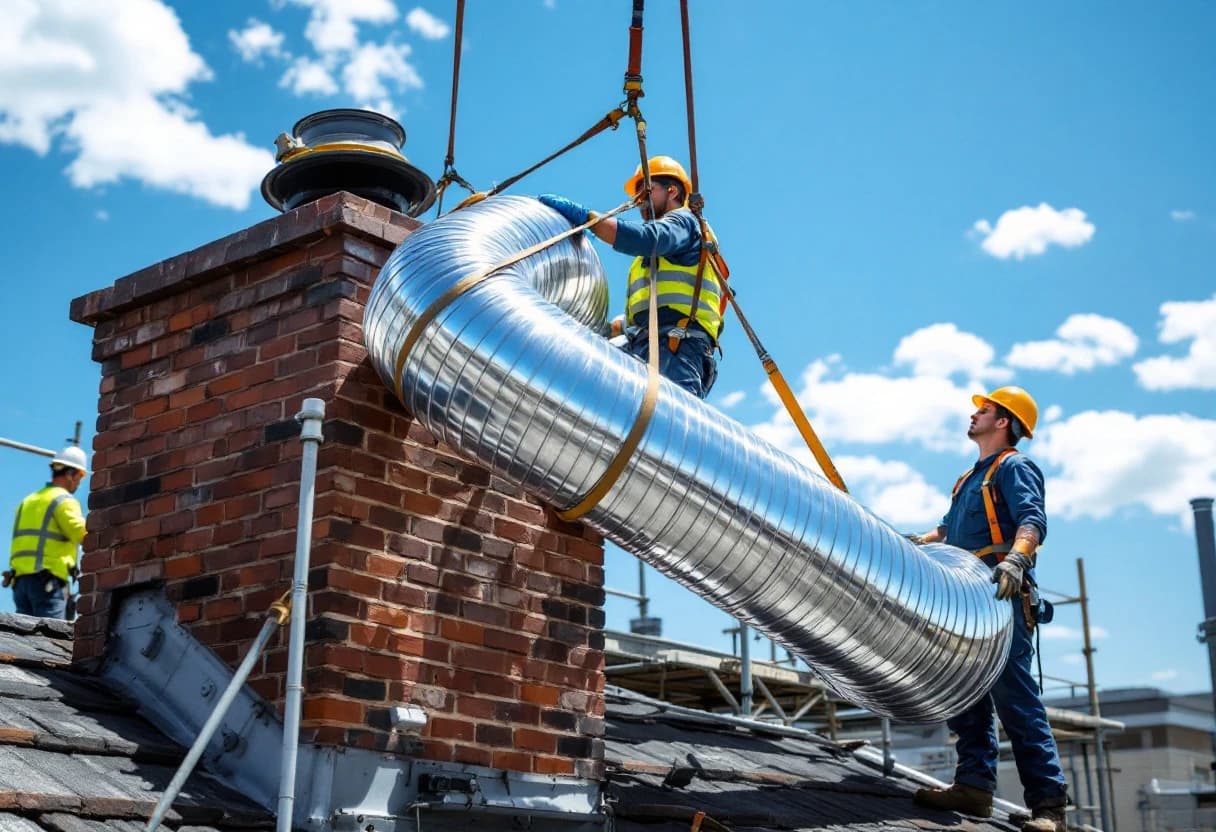
Our shop sits on Sewall Street in Melrose, which means Dedham is not the far edge of some sprawling service map for us; it is part of the neighborhood we drive every week. That proximity shapes how we work. We can schedule promptly, return quickly if a repair needs a second visit, and stand behind our workmanship the way only a local company can, because our reputation lives or dies within a few towns of home. Homeowners in Dedham call us for everything from routine sweeps to full masonry restoration, and every job gets the same treatment: careful protection of your home, a methodical inspection, and straight answers about what your chimney actually needs and what it does not.
The liner is the part of your chimney nobody ever sees, and it is the part doing almost all of the work. Every time your furnace, boiler, wood stove, or fireplace runs, the liner is the barrier standing between 300 to 1,000 degree flue gases and the wood framing of your house. In much of the older housing stock around Dedham, that barrier is either a clay tile flue installed generations ago or, in homes built before roughly 1940, nothing at all except bare brick. When we run a camera up one of these chimneys, we routinely find cracked tiles, missing mortar joints between tile sections, and gaps that open directly into the masonry.
Clay tile fails in New England for a predictable reason: thermal shock and freeze-thaw. Tiles heat unevenly when a fire starts, and because clay expands faster on its hot face than its cold face, it cracks vertically. Then water gets in. Every winter, that water freezes, expands about nine percent, and pries the cracks wider. Add a chimney fire at some point in the home's history, and you get shattered tiles and open joints. Once the tile is breached, flue gases and creosote reach the brick itself, and carbon monoxide has a path into the living space. This is exactly the condition a liner replacement is designed to correct.
The other big driver of relining work around Dedham is appliance mismatch. Thousands of local homes converted from oil heat to high-efficiency gas over the past two decades. A flue built for a hot, high-volume oil burner is dramatically oversized for a modern gas appliance. Cool, slow-moving gas exhaust condenses inside that oversized flue, and the condensate is acidic. It eats mortar joints from the inside, soaks into brick, and produces the flaking, staining, and spalling we see on so many chimneys. Per NFPA 211 and manufacturer instructions, that appliance needs a correctly sized liner, usually an insulated stainless steel system, not a cavernous old masonry flue.
Upside Down Chimney Sweeps installs UL-listed stainless steel liner systems, rigid and flexible, in 316 and 304 alloys as well as heavier gauges for wood and coal service. We size every liner to the actual appliance using the manufacturer's venting tables, insulate it where required, and connect it with listed components from the appliance collar to the termination cap. Everything we do is documented with before-and-after video so you can see the condition we found and the system we left behind. If your chimney has been red-tagged, failed a home inspection, or simply never had a proper flue, call (781) 653-5644 and we will scope it, explain your options plainly, and quote the job in writing.
What Our Chimney Liners Service Covers
1Camera Inspection and Flue Assessment
Before we recommend any liner, we run a video scan of the full flue from the appliance connection to the crown. We are looking for cracked or shifted tiles, missing mortar joints, offsets, previous chimney fire evidence such as glazed stage-3 creosote, and the actual interior dimensions at the tightest point. This matters because a liner that fits at the top can hang up on an offset halfway down. You get the footage, and we walk you through exactly what we saw before quoting anything.
2Stainless Steel Flexible Liner Installation
For most relines we install a UL-listed flexible stainless liner, alloy matched to the fuel: 316Ti for wood, oil, and coal exposure, 304 or AL29-4C where gas condensate is the concern. The liner runs continuous from the appliance to the top plate with no joints inside the chimney, which is a real advantage over sectioned tile. We secure the top plate to the crown, install a storm collar, and finish with a listed cap sized to the liner, not jammed onto the old tile.
3Insulated Liner Systems
Insulation is not an upsell; it is how a liner performs. A half-inch ceramic fiber wrap or poured insulation mix keeps flue gases hot the whole way up, which improves draft, reduces creosote condensation in wood systems, and prevents acidic condensate in gas systems. It is also what earns many liners their zero-clearance listing inside a masonry chimney with combustibles nearby, which describes almost every balloon-framed and platform-framed home around Dedham. We insulate wherever the listing or the conditions call for it.
4Heating Appliance and Furnace Flue Relining
Gas and oil appliances are the quiet majority of our liner work. When a water heater is orphaned on a big flue after a furnace upgrade, or an oil-to-gas conversion leaves exhaust condensing in cold masonry, we install a properly sized liner per the appliance venting tables and connect it with listed connectors. Correct sizing restores draft, stops condensate damage, and keeps carbon monoxide moving up and out instead of spilling at the draft hood. We coordinate with your HVAC contractor whenever the job touches their equipment.
5Fireplace and Wood Stove Relining
Open fireplaces and wood stove installations have their own rules. A fireplace reline is sized to the firebox opening so smoke draws cleanly instead of rolling into the room. A stove or insert gets a full-length liner matched to the flue collar, usually six inches, because dumping a stove into a huge open flue is both against the listing and a creosote factory. We install heavy-gauge liners rated for solid fuel and, where a chimney fire has occurred, we treat the reline as mandatory rather than optional.
6Cast-in-Place and Tile Repair Alternatives
Not every chimney is a candidate for stainless. Severely deteriorated stacks sometimes need the old tile broken out to regain diameter, and some historic masonry benefits from a poured cast-in-place lining system that restores structure while creating a new smooth flue. We will tell you honestly which approach fits your chimney and your budget, including when a partial repair is defensible and when it is throwing money at a flue that needs full replacement. The written quote spells out materials, alloy, insulation, and warranty.
Why Chimney Liners Matters for Dedham Homes
An unlined or breached flue is one of the most common serious defects we find, and it is invisible from the living room. NFPA 211 treats the liner as a required component of a safe venting system for good reason: masonry alone was never meant to contain flue gases. Tests going back decades showed that unlined chimneys can transfer enough heat through the brick to ignite adjacent framing, and that cracked tiles let carbon monoxide migrate into wall cavities and upstairs bedrooms. When a home inspector or sweep tells you the tile is cracked, that is not cosmetic. It means the system that contains fire and CO has a hole in it.
Relining is also what makes the rest of your chimney investment last. Water and acid attack masonry from the inside just as freeze-thaw attacks it from the outside. Oversized flues venting modern gas appliances stay cold and wet, and the acidic condensate dissolves mortar joints year after year until the stack needs rebuilding from the shoulder up. A correctly sized, insulated stainless liner keeps combustion byproducts inside a corrosion-resistant tube and out of your brickwork. We have scoped chimneys in Dedham where a few thousand dollars of liner ten years earlier would have prevented a five-figure rebuild.
Finally, there is performance you can feel. Homeowners call us about fireplaces that smoke, stoves that will not hold a burn, and heating flues that spill fumes on windy days, and the root cause is frequently a flue that is the wrong size for the appliance. Draft is physics: hot gas rises in proportion to its temperature and the height and diameter of the column containing it. Match the liner to the appliance, insulate it against our long cold season, and the whole system behaves the way it was engineered to. That is the difference between fighting your fireplace and enjoying it.
Greater Boston weather asks masonry to survive genuine extremes. A chimney in Dedham may face humid ninety-degree afternoons in July and single-digit nights in January, along with the dozens of freeze-thaw crossings in between that make southern New England one of the tougher masonry climates anywhere. Materials expand and contract with every swing, mortar fatigues, sealants age, and metal components like caps, dampers, and flashing corrode faster in our damp air. None of this means chimneys here are doomed; it means maintenance schedules imported from gentler climates simply do not apply. An annual inspection is the standard everywhere under NFPA 211, but around here it earns its keep almost every single year, usually by catching weather damage early.
Signs You Need Chimney Liners in Dedham
- Pieces of broken clay tile or gray flake debris are showing up in your fireplace or on the smoke shelf.
- A home inspection, gas company visit, or sweep has flagged cracked flue tiles or gaps in the liner.
- Your home was built before about 1940 and the chimney has never been relined or scoped.
- You converted from oil to gas heat and the original masonry flue was never resized with a liner.
- There is white staining, damp brick, or flaking masonry on the chimney, especially near the top.
- The fireplace smokes into the room or the wood stove struggles to draft even with dry wood.
- You have had a chimney fire, even a small one that seemed to burn itself out.
- A carbon monoxide detector near the furnace or fireplace has alarmed or reads elevated levels.
- Mortar joints inside the flue are visibly open or the camera shows brick where tile should be.
- You are installing a new stove, insert, or heating appliance that requires a code-compliant flue.
How the Job Goes, Step by Step
1Video Scan and Measurement
We camera the flue top to bottom, document every crack, offset, and open joint, and measure interior dimensions at the tightest points. We also confirm what appliances vent into the flue and check clearances at the top. You see the footage on-site, so the recommendation is based on evidence you have looked at yourself, not on our say-so.
2System Design and Written Quote
Using the appliance manufacturer's venting tables and NFPA 211 guidance, we spec the liner diameter, alloy, gauge, and insulation your system actually needs. The written quote lists every component from the connection at the appliance to the cap, plus any tile removal or masonry prep, so there are no surprises on installation day.
3Preparation and Tile Removal When Needed
We protect floors and the work area, then prepare the flue. If old tile is too tight or too damaged, we break it out with specialized tooling to regain a straight, adequate chase. Offsets get negotiated with the right liner profile. Debris is removed through the fireplace or cleanout, bagged, and hauled away, not left on the smoke shelf.
4Liner Installation and Insulation
The insulated liner is lowered or pushed through the flue in one continuous run and connected at the bottom with listed fittings: a tee for stoves and appliances, or a smooth transition at a fireplace smoke chamber. At the top we install the plate, storm collar, and a properly sized cap, sealed against wind-driven New England rain.
5Sealing, Testing, and Fire-Up
We seal the top plate to the crown, verify every connection, and then test the system under real conditions: a draft check, smoke test where appropriate, and a full fire-up of the appliance. For gas equipment we confirm proper drafting at the draft hood. We do not leave until the system vents the way it should.
6Documentation and Warranty Registration
You receive before-and-after video, photos of the completed terminations, and the manufacturer paperwork for your liner, including the warranty registration. Keep it with your house records; it matters at resale and for insurance. We also log the installation so future sweeps and inspections reference the exact system in your chimney.
Local Knowledge: Chimney Liners in Dedham
Dedham's range is remarkable: the Fairbanks House, the oldest surviving timber-frame house in North America, anchors a town of Victorian streetcar neighborhoods in Oakdale, brick and shingle two-families near the Square, and postwar capes in Greenlodge and Riverdale. Victorian-era homes here frequently have tall, ornate corbeled chimneys that are as fragile as they are handsome. Precinct 1's historic district holds some of the finest old housing in Norfolk County.
Dedham takes its history seriously — America's first man-made canal, Mother Brook, has run through town since 1639, and its historic districts expect chimney repairs to match original brick and profiles. Streetcar-suburb blocks mean tall stacks on steep slate and asphalt roofs, so staging and safety matter as much as masonry skill here.
We regularly handle chimney liners calls in Dedham and the surrounding towns of Boston, Needham, Westwood, Canton — so scheduling is fast and our pricing reflects local conditions, not guesswork.
Every fall, the same thing happens across Greater Boston: the first genuinely cold weekend arrives, thousands of homeowners simultaneously remember their chimneys, and every reputable sweep's calendar fills for weeks. The homeowners who called in August or September get their pick of appointments; the ones who call in late October wait, sometimes well past the first fires of the season. There is no downside to beating that rush. A chimney swept in late summer stays clean until burning season, inspection findings leave time for repairs before the cold, and scheduling stays flexible. If a fire on the first cold night matters to you, the honest advice from anyone in this trade is simple: book early, and burn easy.
Why Choose Upside Down Chimney Sweeps
Good chimney work starts with good communication, and we structure every job around it. Before we begin, you get a clear scope and a clear price. During the visit, our technician explains what they are finding and photographs anything noteworthy inside the flue or up on the roof, places you would never see otherwise. Afterward, you receive a report that plainly states the condition of your chimney and any recommendations, ranked by urgency. Call our office and a person who knows your job answers, not a call center reading a script. None of this is revolutionary; it is simply how service companies used to operate, and we think Greater Boston homeowners deserve contractors who still work that way.
Chimney Liners FAQs — Dedham, MA
How do I know if my chimney actually needs a new liner?
What is the difference between a 304 and 316 stainless liner?
Does a new liner really need insulation?
My home inspector said the chimney is unlined. Is that dangerous?
How long does a chimney reline take?
What does a chimney liner cost in the Boston area?
Can I use my fireplace or furnace while I wait for the reline?
Will a stainless liner last, and what maintenance does it need?
Book Chimney Liners in Dedham
What you are really buying from a chimney company is the ability to stop wondering. No more second-guessing the flue every time you light a fire, no more eyeing that stain on the ceiling near the chimney, no more resolving each October to deal with it next year. One call to Upside Down Chimney Sweeps at (781) 653-5644 settles the question for your Dedham home: a professional sweep, an inspection guided by NFPA 211, photographs of everything relevant, and recommendations ranked honestly by urgency. Most chimneys pass with minor notes, and their owners sleep better for knowing it. If yours needs work, you will know exactly what and why. Either way, the wondering ends.
Book Chimney Liners in Dedham
Our Melrose shop is 15 miles away — scheduling in Dedham is fast. Call (781) 653-5644.
Mon–Sat: 7:00 AM – 7:00 PM · Emergency service available