Essex, MA · Essex County
Chimney Liner Installation & Relining in Essex, MA
UL-listed stainless steel liner installation and full chimney relining, correctly sized to your appliance and insulated for New England winters.
Most single-flue stainless relines in the Boston area run $2,500–$5,500 installed, depending on flue height, diameter, insulation, and how much old tile has to come out.
Maybe you noticed a damp smell from the fireplace after last week's rain. Maybe smoke curled into the living room instead of up the flue, or a chunk of mortar appeared in the firebox, or a neighbor's chimney fire got you thinking. Homeowners in Essex usually call us because something small felt slightly off, and that instinct is worth trusting. Chimneys telegraph their problems in modest ways long before those problems become expensive ones. Upside Down Chimney Sweeps can tell you quickly whether what you noticed is a harmless quirk or an early warning. One inspection, a set of photographs, and a plain-English conversation will replace vague worry with a concrete plan, whatever that plan turns out to be.
The liner is the part of your chimney nobody ever sees, and it is the part doing almost all of the work. Every time your furnace, boiler, wood stove, or fireplace runs, the liner is the barrier standing between 300 to 1,000 degree flue gases and the wood framing of your house. In much of the older housing stock around Essex, that barrier is either a clay tile flue installed generations ago or, in homes built before roughly 1940, nothing at all except bare brick. When we run a camera up one of these chimneys, we routinely find cracked tiles, missing mortar joints between tile sections, and gaps that open directly into the masonry.
Clay tile fails in New England for a predictable reason: thermal shock and freeze-thaw. Tiles heat unevenly when a fire starts, and because clay expands faster on its hot face than its cold face, it cracks vertically. Then water gets in. Every winter, that water freezes, expands about nine percent, and pries the cracks wider. Add a chimney fire at some point in the home's history, and you get shattered tiles and open joints. Once the tile is breached, flue gases and creosote reach the brick itself, and carbon monoxide has a path into the living space. This is exactly the condition a liner replacement is designed to correct.
The other big driver of relining work around Essex is appliance mismatch. Thousands of local homes converted from oil heat to high-efficiency gas over the past two decades. A flue built for a hot, high-volume oil burner is dramatically oversized for a modern gas appliance. Cool, slow-moving gas exhaust condenses inside that oversized flue, and the condensate is acidic. It eats mortar joints from the inside, soaks into brick, and produces the flaking, staining, and spalling we see on so many chimneys. Per NFPA 211 and manufacturer instructions, that appliance needs a correctly sized liner, usually an insulated stainless steel system, not a cavernous old masonry flue.
Upside Down Chimney Sweeps installs UL-listed stainless steel liner systems, rigid and flexible, in 316 and 304 alloys as well as heavier gauges for wood and coal service. We size every liner to the actual appliance using the manufacturer's venting tables, insulate it where required, and connect it with listed components from the appliance collar to the termination cap. Everything we do is documented with before-and-after video so you can see the condition we found and the system we left behind. If your chimney has been red-tagged, failed a home inspection, or simply never had a proper flue, call (781) 653-5644 and we will scope it, explain your options plainly, and quote the job in writing.
What Our Chimney Liners Service Covers
1Camera Inspection and Flue Assessment
Before we recommend any liner, we run a video scan of the full flue from the appliance connection to the crown. We are looking for cracked or shifted tiles, missing mortar joints, offsets, previous chimney fire evidence such as glazed stage-3 creosote, and the actual interior dimensions at the tightest point. This matters because a liner that fits at the top can hang up on an offset halfway down. You get the footage, and we walk you through exactly what we saw before quoting anything.
2Stainless Steel Flexible Liner Installation
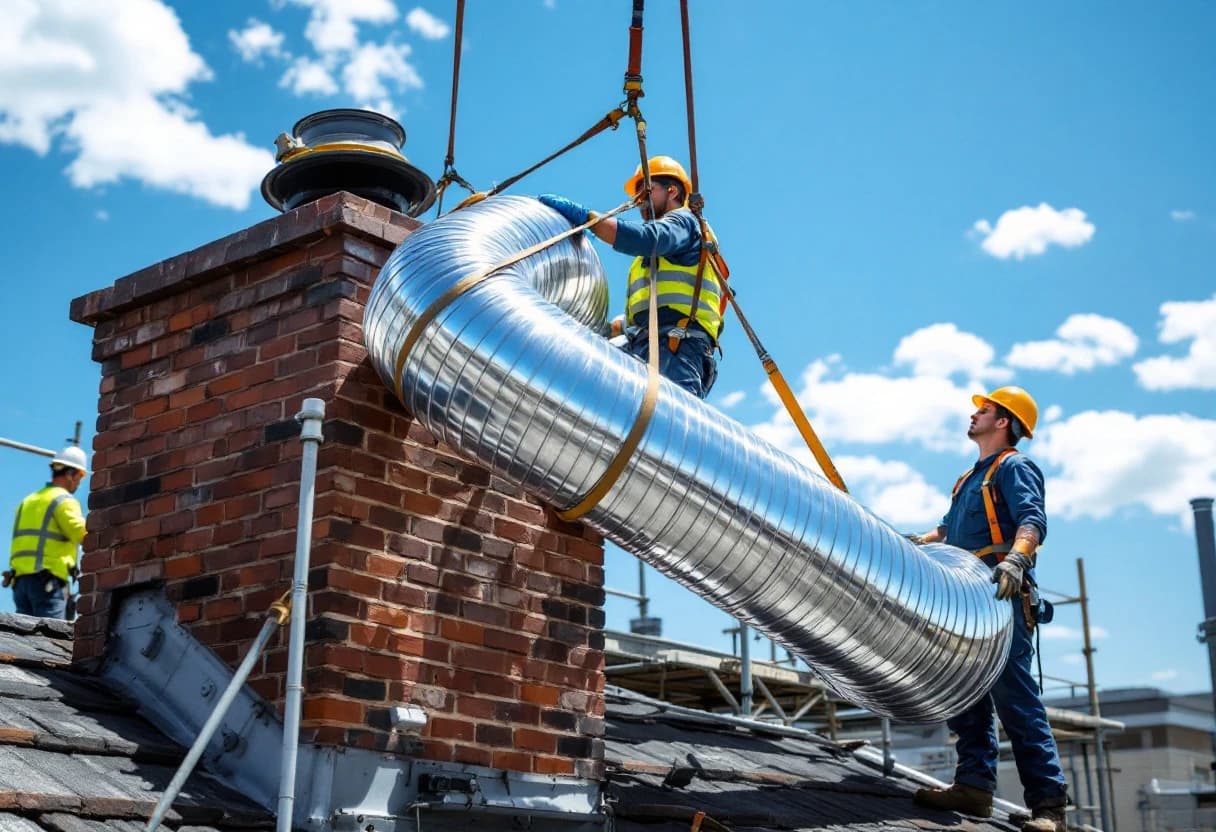
For most relines we install a UL-listed flexible stainless liner, alloy matched to the fuel: 316Ti for wood, oil, and coal exposure, 304 or AL29-4C where gas condensate is the concern. The liner runs continuous from the appliance to the top plate with no joints inside the chimney, which is a real advantage over sectioned tile. We secure the top plate to the crown, install a storm collar, and finish with a listed cap sized to the liner, not jammed onto the old tile.
3Insulated Liner Systems
Insulation is not an upsell; it is how a liner performs. A half-inch ceramic fiber wrap or poured insulation mix keeps flue gases hot the whole way up, which improves draft, reduces creosote condensation in wood systems, and prevents acidic condensate in gas systems. It is also what earns many liners their zero-clearance listing inside a masonry chimney with combustibles nearby, which describes almost every balloon-framed and platform-framed home around Essex. We insulate wherever the listing or the conditions call for it.
4Heating Appliance and Furnace Flue Relining
Gas and oil appliances are the quiet majority of our liner work. When a water heater is orphaned on a big flue after a furnace upgrade, or an oil-to-gas conversion leaves exhaust condensing in cold masonry, we install a properly sized liner per the appliance venting tables and connect it with listed connectors. Correct sizing restores draft, stops condensate damage, and keeps carbon monoxide moving up and out instead of spilling at the draft hood. We coordinate with your HVAC contractor whenever the job touches their equipment.
5Fireplace and Wood Stove Relining
Open fireplaces and wood stove installations have their own rules. A fireplace reline is sized to the firebox opening so smoke draws cleanly instead of rolling into the room. A stove or insert gets a full-length liner matched to the flue collar, usually six inches, because dumping a stove into a huge open flue is both against the listing and a creosote factory. We install heavy-gauge liners rated for solid fuel and, where a chimney fire has occurred, we treat the reline as mandatory rather than optional.
6Cast-in-Place and Tile Repair Alternatives
Not every chimney is a candidate for stainless. Severely deteriorated stacks sometimes need the old tile broken out to regain diameter, and some historic masonry benefits from a poured cast-in-place lining system that restores structure while creating a new smooth flue. We will tell you honestly which approach fits your chimney and your budget, including when a partial repair is defensible and when it is throwing money at a flue that needs full replacement. The written quote spells out materials, alloy, insulation, and warranty.
Why Chimney Liners Matters for Essex Homes
An unlined or breached flue is one of the most common serious defects we find, and it is invisible from the living room. NFPA 211 treats the liner as a required component of a safe venting system for good reason: masonry alone was never meant to contain flue gases. Tests going back decades showed that unlined chimneys can transfer enough heat through the brick to ignite adjacent framing, and that cracked tiles let carbon monoxide migrate into wall cavities and upstairs bedrooms. When a home inspector or sweep tells you the tile is cracked, that is not cosmetic. It means the system that contains fire and CO has a hole in it.
Relining is also what makes the rest of your chimney investment last. Water and acid attack masonry from the inside just as freeze-thaw attacks it from the outside. Oversized flues venting modern gas appliances stay cold and wet, and the acidic condensate dissolves mortar joints year after year until the stack needs rebuilding from the shoulder up. A correctly sized, insulated stainless liner keeps combustion byproducts inside a corrosion-resistant tube and out of your brickwork. We have scoped chimneys in Essex where a few thousand dollars of liner ten years earlier would have prevented a five-figure rebuild.
Finally, there is performance you can feel. Homeowners call us about fireplaces that smoke, stoves that will not hold a burn, and heating flues that spill fumes on windy days, and the root cause is frequently a flue that is the wrong size for the appliance. Draft is physics: hot gas rises in proportion to its temperature and the height and diameter of the column containing it. Match the liner to the appliance, insulate it against our long cold season, and the whole system behaves the way it was engineered to. That is the difference between fighting your fireplace and enjoying it.
Spring is when winter sends Essex homeowners the bill. As temperatures stabilize, the damage done by months of freeze-thaw cycling becomes visible: hairline crown cracks that widened, mortar joints that crumble at a touch, brick faces flaked off onto the roof, and white mineral staining called efflorescence, which is a chimney's way of announcing that water is moving through its masonry and leaving dissolved salts behind on the surface. None of these symptoms improves on its own, and all of them worsen faster once water has an established path. A spring inspection catches the winter's damage at its cheapest stage, and leaves the whole summer, the best season for masonry work, to repair it properly.
Signs You Need Chimney Liners in Essex
- Pieces of broken clay tile or gray flake debris are showing up in your fireplace or on the smoke shelf.
- A home inspection, gas company visit, or sweep has flagged cracked flue tiles or gaps in the liner.
- Your home was built before about 1940 and the chimney has never been relined or scoped.
- You converted from oil to gas heat and the original masonry flue was never resized with a liner.
- There is white staining, damp brick, or flaking masonry on the chimney, especially near the top.
- The fireplace smokes into the room or the wood stove struggles to draft even with dry wood.
- You have had a chimney fire, even a small one that seemed to burn itself out.
- A carbon monoxide detector near the furnace or fireplace has alarmed or reads elevated levels.
- Mortar joints inside the flue are visibly open or the camera shows brick where tile should be.
- You are installing a new stove, insert, or heating appliance that requires a code-compliant flue.
How the Job Goes, Step by Step
1Video Scan and Measurement
We camera the flue top to bottom, document every crack, offset, and open joint, and measure interior dimensions at the tightest points. We also confirm what appliances vent into the flue and check clearances at the top. You see the footage on-site, so the recommendation is based on evidence you have looked at yourself, not on our say-so.
2System Design and Written Quote
Using the appliance manufacturer's venting tables and NFPA 211 guidance, we spec the liner diameter, alloy, gauge, and insulation your system actually needs. The written quote lists every component from the connection at the appliance to the cap, plus any tile removal or masonry prep, so there are no surprises on installation day.
3Preparation and Tile Removal When Needed
We protect floors and the work area, then prepare the flue. If old tile is too tight or too damaged, we break it out with specialized tooling to regain a straight, adequate chase. Offsets get negotiated with the right liner profile. Debris is removed through the fireplace or cleanout, bagged, and hauled away, not left on the smoke shelf.
4Liner Installation and Insulation
The insulated liner is lowered or pushed through the flue in one continuous run and connected at the bottom with listed fittings: a tee for stoves and appliances, or a smooth transition at a fireplace smoke chamber. At the top we install the plate, storm collar, and a properly sized cap, sealed against wind-driven New England rain.
5Sealing, Testing, and Fire-Up
We seal the top plate to the crown, verify every connection, and then test the system under real conditions: a draft check, smoke test where appropriate, and a full fire-up of the appliance. For gas equipment we confirm proper drafting at the draft hood. We do not leave until the system vents the way it should.
6Documentation and Warranty Registration
You receive before-and-after video, photos of the completed terminations, and the manufacturer paperwork for your liner, including the warranty registration. Keep it with your house records; it matters at resale and for insurance. We also log the installation so future sweeps and inspections reference the exact system in your chimney.
Local Knowledge: Chimney Liners in Essex
Essex built more two-masted wooden schooners than any town in America, and the shipwrights' modest 18th- and 19th-century capes and colonials still line Main Street and the causeway. Housing is low-density and old on average, with plenty of original center chimneys, plus seasonal cottages out at Conomo Point. New construction is scarce, so antique masonry is the day-to-day reality here.
The town wraps around a tidal salt-marsh estuary, so chimneys live in briny, fog-heavy air even a mile from open water — a slow but relentless recipe for spalled brick and rusted dampers. Essex is also where the fried clam was invented at Woodman's in 1916, and its compact antique streetscape means most jobs involve older flues, steep old roofs, and history underfoot.
We regularly handle chimney liners calls in Essex and the surrounding towns of Gloucester, Manchester-by-the-Sea, Hamilton, Ipswich — so scheduling is fast and our pricing reflects local conditions, not guesswork.
Summer looks like the chimney off-season, and that is exactly what makes it valuable. Masonry repairs, crown rebuilds, repointing, and waterproofing all want sustained warm temperatures, because mortar and sealants cure correctly only above certain thresholds; a repair attempted in November is a repair fighting its own materials. Summer scheduling is also simply easier, with more open dates and no burning-season urgency pressing on anyone. Chimney odors are another summer matter: humidity and warm air can push the smell of winter creosote back into the house, and a thorough sweep is the cure, not air freshener. If your chimney needs actual repair work rather than just a sweep, summer is the season that work will go best.
Why Choose Upside Down Chimney Sweeps
We built this company on the belief that chimney work should follow written standards, not folklore. Our sweeping and inspection procedures track NFPA 211, the National Fire Protection Association's standard for chimneys, fireplaces, and vents, along with the best practices promoted by the Chimney Safety Institute of America. That means we do not eyeball a flue and pronounce it fine; we examine accessible portions methodically, note the condition of liners, crowns, caps, and flashing, and classify creosote honestly by stage. Standards protect you in a second way, too: when we recommend a repair, we can point to the specific condition and the specific guidance behind the recommendation, so you are never asked to take an expensive claim on faith.
Chimney Liners FAQs — Essex, MA
How do I know if my chimney actually needs a new liner?
What is the difference between a 304 and 316 stainless liner?
Does a new liner really need insulation?
My home inspector said the chimney is unlined. Is that dangerous?
How long does a chimney reline take?
What does a chimney liner cost in the Boston area?
Can I use my fireplace or furnace while I wait for the reline?
Will a stainless liner last, and what maintenance does it need?
Book Chimney Liners in Essex
Chimney calendars around Essex fill fastest exactly when you most want an appointment, so the best time to call is before the season demands it. Whether that means a sweep before the first fire, a repair while the weather still favors masonry work, or an inspection simply because it has been more than a year, Upside Down Chimney Sweeps can get you scheduled with one call to (781) 653-5644. We will confirm the scope, give you an honest price, and show up when we said we would. The homeowners who never seem to have chimney emergencies are, almost without exception, the ones who made this call a little earlier than they strictly needed to.
Book Chimney Liners in Essex
Our Melrose shop is 25 miles away — scheduling in Essex is fast. Call (781) 653-5644.
Mon–Sat: 7:00 AM – 7:00 PM · Emergency service available