
Lynn, MA · Essex County
Fireplace & Firebox Repair in Lynn, MA
Firebox rebuilds, refractory panel replacement, smoke chamber parging, damper repair, and hearth restoration that make an aging fireplace safe to light again.
Typical firebox repointing runs $400–$900, refractory panel replacement $600–$1,200, and full firebox rebuilds $2,000–$4,500 in the Boston market, depending on scope and materials.
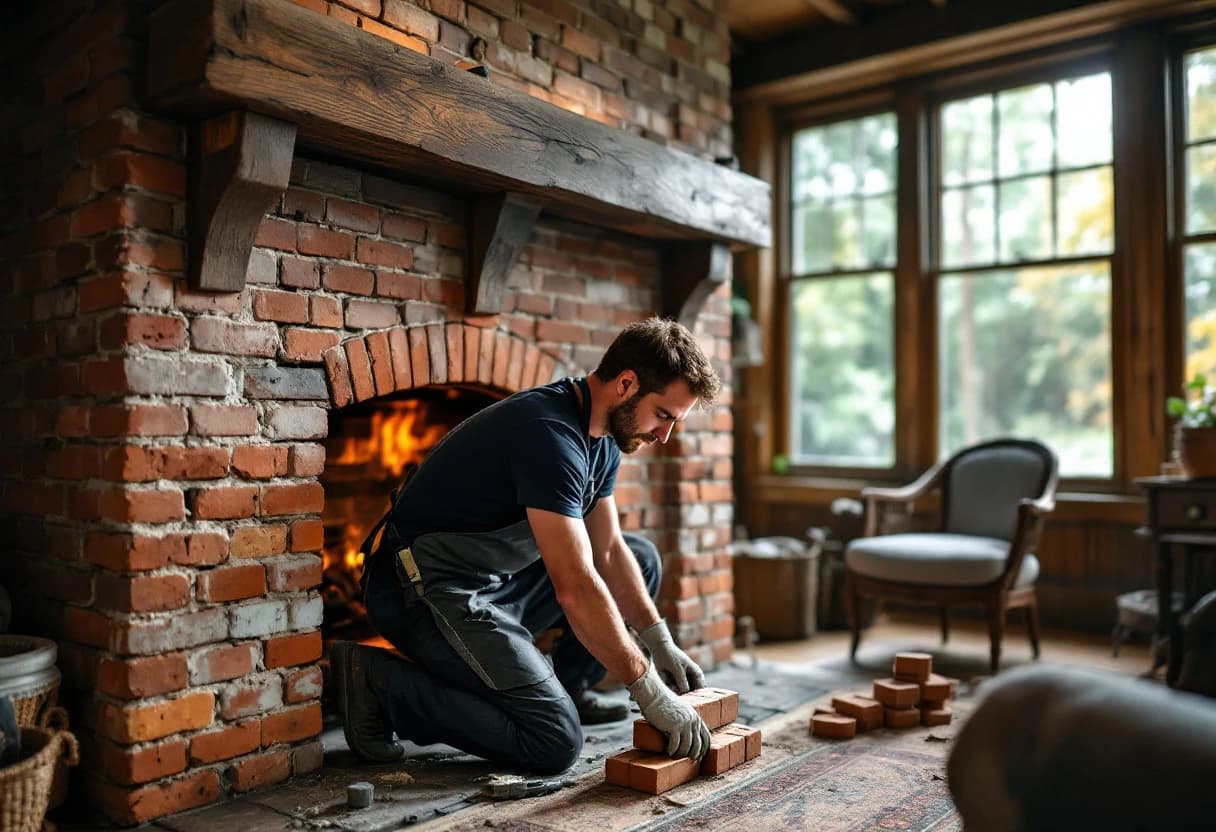
When was your chimney last swept and inspected? If you are like most homeowners in Lynn, the honest answer is that you cannot quite remember. That is nothing to be embarrassed about, but it is worth fixing, because the National Fire Protection Association's NFPA 211 standard calls for chimneys to be inspected every year and cleaned whenever deposits have built up. A chimney hides its problems well: creosote accumulates out of sight, mortar erodes above the roofline, and a small crack can channel water into your walls for months before a stain ever appears. One appointment with Upside Down Chimney Sweeps answers the question definitively, and gives you a documented baseline for every burning season that follows.
Stand at your hearth and look closely at the back wall of the firebox. If you can see crumbling joints, gaps where mortar used to be, or a crack you could slide a quarter into, your fireplace is telling you something. The firebox is the single hottest place in your entire house, cycling from room temperature to over 1,000 degrees and back, sometimes twice in a weekend. Ordinary masonry cannot survive that. Fireboxes are built from firebrick set in refractory mortar precisely because normal brick and Portland-based mortar spall, crack, and fall apart under thermal cycling. When the refractory joints fail, heat and embers get a direct path toward the wood framing hidden behind the masonry.
The fireplaces we repair around Lynn span three centuries of construction. We work on rumford-style fireplaces in antique colonials, shallow coal-burning fireboxes from the streetcar-suburb era that were never meant for wood at all, mid-century masonry fireplaces with deteriorating smoke chambers, and prefabricated factory-built units from the 1980s onward whose refractory panels have cracked past the point of safe use. Each type fails in its own way, and each has its own correct repair. A prefab with a cracked panel needs a listed replacement panel, not a smear of furnace cement. An 1890s firebox needs refractory repointing done joint by joint, not a skim coat that hides the problem for one season.
Above the firebox sits the part of the fireplace most homeowners have never heard of: the smoke chamber. This is the funnel that gathers smoke from the wide firebox and squeezes it into the narrow flue, and in older homes it was almost always built with corbeled brick, stepped like an inverted staircase, with open joints and jagged surfaces. NFPA 211 calls for smoke chamber walls to be smooth and parged. Rough corbeled chambers grab creosote on every ledge, slow the draft, and in many older homes around Lynn sit only inches from framing lumber. Parging the chamber with insulating refractory mortar is one of the highest-value repairs in this trade.
Upside Down Chimney Sweeps repairs fireplaces from the hearth up: firebox repointing and rebuilds, refractory panel replacement, smoke chamber parging, damper repair and replacement, lintel work, and hearth extension corrections. We begin every job with an inspection, because a cracked firebox is frequently a symptom of movement or water problems higher in the chimney, and repairing the symptom without the cause wastes your money. You get photos of everything we find, an itemized written quote, and workmanship intended to outlive the mortgage. If your fireplace has been sitting cold because you are not sure it is safe, call (781) 653-5644 and let us take a look before the season starts.
What Our Fireplace Repair Service Covers
1Firebox Repointing and Rebuilds
Failed joints get ground out and repacked with genuine refractory mortar rated for direct flame contact, not the hardware-store tube goo that shrinks and falls out by February. Where firebrick itself has spalled or shifted, we cut out and replace individual brick, and where deterioration is widespread we dismantle and rebuild the firebox to its original geometry. Getting the geometry right matters: the angled side walls and sloped back of a well-built firebox are what throw heat into the room instead of up the flue.
2Refractory Panel Replacement for Prefab Fireplaces
Factory-built fireplaces line the firebox with molded refractory panels, and manufacturers are specific: a crack you can catch a fingernail in, or any crack exposing the metal shell, means the panel is done. We identify your unit from its rating plate, source the correct listed replacement panels, and install them per the manufacturer's instructions so the listing stays intact. If the unit is orphaned and panels are no longer made, we will tell you honestly what your options are rather than improvising something the listing does not allow.
3Smoke Chamber Parging
We parge rough, corbeled smoke chambers with an insulating refractory mortar, troweled or sprayed to create the smooth, sealed funnel NFPA 211 calls for. Parging closes the open joints that let heat reach nearby framing, streamlines the path so smoke accelerates into the flue instead of eddying, and eliminates the ledges where stage-3 glazed creosote loves to accumulate. On many older fireplaces this one repair noticeably improves draft, and it is often the difference between passing and failing a Level 2 inspection at resale.
4Damper Repair and Top-Sealing Dampers
A throat damper that is rusted open pours heated indoor air up the flue all winter; one rusted shut makes the fireplace unusable. We free, repair, or replace throat dampers, and where the original casting is beyond saving we install top-sealing dampers at the flue exit. A top-sealing damper closes with a silicone gasket rather than metal on metal, sealing far tighter than any throat damper, and it doubles as weather protection for the flue. In leaky older homes it is one of the fastest paybacks in chimney work.
5Lintel, Facing, and Hearth Repairs
The steel lintel spanning the fireplace opening rusts and expands over decades, and that expansion cracks the surrounding brick, a failure we see constantly in homes near the coast where salt air accelerates corrosion. We replace deteriorated lintels, repair cracked facing brick and stone, and correct hearth extensions that do not meet the clearances required for embers. If your hearth is a tripping patchwork of broken tile or your mantel has visible gaps against the masonry, those are fixable problems with real safety dimensions.
6Water Damage Diagnosis and Correction
When a firebox smells like a wet basement or its joints are dissolving into sand, water is getting in from above. We trace it, whether the entry point is a cracked crown, failed flashing, a missing cap, or brick soaked through by wind-driven rain, and we fix the source before rebuilding what the water destroyed. Repairing a firebox under an active leak is like painting over rot. Every fireplace repair we quote includes an honest assessment of where the water is coming from.
Why Fireplace Repair Matters for Lynn Homes
The wall between your fire and your house is thinner than most people think. Behind the firebrick of many older fireboxes sits a rubble fill and then framing lumber, sometimes just a few inches away, and building practices in the era when much of Lynn was built were looser than anything code allows today. Pyrolysis makes this worse over time: wood repeatedly warmed by a nearby heat source chemically degrades and its ignition temperature drops year after year, until a gap in a mortar joint that was harmless for decades finally lets through enough heat to start a fire inside a wall. Open joints in a firebox are not cosmetic. They are the failure that structure fires trace back to.
Fireplace defects also compound quietly. A missing chunk of refractory mortar lets water from a leaky flue soak the firebox, freeze-thaw cycles wedge the crack wider, the loosened brick shifts, the damper frame drops out of alignment, and within a few seasons a $500 repointing job has become a $4,000 rebuild. New England is brutal about this because our winters deliver dozens of freeze-thaw cycles, each one prying at every crack that holds moisture. Catching firebox and smoke chamber deterioration early is the cheapest fireplace decision you will ever make, which is why we photograph and flag hairline problems during routine sweeps instead of waiting for them to become invoices.
There is also the simple matter of getting to use the thing. A fireplace with a rusted damper, a smoking problem, or a firebox you do not trust becomes a decorative hole in the wall that you pay to heat. Done right, repair work reverses that: a rebuilt firebox with correct geometry radiates noticeably more heat, a parged smoke chamber pulls smoke cleanly on the first match, and a top-sealing damper stops the cold downdraft you feel on the hearth in January. We follow NFPA 211 and CSIA guidance on every repair so the fireplace is not just working again but documented safe, which matters enormously when the house eventually sells.
The stretch of chimney above your roofline lives a harder life than any other masonry on a Lynn home. It takes weather from all four sides, gets no shelter from eaves or landscaping, and endures the sharpest temperature swings on the property, warmed from within by flue gases while winter air holds the exterior far below freezing. The crown, the concrete surface sealing the top of the stack, bears the worst of it and is often built too thin in the first place. Small crown cracks admit water directly into the chimney's core, where freeze-thaw pressure spreads the damage downward out of sight. This is why a professional inspection pays so much attention to the top three feet of a chimney.
Signs You Need Fireplace Repair in Lynn
- Mortar joints in the firebox are cracked, crumbling, or missing, or you can see gaps between firebrick.
- Pieces of brick, mortar, or refractory material are collecting on the firebox floor.
- A refractory panel in your prefab fireplace has a crack wide enough to catch a fingernail.
- The damper is rusted stuck, will not seal, or showers rust flakes when you move it.
- You feel a cold draft on the hearth even with the damper closed.
- The fireplace smokes into the room when you light it, especially on the first fire of the day.
- There is white staining, dampness, or a musty smell inside the firebox after rain.
- Brick above the fireplace opening is cracked in a horizontal line, suggesting a rusting lintel.
- The fireplace has not been used in years and nobody can vouch for its condition.
- A home inspector or sweep noted smoke chamber or firebox deficiencies during a Level 2 inspection.
How the Job Goes, Step by Step
1Hearth-to-Flue Evaluation
We inspect the firebox joint by joint, check the damper operation and seal, examine the smoke chamber with lights and camera, and scan the flue above, because firebox damage often originates higher up. We also probe for moisture and check hearth clearances. Everything is photographed so you can see precisely what we are quoting and why.
2Diagnosis and Itemized Quote
You get a written scope that separates must-fix safety items from worth-doing improvements, each priced individually. If water intrusion or flue damage is driving the firebox deterioration, the quote addresses the cause as well as the symptom, and we will say plainly when a cheap repair would just be buying the problem back in three years.
3Protection and Demolition
Fireplace repair is dusty work in the middle of your living space, so we seal off the area, run HEPA filtration, and protect floors before a single joint is ground. Failed mortar is cut out to sound material, loose or spalled firebrick is removed, and rusted damper hardware comes out. Debris leaves in sealed containers, not through your house in an open bucket.
4Rebuild and Refractory Work
New firebrick is laid in refractory mortar to the original firebox geometry, joints are struck tight and thin as good firebox work demands, and smoke chambers are parged smooth where the scope includes them. Prefab panels are installed per the manufacturer's listing. Refractory materials cure on their own schedule, and we build that cure time into the plan rather than rushing it.
5Damper and Hardware Installation
Repaired or replacement dampers are fitted and cycled until they operate smoothly with one hand. Top-sealing dampers are mounted and their cable and handle installed at the firebox. Lintels, grates, and doors go back in square and level. Every moving part gets tested repeatedly, because hardware that binds in October will be frozen solid by January.
6Curing Guidance and First-Fire Walkthrough
Before we leave you get the full picture: how long to wait before the first fire, how to run initial break-in fires small so fresh refractory cures without cracking, and what maintenance the repair needs going forward. We document the completed work with photos for your records and remain a phone call away at (781) 653-5644 if anything about the first burn seems off.
Local Knowledge: Fireplace Repair in Lynn
Lynn's shoe-industry boom left it with block after block of triple-deckers, Victorians, and multi-family homes, from dense downtown streets to the grander houses of Lynn Woods-adjacent neighborhoods and the shoreline along Lynn Shore Drive. Century-old brick chimneys serving two or three units apiece are the standard, and many have never been relined. Ocean-facing homes add salt exposure to the usual aging problems.
Lynn combines two hard environments in one city: dense urban housing inland and direct Atlantic exposure along the shore, where storms push salt spray across Lynn Shore Drive. We are minutes away from Melrose, so Lynn is core territory for us, and we know its triple-decker stacks and seaside masonry well. Multi-unit buildings here benefit from scheduled maintenance rather than waiting for a failed flue.
We regularly handle fireplace repair calls in Lynn and the surrounding towns of Saugus, Swampscott, Nahant, Peabody — so scheduling is fast and our pricing reflects local conditions, not guesswork.
A spring inspection is one of the smartest appointments on the chimney calendar. Burning season is finished, so the technician sees the flue at its dirtiest, and your sweep clears a full winter's creosote before it spends a humid summer hardening and generating the sour, smoky odor chimneys can develop in warm weather. Winter's freeze-thaw damage is fresh and visible, from crown cracks to failed mortar joints, and identifying it in April means repairs can be scheduled calmly rather than crammed into fall. Masonry work itself also wants warm weather, since mortar cures properly only above certain temperatures. Spring diagnosis, summer repair, fall enjoyment: that sequence is the whole strategy, and it starts with one appointment.
Why Choose Upside Down Chimney Sweeps
Chimney work in New England is its own discipline. The housing stock around Greater Boston includes homes from nearly every decade since the Revolution, which means our technicians routinely encounter unlined flues, coal-era chimneys converted to gas, shared stacks serving multiple fireplaces, and brick manufactured to standards long since retired. Add a climate that freezes and thaws dozens of times each winter, and you have conditions no sunbelt training manual ever anticipated. Upside Down Chimney Sweeps works exclusively in this environment, so the judgment calls that matter most here, like when old mortar can be repointed versus rebuilt, or how to reline a flue without disturbing historic masonry, are calls we make every single week.
Fireplace Repair FAQs — Lynn, MA
Is it safe to keep using a fireplace with cracked mortar joints in the firebox?
What is refractory mortar and why does it matter which mortar is used?
My prefab fireplace has a cracked panel. Can it just be patched?
Why does my fireplace smoke into the room when I first light it?
What does fireplace repair typically cost?
How long after a firebox repair before I can have a fire?
Why is my firebox wet or musty when the fireplace has not been used?
Can you restore the original fireplaces in an older or historic home?
Book Fireplace Repair in Lynn
From our shop on Sewall Street in Melrose, Lynn is a short and familiar drive, and that proximity is worth something practical to you: prompt scheduling, easy follow-ups, and a company whose reputation lives in the same corner of Massachusetts as your home. When you call (781) 653-5644, you reach people who know these towns, these winters, and these chimneys. We will set an appointment, arrive on time, protect your home while we work, and leave you with a written record of everything we found and everything we did. Local is not a slogan for us; it is the business model. We would be glad to add your chimney to the neighborhood we look after.
Book Fireplace Repair in Lynn
Our Melrose shop is 6 miles away — scheduling in Lynn is fast. Call (781) 653-5644.
Mon–Sat: 7:00 AM – 7:00 PM · Emergency service available