
Norwood, MA · Norfolk County
Damper Repair & Replacement in Norwood, MA
A stuck, rusted, or warped damper leaks heat all winter and smoke all season. We free, rebuild, and replace throat dampers and install energy-sealing top-mount dampers.
As typical Boston-area figures, most throat damper repairs run $175-$450, replacement throat damper assemblies land around $350-$700 installed, and a new top-sealing damper with cable control typically runs $450-$850.
When was your chimney last swept and inspected? If you are like most homeowners in Norwood, the honest answer is that you cannot quite remember. That is nothing to be embarrassed about, but it is worth fixing, because the National Fire Protection Association's NFPA 211 standard calls for chimneys to be inspected every year and cleaned whenever deposits have built up. A chimney hides its problems well: creosote accumulates out of sight, mortar erodes above the roofline, and a small crack can channel water into your walls for months before a stain ever appears. One appointment with Upside Down Chimney Sweeps answers the question definitively, and gives you a documented baseline for every burning season that follows.
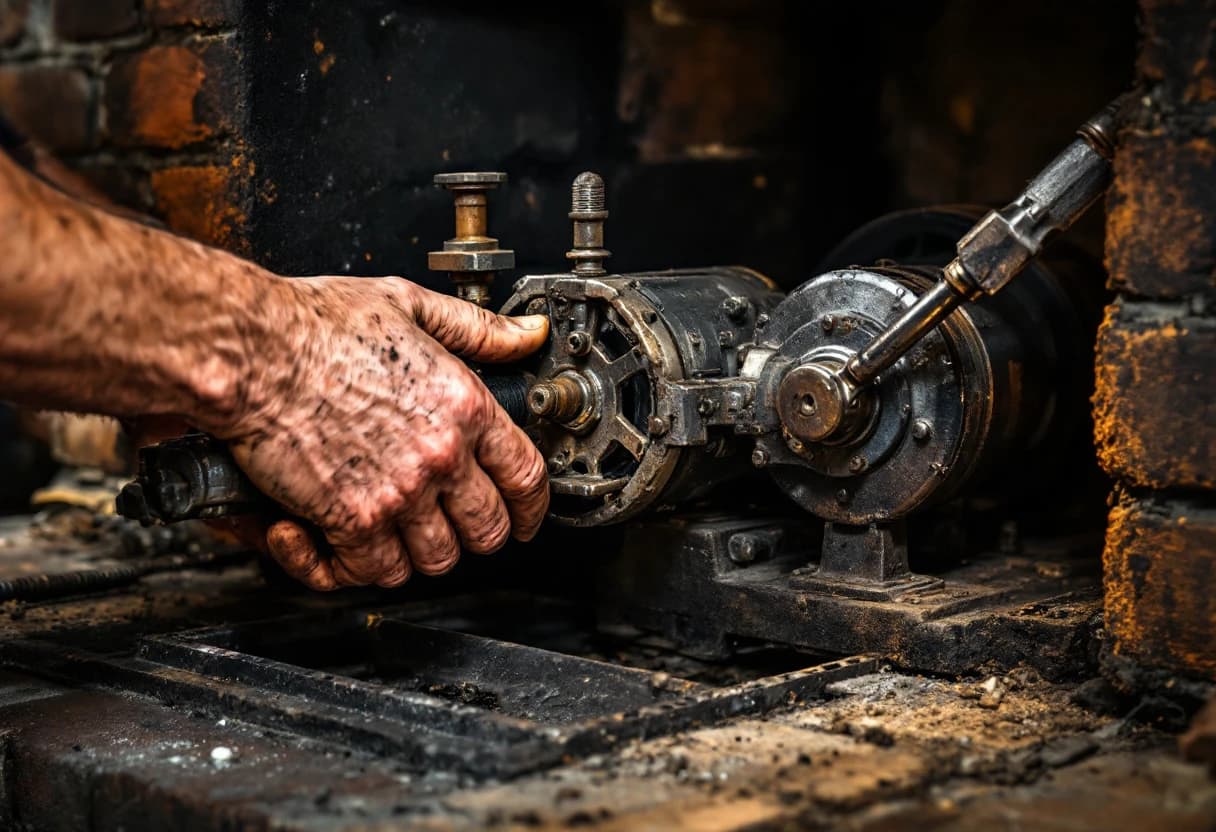
Reach up past the lintel of your fireplace and find the handle - the one that grinds, sticks, or spins uselessly when you try to move it. That is your damper, the valve that decides whether your chimney is open or closed, and in our experience it is the most neglected moving part in any house in Norwood. When it works, you never think about it. When it fails, you pay for it two ways at once: a damper stuck open pours your heated air up the flue every hour of the winter, and a damper stuck closed fills the living room with smoke the moment you strike a match. Upside Down Chimney Sweeps repairs and replaces dampers across Greater Boston.
Most fireplaces built before the 1990s use a throat damper: a cast-iron frame mortared into the masonry just above the firebox, with a pivoting iron plate operated by a poker-style, rotary, or ratchet handle. Cast iron in a chimney throat lives a hard life. Rain and snowmelt coming down an uncapped flue pool on the plate and rust the hinge pins. Falling creosote flakes pack the frame channels until the plate cannot seat. The heat of a hot fire - or the violence of a chimney fire - can warp the plate so it never closes flat again. Give it a few decades of Norwood winters and you get exactly what we find on service calls: handles seized solid, plates rusted through, hardware lying in the ash dump.
Here is what a failed damper costs you in plain numbers. A typical open fireplace flue is a hole of forty square inches or more connected directly to outdoor air, and a chimney is engineered to pull air upward - which it does year-round, fire or no fire, dragging your furnace-heated air with it. Energy auditors compare an open damper to leaving a window cracked all winter, and in a heating climate like Eastern Massachusetts that shows up as real money on oil and gas bills. Even a damper that technically closes rarely seals: cast iron seats metal-on-metal with no gasket, and a warped or rust-pitted plate can leak a steady, expensive draft you can feel with a bare hand on a cold night.
Our approach is to fix what is fixable and upgrade what is not. Many seized dampers can be freed, cleaned, and rebuilt with new pins and handles at modest cost. When the plate or frame is too far gone - or when you want an actual airtight seal - we install a top-sealing damper at the flue exit: a spring-loaded lid with a silicone rubber gasket, operated by a stainless cable dropping down to a handle in the firebox. It seals like a storm door instead of a rusty pot lid, doubles as a rain and animal barrier, and keeps the whole flue warmer so fires start with less smoke roll-back. We work per NFPA 211 and check the full flue while we are in there. Call (781) 653-5644 to get the valve on your chimney working again.
What Our Damper Repair Service Covers
1Damper Inspection and Diagnosis
Before touching a wrench, we diagnose. With a light and mirror - and a camera when the situation warrants - we examine the damper frame, plate, hinge pins, and handle linkage, check how the frame is seated in the smoke chamber masonry, and look for the underlying cause: water rust from a missing cap, creosote packing, warping from overfiring, or simple mechanical wear. A damper that failed because water is coming down the flue will fail again unless the water is addressed, so the diagnosis covers the system, not just the part.
2Throat Damper Free-Up and Rebuild
A large share of the seized dampers around Norwood do not need replacement - they need service nobody has done since the house was built. We remove the plate where the design allows, wire-brush rust scale off the frame channels and seat, clear packed creosote and mortar debris, treat the pivot points with a high-temperature lubricant that will not bake off, and reinstall with new pins, clips, or handles as needed. The result is a plate that swings freely and seats as well as its casting allows, at a fraction of replacement cost.
3Throat Damper Plate and Assembly Replacement
When a plate is rusted through, cracked, or warped beyond seating, we replace it. Many classic damper designs take direct replacement plates and hardware; where the full frame has failed, we can cut out and replace the assembly or, more often, recommend bypassing the throat entirely with a top-sealing damper - because chiseling a mortared cast-iron frame out of a smoke chamber is invasive and usually not the best use of your money. We reset loose frames in refractory mortar rated for the heat, never ordinary cement, so the repair survives the fireplace's temperature swings.
4Top-Sealing Damper Installation
Our most-recommended upgrade: a damper mounted at the top of the flue with a gasketed, spring-loaded lid, opened and closed by a stainless steel cable running down to a bracket in the firebox. Closed, the silicone gasket gives a genuinely airtight seal that cast iron cannot match - independent comparisons commonly credit gasketed top dampers with cutting fireplace standby heat loss dramatically. It also closes the flue to rain, snow, and animals, and keeps the flue column warmer, which improves start-up draft. We install units sized to your tile and verify smooth cable operation from the hearth.
5Gas Appliance Damper Clamps and Safety Compliance
If your fireplace has vented gas logs, the damper must be blocked permanently open with a clamp - that is a requirement of the fuel gas code and every log manufacturer's instructions, because a closed or partially closed damper over burning gas logs sends carbon monoxide into the room. We install proper damper clamps during conversions, verify clearances, and check for the incomplete-combustion sooting that signals a venting problem. If you have gas logs and a damper that still closes freely, that is a safety correction we should make this week, not this season.
6Draft and Smoke Problem Correction
Dampers get blamed for smoke problems they did not cause, and vice versa, so we evaluate the whole draft path while we are in the firebox: throat sizing, smoke chamber condition, flue height, and cap or termination issues. A partially opening damper genuinely will choke a fire and roll smoke past the lintel - but so will a debris-blocked flue or a too-short chimney. Because we diagnose the full system per NFPA 211 inspection practice, you get the actual fix instead of a new damper bolted onto an unsolved problem.
Why Damper Repair Matters for Norwood Homes
The damper is the only thing standing between your heated living space and a vertical pipe to the winter sky. Every hour it fails to seal, your heating system replaces the warm air the chimney pulls out - and in an oil- or gas-heated home in Norwood, that is not an abstraction, it is a line item. The physics is relentless: warm indoor air rises up the flue, cold outdoor air infiltrates elsewhere to replace it, and the furnace runs to reheat it, all night, all season. A gasketed damper that actually seals is one of the fastest-payback energy repairs a fireplace-owning household can make, typically recovering its cost within a few heating seasons.
The safety stakes run in both directions. A damper that will not open fully chokes draft, and poor draft is how smoke - and the carbon monoxide riding in it - ends up in the room instead of the sky. A damper closed over vented gas logs is more dangerous still, because gas burns clean enough that nothing visible warns you the exhaust is spilling indoors; this is exactly why code requires those dampers clamped open. And a damper plate warped by a past chimney fire is physical evidence that flue temperatures went somewhere they never should - a finding that, per NFPA 211, justifies a Level 2 camera inspection of the liner before the next fire is lit.
There is also the slow damage a dead damper invites. Stuck open, the flue becomes a highway for rain, snow, animals, and insects straight into the firebox; the moisture rusts what is left of the hardware, feeds the acidic creosote sludge that eats smoke chamber mortar, and drives the musty fireplace odor that fills houses on humid summer days. Stuck closed, the flue traps that same damp air with no circulation at all. Either way the deterioration compounds season over season, which is why we treat a failed damper as an early-warning light for the whole lower chimney - and why fixing it promptly is cheaper than fixing what follows it.
Nor'easters give chimneys in Norwood a beating that ordinary storms never match. These coastal systems drive rain and snow horizontally for hours at a time, forcing water against the sides of a chimney rather than politely down onto its cap. Wind-driven rain exploits every weakness: hairline cracks in the crown, thin spots in mortar joints, and lifted flashing at the roofline all become entry points under that kind of pressure. Homeowners often discover the aftermath weeks later, as a ceiling stain near the chimney or a damp, smoky odor in the firebox. After a hard nor'easter season, a careful inspection of the crown, flashing, and masonry is not paranoia; it is how storm damage gets caught while the fix is still small.
Signs You Need Damper Repair in Norwood
- The damper handle spins, flops, or moves without any corresponding movement of the plate.
- The plate is seized shut, seized open, or takes two hands and a fireplace poker to move.
- You feel a steady cold draft spilling from the fireplace opening all winter even with the damper closed.
- Smoke rolls into the room when you light a fire, then improves as the flue warms - a classic partially opened damper.
- Rust flakes, scale, or pieces of metal hardware appear on the grate or firebox floor.
- The handle grinds, screeches, or binds mid-travel instead of swinging smoothly.
- You can see daylight or feel airflow around the closed plate with a hand in the throat.
- The fireplace exhales a musty, smoky odor into the house on humid summer days.
- The damper never sat right again after a chimney fire or an especially hot burn.
- You have vented gas logs and the damper still closes freely - a code and carbon monoxide problem.
How the Job Goes, Step by Step
1Full damper and flue evaluation
We inspect the damper assembly from the firebox with light, mirror, and camera as needed - plate, frame, pins, and handle linkage - and assess the smoke chamber and flue above it, since dampers rarely fail in isolation. We identify the root cause, whether that is water intrusion, creosote packing, warping, or plain wear, and photograph the condition so you can see the mechanism yourself.
2Repair-first free-up and rebuild
Where the castings are sound, we service rather than sell: plate removed if the design allows, frame channels and seat wire-brushed clean, packed debris cleared, pivots treated with high-temperature lubricant, and worn pins, clips, or handles replaced with matched hardware. Most seized dampers leave this step swinging freely, and we tell you honestly how well the refurbished plate can be expected to seat and seal.
3Component or assembly replacement
If the plate is rusted through or warped beyond seating, we fit a replacement plate or hardware set matched to the damper's design, resetting loose frames in heat-rated refractory mortar. When the whole throat assembly is beyond saving, we lay out the options and costs plainly - full frame extraction versus a top-sealing damper that bypasses the throat - so you choose with real numbers instead of pressure.
4Top-sealing damper installation when it is the right call
For airtight sealing or unsalvageable throat dampers, we mount a gasketed top-sealing damper on the flue exit, bed it in high-temperature sealant, run the stainless control cable down the flue, and anchor the operating bracket in the firebox where you can reach it comfortably. The old throat plate is fixed open or removed so the two dampers can never fight each other.
5Operation test and homeowner walkthrough
We cycle the damper through full travel repeatedly, verify the seal by feel and by light test, and confirm draft behavior at the firebox. Then we hand it to you: how the control works, how firmly to seat it, what maintenance it needs - which for a top damper is almost none - and when the damper should be left open, including the always-open rule for vented gas logs. You get before-and-after photos with your service record.
Local Knowledge: Damper Repair in Norwood
Norwood grew rapidly in the early 1900s, and the neighborhoods around the center still carry two-family homes and Victorians from that era, most with their original brick chimneys. Postwar capes and ranches fill out the outer neighborhoods toward Westwood and Walpole. Century-old masonry above the roofline is a routine repair item across town.
Norwood's compact, walkable center around the Town Common and its landmark municipal building tower reflect a town that built out early and densely. Many chimneys here have passed the hundred-year mark, and original terracotta liners from the 1910s and 1920s are frequently cracked or missing. Homes converted from oil to gas heat also commonly need flue resizing or relining.
We regularly handle damper repair calls in Norwood and the surrounding towns of Westwood, Walpole, Canton, Sharon — so scheduling is fast and our pricing reflects local conditions, not guesswork.
There is a quiet advantage in chimney care: the best time to schedule is precisely when nobody is thinking about chimneys. Spring and summer appointments book quickly and without the fall backlog. If an inspection uncovers something significant, like a failing liner or a deteriorated crown, you have months of good weather to plan and complete the repair instead of scrambling before the holidays. Timelines for masonry work are friendlier when crews are not overbooked. And a clean flue in May means no creosote smell all summer and one less item on the autumn to-do list. Calling a sweep in the off-season feels premature right up until October arrives and proves it was foresight.
Why Choose Upside Down Chimney Sweeps
We built this company on the belief that chimney work should follow written standards, not folklore. Our sweeping and inspection procedures track NFPA 211, the National Fire Protection Association's standard for chimneys, fireplaces, and vents, along with the best practices promoted by the Chimney Safety Institute of America. That means we do not eyeball a flue and pronounce it fine; we examine accessible portions methodically, note the condition of liners, crowns, caps, and flashing, and classify creosote honestly by stage. Standards protect you in a second way, too: when we recommend a repair, we can point to the specific condition and the specific guidance behind the recommendation, so you are never asked to take an expensive claim on faith.
Damper Repair FAQs — Norwood, MA
Should I repair my old damper or replace it entirely?
What exactly is a top-sealing damper, and why do you recommend them so often?
How much does damper repair or replacement cost in the Boston area?
Can I close the damper to save heat if I have gas logs?
Why does cold air still pour in when my damper is closed?
My damper is stuck - can I just hit it with penetrating oil myself?
Do you need roof access to fix a damper?
How much energy does a leaky damper actually waste?
Book Damper Repair in Norwood
Chimney calendars around Norwood fill fastest exactly when you most want an appointment, so the best time to call is before the season demands it. Whether that means a sweep before the first fire, a repair while the weather still favors masonry work, or an inspection simply because it has been more than a year, Upside Down Chimney Sweeps can get you scheduled with one call to (781) 653-5644. We will confirm the scope, give you an honest price, and show up when we said we would. The homeowners who never seem to have chimney emergencies are, almost without exception, the ones who made this call a little earlier than they strictly needed to.
Book Damper Repair in Norwood
Our Melrose shop is 21 miles away — scheduling in Norwood is fast. Call (781) 653-5644.
Mon–Sat: 7:00 AM – 7:00 PM · Emergency service available