
Pembroke, MA · Plymouth County
Wood Stove & Insert Services in Pembroke, MA
Wood stove and insert installation, full-liner hookups, annual stove sweeps, gasket and firebrick service, and honest advice on running a stove safely in an old house.
A typical stove or insert installation with a full stainless liner runs $3,000–$6,000 in the Boston area, while annual stove sweeps and tune-ups generally run $250–$450.
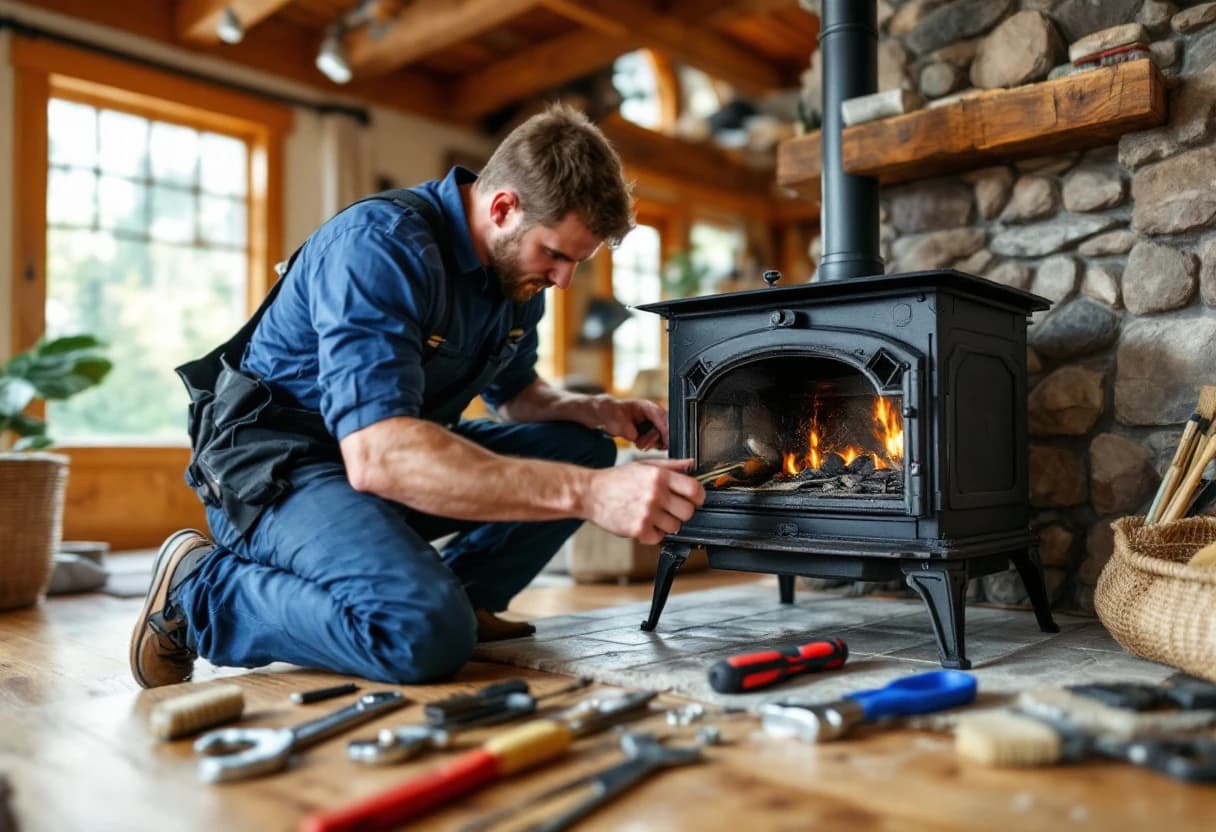
The safety standard that governs our trade, NFPA 211, is refreshingly blunt: chimneys, fireplaces, and vents should be inspected at least once a year and cleaned whenever needed. Not when smoke backs up, and not just when a home sale requires it; every year. There is a good reason the standard reads that way. Chimney hazards such as glazed creosote, cracked flue tiles, and blocked vents rarely give a homeowner in Pembroke any warning that a trained eye would not catch first. Upside Down Chimney Sweeps builds every visit around that annual-inspection principle, following the methods promoted by the Chimney Safety Institute of America, so your fireplace stays the safest kind of pleasure: a well-maintained one.
A wood stove is the hardest-working appliance in any house that has one. Where an open fireplace sends most of its heat up the flue and might burn thirty evenings a year, a stove in a Pembroke home often runs around the clock from Thanksgiving to April, radiating steadily through nor'easters and power outages alike. That workload is exactly why stoves demand more disciplined installation and maintenance than anything else we service. Every shortcut taken on a stove install, an uninsulated flue, a slammer hookup, a clearance shaved to make the hearth fit, gets stress-tested a hundred-plus burn days a year. Our job is to make sure the system holds up to that test.
The physics of a stove flue are unforgiving. Modern EPA-certified stoves burn efficiently, which means less waste heat goes up the chimney, which means the flue runs cooler than the old smoke dragons ever did. Flue gases below roughly 250 degrees let creosote condense on the liner walls, and repeated slow, smoldering burns build it toward stage-3: a hard, glossy, tar-glazed deposit that ordinary brushes cannot remove and that burns at ferocious temperatures if it ignites. The defense is a correctly sized, insulated liner that keeps gases hot to the cap, plus dry wood and an annual sweep. Get those three right and a stove is remarkably safe; get them wrong and it is the leading cause of the chimney fires we get called about.
Inserts deserve special mention because so many were installed badly. For decades, stoves and inserts were shoved into fireplaces with a short connector pipe dumped into the open flue, the so-called slammer install. The oversized masonry flue cools the smoke immediately, creosote rains onto the smoke shelf where no brush reaches it, and draft suffers because the stove cannot pressurize a cavern. NFPA 211 and every insert manufacturer now require a full liner from the flue collar to the chimney top. If your insert predates that practice, or you bought a Pembroke home and have no paperwork on how the stove was connected, that is worth a camera inspection before you light another fire.
Upside Down Chimney Sweeps installs, connects, sweeps, repairs, and troubleshoots wood stoves and inserts across Greater Boston and Eastern Massachusetts. We handle full-liner installations with insulated UL-listed stainless systems, hearth pad and clearance corrections, gasket and firebrick replacement, catalytic combustor checks, draft problem diagnosis, and removal of old units. We follow NFPA 211 and the manufacturer's installation manual on every job, and we put what we did in writing with photos, which your insurance carrier may ask for and your future buyer certainly will. Thinking about adding a stove, or unsure about the one you inherited? Call (781) 653-5644 and we will give you a straight assessment.
What Our Wood Stove Services Service Covers
1Stove and Insert Installation
We install freestanding stoves and fireplace inserts to the letter of the manufacturer's manual and NFPA 211: clearances to combustibles verified with a tape measure rather than optimism, hearth protection sized and rated for the unit, and the flue connection built from listed components. Before any installation we confirm the chimney can serve the stove, because a beautiful new stove on a compromised flue is a liability. We coordinate permits and inspections where your municipality requires them, and we leave you with the documentation package your insurer wants to see.
2Full Stainless Liner Hookups
Every insert we install gets a continuous insulated liner from the flue collar to the termination, usually six-inch heavy-gauge 316Ti stainless rated for solid fuel. The insulation keeps flue gases above the creosote condensation threshold in a January cold snap, which is when an uninsulated exterior chimney runs coldest and gums up fastest. Freestanding stoves venting into masonry chimneys get the same treatment through a listed thimble and tee. If you already own a slammer install, we convert it to a full liner and show you the before-and-after draft difference.
3Annual Stove Sweeps and Creosote Removal
Stove flues earn their sweep. We brush the liner from the top or bottom with rods and heads matched to the liner so we clean it without scoring it, empty the tee cap, vacuum the connector pipe, and inspect everything we just cleaned. Where we find glazed stage-3 creosote we treat it with chemical modifiers over one or more visits until it can be mechanically removed, and we tell you which burning habits created it. Per NFPA 211, solid-fuel systems should be inspected annually and swept as needed; heavy burners often need midwinter service too.
4Gasket, Firebrick, and Component Service
A stove is a machine with wearing parts. Door and glass gaskets crush and harden over a few seasons, and a leaking gasket feeds the fire uncontrolled air, which overfires the stove and shortens its life. Firebrick liners crack and crumble, baffle boards sag, catalytic combustors clog and deactivate, and air controls seize. We stock and service all of it: gasket replacement with the correct diameter and density rope, firebrick and baffle replacement, combustor cleaning or replacement, and control lubrication, usually in the same visit as your annual sweep.
5Draft and Performance Troubleshooting
Backpuffing when you open the door, smoke smell upstairs, a fire that sulks no matter how dry the wood, glass that blackens in an evening: these are diagnosable symptoms, not stove personality. We measure draft, inspect the liner and cap, check gaskets, evaluate flue height against the roofline, and look at the house itself, because tight modern air sealing and competing exhaust fans starve stoves of makeup air. Then we fix the actual cause, which is cheaper than replacing a stove that was never the problem.
6Stove Removal and Chimney Restoration
When a stove reaches the end of the road, or a new owner in Pembroke inherits an ancient unlisted unit no insurer will touch, we handle the exit: disconnecting and hauling out the stove, pulling any old liner or thimble hardware, sealing the breach in the chimney properly, and restoring the fireplace to open-burning service if that is the goal, including whatever reline the open fireplace itself needs. We can also advise on replacement units, since a modern EPA stove burns cleaner on a third less wood than what it replaces.
Why Wood Stove Services Matters for Pembroke Homes
Heating with wood concentrates risk in a way occasional fireplace use never does. A stove flue sees more burn-hours in one winter than most open fireplaces see in a decade, so small installation flaws compound quickly: an uninsulated liner grows creosote by December, a shaved clearance bakes the same stud all season, an unswept tee cap fills and chokes the draft. The chimney fires we respond to across Eastern Massachusetts trace overwhelmingly to solid-fuel systems, and almost every one had a preventable cause sitting in plain sight. Installation to the listing and an annual sweep are not bureaucratic box-checking; they are specifically the two habits that keep wood heat as safe as it is satisfying.
There is also a paperwork reality that catches homeowners off guard. Insurance carriers in Massachusetts routinely ask about wood stoves at policy renewal or after a claim, and an undocumented, unpermitted, or visibly non-compliant installation gives them leverage exactly when you need them most. The same applies at resale: a home inspector who finds a slammer insert or an unlisted stove will flag it, and the buyer's first question is whether it was professionally installed. A stove installed per the manual and NFPA 211, with photos, permit records, and sweep receipts, is an asset. The identical stove without that paper trail is a negotiation problem. We build the paper trail into every job.
Finally, correct setup is the difference between wood heat that works and wood heat that wears you out. A stove on a properly sized insulated liner lights easily, holds an overnight burn, keeps its glass clean, and coaxes a full winter from three cords instead of five. The same stove on a cold oversized flue fights you at every reload and eats wood without warming the room. Around Pembroke, where a hard nor'easter can take the power out for days, a well-installed stove is also genuine resilience: heat that needs no electricity, no oil delivery, and no gas line. It is worth doing properly, and it is not much more expensive to do properly.
The stretch of chimney above your roofline lives a harder life than any other masonry on a Pembroke home. It takes weather from all four sides, gets no shelter from eaves or landscaping, and endures the sharpest temperature swings on the property, warmed from within by flue gases while winter air holds the exterior far below freezing. The crown, the concrete surface sealing the top of the stack, bears the worst of it and is often built too thin in the first place. Small crown cracks admit water directly into the chimney's core, where freeze-thaw pressure spreads the damage downward out of sight. This is why a professional inspection pays so much attention to the top three feet of a chimney.
Signs You Need Wood Stove Services in Pembroke
- Your insert vents into the open fireplace flue with a short connector instead of a full liner to the top.
- Smoke puffs back into the room when you open the stove door to reload.
- The stove glass blackens within a day or two even when burning dry, seasoned wood.
- You see shiny, tar-like glaze inside the stovepipe or flue rather than soft, brushable soot.
- A dollar bill closed in the door gasket pulls out with no resistance.
- Firebrick inside the stove is cracked, crumbling, or missing pieces.
- You smell smoke upstairs or in adjacent rooms while the stove is running.
- The stove has not been swept since last heating season, or you cannot remember the last sweep.
- The chimney serving the stove has ever had a chimney fire, even one that seemed minor.
- You bought the house with the stove in place and have no documentation on the installation.
How the Job Goes, Step by Step
1Site and Chimney Evaluation
We start with the chimney, not the stove: a camera scan of the flue, measurements of height and interior dimensions, and a check of clearances, hearth, and floor structure. For existing stoves, we document how the unit is actually connected. This visit tells us whether your plan is straightforward, needs a liner, or needs rethinking before money is spent.
2System Specification and Quote
We spec the installation from the appliance manual and NFPA 211: liner diameter and alloy, insulation, hearth protection dimensions, clearance solutions such as listed shields where the room is tight, and every fitting in between. The written quote itemizes all of it, flags any permit your town requires, and gives you a realistic installation date.
3Liner and Venting Installation
Installation day starts up top. We run the insulated stainless liner the full height of the chimney, connect it below through a listed tee or direct to the insert collar, and finish the top with plate, storm collar, and a solid-fuel-rated cap that keeps out rain and animals without choking draft in a snowstorm.
4Stove Placement and Hookup
The stove or insert is set on its rated hearth protection, leveled, and connected with listed pipe, joints secured and oriented correctly. We verify every clearance against the manual one final time with the unit in its exact finished position, because a stove two inches out of place can void the listing. Surrounds and trim go on last.
5Break-In Fire and Operating Tutorial
We light the first fire with you standing there. Paint on a new stove cures with some odor for the first burns, and we walk you through that, plus air control operation, top-down lighting, reload technique, overnight burns, and how to read your glass and smoke for signs you are burning too cool. Good operation is half of creosote prevention.
6Documentation and Maintenance Plan
You receive the full record: photos of the liner run and connections, the manufacturer manuals, permit and inspection paperwork where applicable, and warranty registration. We set an annual sweep reminder and tell you honestly whether your burn rate calls for a midwinter check. When your insurer asks who installed the stove, the answer is in your folder.
Local Knowledge: Wood Stove Services in Pembroke
A good share of Pembroke's housing began as seasonal cottages around Furnace Pond, Oldham Pond, and the town's other ponds, later winterized into year-round homes, often with retrofit wood stoves and added flues. Mid-century capes and ranches line the older roads, while colonial-style subdivisions from the 1980s onward fill the rest. Retrofit stove installations here deserve close inspection.
Pembroke keeps a semi-rural, ponds-and-bogs character, with cranberry bogs still working and a herring run at Luddam's Ford each spring. Wood-stove heating is common and many homes burn through several cords a winter, so creosote buildup is a recurring issue. Converted lake cottages often have undersized or improvised chimneys that were never designed for daily winter burning.
We regularly handle wood stove services calls in Pembroke and the surrounding towns of Hanover, Hanson, Marshfield, Norwell — so scheduling is fast and our pricing reflects local conditions, not guesswork.
A chimney runs on a yearly rhythm, and working with that rhythm is easier than fighting it. Late summer and early fall are for sweeping and inspection, ahead of the rush and the first fires. Winter is for burning well: seasoned wood, hot fires, and attention to anything that suddenly changes, from draft to odor. Spring is for assessment, when winter damage is fresh and visible and the flue holds a season's worth of creosote worth removing. Summer is for masonry, when warm weather lets mortar, crowns, and waterproofing cure as designed. Homeowners who follow that cycle rarely face emergencies, because every problem gets noticed in the season before it would have become one.
Why Choose Upside Down Chimney Sweeps
People ask about the name. Upside Down Chimney Sweeps comes from how we approach every job: from both ends. Plenty of problems hide from a technician working only at the hearth, and just as many hide from one working only on the roof. So we look up the flue from the firebox and down from the chimney top, check the crown and cap where weather attacks first, and examine the attic and rooflines where leaks leave their earliest evidence. Turning the routine upside down is a small discipline that catches the cracked tile, the failing flashing, and the nesting animals that a quicker visit would miss. It is a slightly odd name that stands for exactly the thoroughness you are hiring.
Wood Stove Services FAQs — Pembroke, MA
How often does a wood stove chimney really need to be swept?
What is a slammer install and why does it matter?
Can I install a wood stove myself and just have you inspect it?
Why does my stove smoke into the room when I open the door?
What does it cost to install an insert or stove with a full liner?
How can I tell if I have dangerous creosote buildup?
Does burning wood in an older home create special problems?
Is a wood stove worth it compared to my oil or gas heat?
Book Wood Stove Services in Pembroke
If something prompted you to read this far, a smell, a stain, a sluggish draft, a chunk of mortar in the firebox, treat it as your chimney asking for help while the help is still simple. Small chimney problems in Pembroke do not stay small through many Massachusetts winters; water and freeze-thaw cycles see to that. Call Upside Down Chimney Sweeps at (781) 653-5644 and describe what you have noticed. We will tell you honestly whether it sounds urgent, get you scheduled accordingly, and put trained eyes on the actual problem instead of guesses. Acting on an early sign is the cheapest chimney decision you will ever make, and it starts with a single call.
Book Wood Stove Services in Pembroke
Our Melrose shop is 32 miles away — scheduling in Pembroke is fast. Call (781) 653-5644.
Mon–Sat: 7:00 AM – 7:00 PM · Emergency service available