
Quincy, MA · Norfolk County
Chimney Cap Installation & Replacement in Quincy, MA
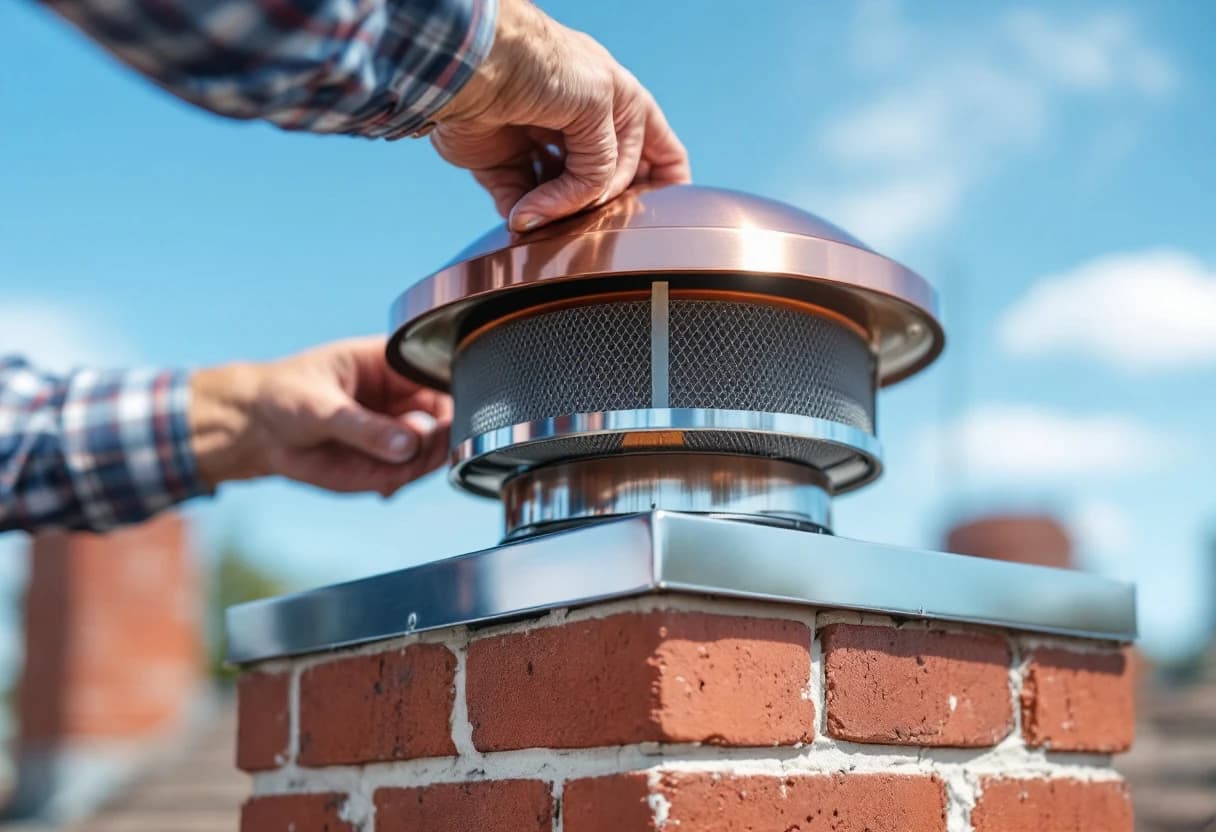
An uncapped flue is an open hole in your roof. We install stainless and copper chimney caps sized for proper draft that keep out rain, squirrels, raccoons, and nor'easter downdrafts.
As a typical Boston-market range, most single-flue stainless caps run $250-$600 installed, while custom multi-flue and full-coverage outside-mount caps generally fall between $700 and $1,800 depending on size and fabrication.
The safety standard that governs our trade, NFPA 211, is refreshingly blunt: chimneys, fireplaces, and vents should be inspected at least once a year and cleaned whenever needed. Not when smoke backs up, and not just when a home sale requires it; every year. There is a good reason the standard reads that way. Chimney hazards such as glazed creosote, cracked flue tiles, and blocked vents rarely give a homeowner in Quincy any warning that a trained eye would not catch first. Upside Down Chimney Sweeps builds every visit around that annual-inspection principle, following the methods promoted by the Chimney Safety Institute of America, so your fireplace stays the safest kind of pleasure: a well-maintained one.
Think about what an uncapped chimney actually is: an open pipe, eight inches or more across, running from the sky straight into the middle of your house. Nobody in Quincy would leave a window that size open year-round, yet uncapped flues are everywhere - we see them weekly. Every rainstorm sends gallons of water down the tile. Every October, squirrels and raccoons go hunting for a warm vertical den. Every windy January night, gusts drive cold air and smoke back down into the living room. A chimney cap is the least expensive component on the entire chimney, and it prevents more categories of damage than any other single part. Upside Down Chimney Sweeps installs and replaces caps across Greater Boston.
A good cap does four jobs at once. First, it sheds rain and snow away from the flue, keeping water off the smoke shelf and damper where it mixes with creosote into an acidic sludge that eats metal and mortar. Second, its mesh screening keeps out wildlife - squirrels, raccoons, bats, and birds, including the chimney swifts that nest in open flues all over Eastern Massachusetts every summer. Third, that same mesh acts as a spark arrestor, catching glowing embers before they land on your roof or your neighbor's. Fourth, a properly designed hood disrupts the wind patterns that cause downdrafts, the reason some fireplaces puff smoke every time a nor'easter blows through.
Material choice matters more here than almost anywhere else on the house, because a cap lives in the harshest microclimate your property has: full weather exposure on top, hot corrosive flue gases underneath. The builder-grade galvanized caps sold at big-box stores routinely rust through in five to eight years, faster near the coast where salt air accelerates corrosion - the streaked orange stains running down so many chimneys in Quincy are dying galvanized caps announcing themselves. We install 304 stainless steel as our standard, 316 stainless for oceanfront exposure, and copper where the architecture calls for it. Stainless costs more up front and is dramatically cheaper per year of service.
Fit is the other half of the job. A cap that is undersized chokes the draft; screening with openings that are too fine clogs with creosote and can starve a wood fire of air; a cap merely friction-fit on the tile ends up in the yard after the first real coastal storm. We measure the flue, match the cap to the fuel and appliance it serves, anchor it mechanically, and check draft before we leave, following NFPA 211 guidance on termination and spark arrestor screening. If your chimney is bare, or the cap up there is rusting, rattling, or missing since the last storm, call (781) 653-5644 - this is a same-week fix that heads off thousand-dollar problems.
What Our Chimney Caps Service Covers
1Single-Flue Stainless Cap Installation
The bread-and-butter fix for most homes: a heavy-gauge 304 stainless steel cap sized to your clay flue tile, with three-quarter-inch mesh screening that arrests sparks and blocks animals without strangling draft. We measure the tile's outside dimensions rather than guessing from the ground, secure the cap with mechanical fasteners so nor'easter gusts cannot walk it loose, and confirm clearance above the flue outlet so exhaust exits freely. Lifetime-warranted stainless models are our default because replacing rusted galvanized caps every few years is money thrown off the roof.
2Multi-Flue and Custom-Fabricated Caps
Older housing stock around Quincy often carries two, three, or four flues in a single stack - fireplace, furnace, and water heater venting side by side. Rather than crowding individual caps that fight each other for space, we install a single multi-flue cap: a fabricated stainless or copper unit with one lid spanning the whole chimney top and screened sides around every tile. Custom fabrication handles odd tile heights, oval flues, and decorative requirements. One well-built unit protects every flue, looks intentional from the street, and eliminates the gaps animals exploit between separate caps.
3Full-Coverage Outside-Mount Caps
When a crown is aging or a chimney takes brutal weather exposure, we recommend an outside-mount cap: instead of clamping to the flue tile, it anchors to the outside faces of the masonry and roofs over the entire chimney top - crown included. This turns the cap into an umbrella for the whole termination, sharply slowing freeze-thaw deterioration of the crown and upper brick. For coastal properties and tall unsheltered stacks, it is the single best dollar-for-dollar protection upgrade available, and we fabricate them to fit stone, brick, and irregular chimney tops.
4Damaged and Rusted Cap Replacement
A failing cap often does damage on its way out: rust staining down the masonry, screen sections torn open by weather or raccoons, lids dented flat by ice, caps rattling loose enough to howl in the wind. We remove the old unit, clean up corrosion staining where the masonry allows, evaluate the flue tile the old cap may have been hiding, and install a correctly sized stainless replacement. If the tile's top edge turns out cracked or spalled - a very common find under dead caps - we can address it in the same visit rather than booking a second climb.
5Animal-Resistant Capping and Screening
Spring and fall bring a rush of wildlife calls: squirrels shredding nesting material onto smoke shelves, raccoon mothers denning on damper plates, birds down the tile. Capping is the permanent cure, but sequence matters - screening an occupied flue traps animals inside, which is both inhumane and, in the case of nesting chimney swifts, a violation of the Migratory Bird Treaty Act that requires waiting until the brood fledges. We verify the flue is clear or coordinate humane removal first, then install caps and screening that close the door for good.
6Draft and Downdraft Problem Solving
Some fireplaces smoke only on windy days, and the cause is usually at the termination: wind striking a roofline, tree canopy, or taller neighboring structure creates a pressure zone that shoves air down the flue. We evaluate the termination height against the roof per the standard ten-foot rule guidance in NFPA 211, then match a solution to the problem - a wind-directional cap that rotates like a weathervane to shield the outlet, a taller flue extension, or a redesigned hood. Guessing at caps for a draft problem wastes money; measurement fixes it.
Why Chimney Caps Matters for Quincy Homes
Water is the quiet cost of an open flue. Rain funneling down clay tile soaks the smoke shelf, rusts the damper until it seizes, dissolves the mortar parging in the smoke chamber, and keeps the flue interior damp enough that creosote turns acidic and attacks the tile joints. In winter, that moisture participates in the same freeze-thaw mechanics that destroy crowns and brick - except the damage happens inside the chimney where nobody sees it developing. An inspection camera tells the story vividly in homes around Quincy: capped flues look decades younger than uncapped twins of the same age. A few hundred dollars of stainless steel prevents nearly all of it.
The animal problem is not just noise in the walls. Nesting debris stacked on a smoke shelf or damper is kindling positioned directly above your firebox, and a blocked flue pushes combustion gases - including carbon monoxide - back into the house instead of up the stack. Furnace and water heater flues are especially dangerous when blocked, because oil and gas appliances vent continuously all winter and give none of the visual cues a smoky fireplace does. Dead animals in flues create odor and insect problems that linger for months. Every one of these scenarios ends with an emergency service call that costs multiples of what the cap would have.
There is also the matter of what leaves your chimney. Wood fires shed glowing embers, and on a dry, windy night an unscreened flue is a spark launcher aimed at your own roof and everything downwind of it. The spark arrestor mesh on a proper cap - three-quarter-inch openings per NFPA 211 guidance, tight enough to catch embers, open enough to breathe - is the reason capped chimneys rarely feature in ember-ignition fires. Add the downdraft protection that keeps smoke and cold air from blowing backward into the room, and a cap earns its keep in safety terms alone before you ever count the water damage it prevents.
The single greatest enemy of masonry in Quincy is not fire; it is water paired with our freeze-thaw climate. Brick and mortar are porous, and every rain or melting snowfall lets moisture soak in. When temperatures drop below freezing, that trapped water expands roughly nine percent, prying the material apart from within. When it thaws, the water sinks deeper into the newly opened pores and waits to freeze again. Massachusetts winters can cycle above and below freezing dozens of times, and each cycle does its increment of damage. The visible result is spalling: brick faces popping off, mortar joints crumbling, and crowns cracking. Keeping water out of the masonry in the first place is why caps, crowns, and waterproofing earn their keep here.
Signs You Need Chimney Caps in Quincy
- There is simply no cap on the flue - look up, and if you see open tile, that is the sign.
- Orange-brown rust streaks bleeding down the chimney from a corroding galvanized cap.
- You can hear the cap rattling or clanging on the roof during windy nights.
- Dripping sounds or actual water in the firebox during or after heavy rain.
- Scratching, scrambling, or chirping noises from the flue, especially in spring and early summer.
- Twigs, leaves, or shredded nesting material appearing on the smoke shelf or falling into the firebox.
- Smoke puffing back into the room on gusty days when the fire otherwise burns fine.
- The cap mesh is visibly clogged with creosote or the screen sections are torn open.
- A cap turned up in the yard or gutter after the last big storm.
- Persistent damp, smoky odors from the fireplace in humid summer weather.
How the Job Goes, Step by Step
1Flue measurement and termination evaluation
We start on the roof with a tape measure, recording the outside dimensions and height of every flue tile, the condition of the tile edges and crown, and the termination's height relative to the roofline. We also note what each flue vents - wood fireplace, oil burner, gas appliance - because fuel type drives cap selection. Photos come down from the roof with us so you see exactly what we measured.
2Cap selection matched to fuel and exposure
Based on the measurements, we recommend a specific cap: material grade for your exposure - 304 stainless inland, 316 or copper near salt water - mesh sizing appropriate to the fuel, single versus multi-flue versus outside-mount design, and any wind-directional or extended-height options if the fireplace has a history of downdrafts. You approve the exact unit and price before anything is ordered or installed.
3Old cap removal and flue-top preparation
If a failing cap is present, we remove it and inspect what it was covering - cracked tile edges, deteriorated crown sealant, and rust staining are common finds. We clear any nesting debris from the flue top, verifying first that no animals are inside, and clean the mounting surfaces so fasteners and sealant bond to sound material rather than to grit and corrosion flakes.
4Mechanical installation and sealing
The cap is anchored with corrosion-resistant mechanical fasteners - clamped to the tile or bolted to the masonry for outside-mount units - never friction-fit, because friction fits become projectiles in coastal storms. Where the design calls for it, we bed mounting flanges in high-grade sealant to close capillary paths. We then verify the lid height leaves adequate free area above the flue outlet so draft is unrestricted.
5Draft verification and final documentation
Before packing up, we confirm the flue draws properly with the new cap in place and check that every screened face is intact and secure. You receive after photos, the manufacturer's warranty documentation - lifetime on the stainless models we prefer - and honest notes on anything else we observed at the termination, from crown cracks to flashing wear, with no obligation attached. Most installations are complete within an hour or two.
Local Knowledge: Chimney Caps in Quincy
Quincy's housing runs from triple-deckers and two-families in North Quincy and Wollaston to capes and colonials in Merrymount, Squantum, and Houghs Neck. Many older foundations and some chimneys were built with granite from the city's own quarries. Multifamily buildings here often carry tall multi-flue stacks serving several units, which complicates both sweeping and relining.
The Granite City quarried the stone that built much of Boston, and its own masonry heritage runs deep. Neighborhoods along Quincy Bay and Wollaston Beach take direct salt air and wind off the water, which eats at mortar joints and rusts chimney caps and chase covers faster than inland. Coastal storm exposure makes flashing and crown condition worth checking annually here.
We regularly handle chimney caps calls in Quincy and the surrounding towns of Boston, Milton, Braintree, Weymouth — so scheduling is fast and our pricing reflects local conditions, not guesswork.
Winter is the season your chimney works hardest, and it deserves some attention even in mid-use. If you burn frequently, deposits accumulate faster than an annual schedule assumes, particularly when the wood is less than fully seasoned; heavy burners sometimes need a mid-season sweep. Winter is also when problems announce themselves: sluggish draft on cold starts, smoke odors migrating through the house, or a damper that suddenly stiffens. None of those should be ignored until spring. And if you ever suspect a chimney fire, however brief, stop using the fireplace and have the flue inspected before lighting the next one. We work straight through the winter for exactly these situations, and prompt attention keeps small issues small.
Why Choose Upside Down Chimney Sweeps
We built this company on the belief that chimney work should follow written standards, not folklore. Our sweeping and inspection procedures track NFPA 211, the National Fire Protection Association's standard for chimneys, fireplaces, and vents, along with the best practices promoted by the Chimney Safety Institute of America. That means we do not eyeball a flue and pronounce it fine; we examine accessible portions methodically, note the condition of liners, crowns, caps, and flashing, and classify creosote honestly by stage. Standards protect you in a second way, too: when we recommend a repair, we can point to the specific condition and the specific guidance behind the recommendation, so you are never asked to take an expensive claim on faith.
Chimney Caps FAQs — Quincy, MA
Does my chimney really need a cap?
What is the difference between stainless, galvanized, and copper caps?
My chimney has three flues - do I need three separate caps?
Will a chimney cap hurt my fireplace's draft?
There is an animal in my chimney right now - can you just cap it?
How much does chimney cap installation cost around Boston?
How long does installation take, and do you need anything from me?
What is the difference between a chimney cap, a crown, and a chase cover?
Book Chimney Caps in Quincy
Not sure what your chimney actually needs? That is the most common way these conversations start, and it is exactly what an inspection is for. Call Upside Down Chimney Sweeps at (781) 653-5644, and we will begin with a thorough look rather than a sales pitch. If the flue just needs sweeping, that is what we will tell you. If something more is developing, you will see it in photographs and hear it explained in plain English, with honest priorities instead of pressure. Homeowners across Quincy rely on us precisely because the diagnosis comes before the invoice. One appointment turns a vague, nagging worry into a clear plan, and that clarity alone is worth the visit.
Book Chimney Caps in Quincy
Our Melrose shop is 14 miles away — scheduling in Quincy is fast. Call (781) 653-5644.
Mon–Sat: 7:00 AM – 7:00 PM · Emergency service available