
Somerville, MA · Middlesex County
Chimney Leak Repair in Somerville, MA
Water finds every weakness in a chimney. We trace leaks to their true source — crown, flashing, masonry, or cap — and repair the cause, not just the stain.
Most chimney leak repairs in the Boston market run $350–$1,500 depending on the confirmed source, with cap and flashing reseals at the low end and crown rebuilds at the top.
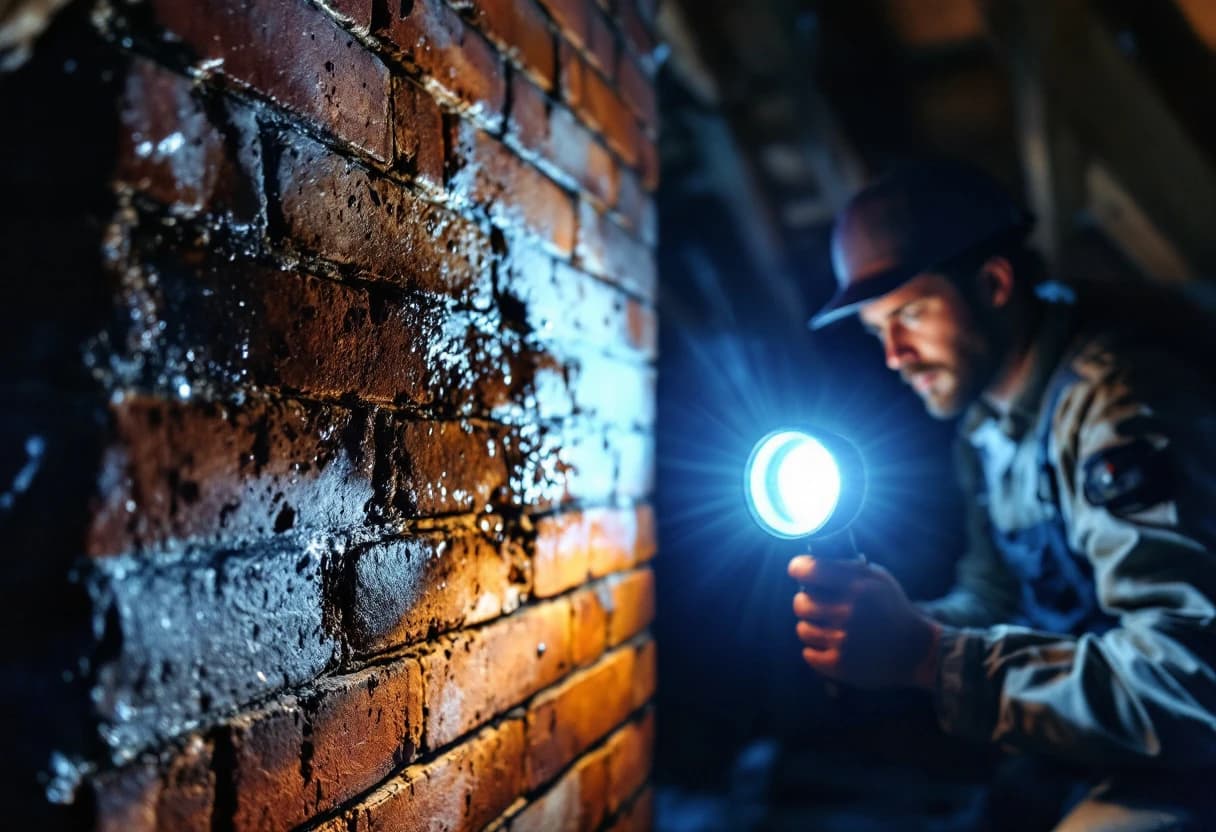
Our shop sits on Sewall Street in Melrose, which means Somerville is not the far edge of some sprawling service map for us; it is part of the neighborhood we drive every week. That proximity shapes how we work. We can schedule promptly, return quickly if a repair needs a second visit, and stand behind our workmanship the way only a local company can, because our reputation lives or dies within a few towns of home. Homeowners in Somerville call us for everything from routine sweeps to full masonry restoration, and every job gets the same treatment: careful protection of your home, a methodical inspection, and straight answers about what your chimney actually needs and what it does not.
A chimney leak almost never shows itself where it starts. Water slips in at a hairline crown crack or a lifted flashing corner, rides the outside of the flue tiles, tracks along a rafter, and finally surfaces as a brown stain on a ceiling six feet from the chimney itself. That is why chasing a chimney leak with a caulk gun so rarely works — the drip you can see is the end of the story, not the beginning. At Upside Down Chimney Sweeps, leak diagnosis is its own discipline: we work from the top of the chimney down and from the stain back up until the two paths meet, and only then do we talk about repairs. Homeowners across Somerville often call us after two or three failed fixes; we would rather be your first call.
Your chimney is the most weather-beaten structure on your property. Unlike a wall, which gets wet on one face and dries from the other, the masonry above your roofline takes rain, sleet, and wind-driven snow on all four sides at once. Brick is porous by design, and a single brick can hold a surprising amount of water. When that trapped water freezes, it expands roughly nine percent, and repeated freeze-thaw cycles — Massachusetts sees dozens each winter — pop the outer faces off bricks in a failure called spalling and grind mortar joints into sand. Every opened pore and joint lets in more water, so the deterioration accelerates on its own. A nor'easter that drives rain sideways for eighteen hours will find every one of those openings.
Because there are at least five common entry points — the crown, the cap, the flashing, the masonry field, and condensation forming inside the flue itself — we never guess. Our leak evaluations combine a roof-level inspection, an interior and attic inspection with a moisture meter, and, when the source is still ambiguous, a controlled water test that isolates one component at a time. Where we suspect hidden damage, or where the system's performance has changed, we recommend stepping up to a Level 2 inspection per NFPA 211, which adds a camera scan of the flue interior to the evaluation. The goal is simple: identify and repair the actual cause once, rather than resealing symptoms every spring and hoping this year is different.
We are based at 20 Sewall St in Melrose and repair leaking chimneys throughout Somerville and the rest of Greater Boston and Eastern Massachusetts. Much of the housing stock here — brick colonials, gambrel capes, triple-deckers converted from coal to oil to gas heat over a century — carries chimneys that are 80 to 120 years old and were never designed for modern appliance exhaust. That history shapes how these chimneys leak and how they should be fixed. If water is showing up anywhere near your chimney, call (781) 653-5644 and describe what you are seeing: we can usually tell you over the phone which evaluation makes sense and get you scheduled before the next storm system rolls in off the Atlantic.
What Our Leak Repair Service Covers
1Leak diagnosis and controlled water testing
Every leak repair starts with a documented diagnosis. We photograph the crown, cap, flashing, and masonry from the roof, then move inside to check attic framing, the chimney chase, smoke shelf, and firebox with a moisture meter. If the entry point is still ambiguous, we run a controlled water test — wetting one component at a time, from the bottom of the roofline up, while a second set of eyes watches inside. That sequence isolates the true source instead of blaming the most visible defect, and it is the reason our repairs stay fixed.
2Crown repair and resurfacing
The crown is the sloped concrete cap that sheds water off the top of the stack, and it is the single most common leak source we find. Builders often struck crowns from leftover mortar, which shrinks and cracks within a few seasons. We repair sound crowns with a flexible elastomeric crown coating that bridges hairline cracks and moves with thermal cycling, and we rebuild failed crowns in proper form — cast concrete with an overhanging drip edge and a bond break at the flue tile so expansion cannot split it open again.
3Flashing repair and resealing
Where the chimney passes through the roof, a layered metal system — step flashing woven into the shingle courses, counter-flashing let into the mortar joints above — is what keeps water out. We repair lifted or corroded sections, re-seat counter-flashing into freshly cut grooves in the mortar, and replace systems that were smeared over with roofing tar by a previous repair. On wide chimneys we add a cricket to divert water around the high side. When flashing is the confirmed source, this is a permanent fix, not a seasonal patch.
4Repointing and spalled brick replacement
Open mortar joints and spalled brick faces let water straight into the chimney's core. We grind failed joints to proper depth and repoint with mortar matched to the strength and color of the original — critical on older Somerville homes, where a modern high-Portland mix can actually accelerate damage to softer historic brick. Individually spalled bricks are cut out and replaced with compatible units. Sound repointing restores the masonry's ability to shed water, and it is often the difference between a repair now and a partial rebuild five years from now.
5Cap installation and chase cover replacement
An open flue swallows rain by the gallon — a straight shot down to the smoke shelf and damper, which is why rusted dampers and musty fireboxes are classic leak clues. We install stainless steel rain caps sized to the flue, with mesh that also keeps out squirrels, birds, and stray embers. On framed chase chimneys we replace rusted-through galvanized chase covers with fabricated stainless or aluminum covers that have proper cross-breaks and drip edges, eliminating the ponding that rots a chase from the top down.
6Water repellent and repair verification
Once the entry point is repaired, we protect the whole masonry field. We apply a vapor-permeable siloxane water repellent that stops brick and mortar from absorbing rain while still letting interior moisture escape — never a film-forming sealer, which traps vapor and makes spalling worse. Then we verify the work: photographs of everything completed, a hose test where appropriate, and a follow-up check after the next hard rain if the leak was chronic. You get clear documentation of what was found, what was done, and what to watch going forward.
Why Leak Repair Matters for Somerville Homes
Water is the slowest but most expensive failure mode a chimney has. A leak that produces one faint ceiling stain per storm is also quietly rusting your damper shut, dissolving the mortar joints between flue tiles, and soaking the framing that carries your roof around the chase. By the time drywall bubbles or paint peels, the hidden damage usually costs several times more than the visible repair would have. Catching a leak at the first stain — or at an annual inspection before any stain appears at all — is the cheapest moment you will ever have to fix it, and every storm you wait moves the price in one direction.
New England weather punishes hesitation. Water that enters a hairline crack in October does not sit quietly; it freezes and expands roughly nine percent, wedging the crack wider, then thaws, refills, and freezes again. A typical Massachusetts winter delivers dozens of these cycles, which is how a modest crown seal deferred in the fall becomes a multi-thousand-dollar crown rebuild by spring. Coastal towns take extra abuse: salt-laden air keeps masonry damp longer between storms and corrodes galvanized caps, chase covers, and flashing years ahead of their inland schedule. The climate here does not forgive an open pathway for long.
A wet chimney is a safety issue, not just a cosmetic one. Moisture mixes with creosote to form acids that eat clay flue tiles; missing mortar between tiles can let flue gases, including carbon monoxide, migrate into wall cavities and living space; and a rust-frozen damper can prevent a fireplace from venting properly at all. NFPA 211 calls for chimneys to be inspected annually precisely because this kind of deterioration does most of its work out of sight, inside the structure. Fixing the leak protects the flue, and inspecting the flue confirms the leak has not already done deeper damage than the stains suggest.
Greater Boston weather asks masonry to survive genuine extremes. A chimney in Somerville may face humid ninety-degree afternoons in July and single-digit nights in January, along with the dozens of freeze-thaw crossings in between that make southern New England one of the tougher masonry climates anywhere. Materials expand and contract with every swing, mortar fatigues, sealants age, and metal components like caps, dampers, and flashing corrode faster in our damp air. None of this means chimneys here are doomed; it means maintenance schedules imported from gentler climates simply do not apply. An annual inspection is the standard everywhere under NFPA 211, but around here it earns its keep almost every single year, usually by catching weather damage early.
Signs You Need Leak Repair in Somerville
- Brown or yellow water stains on the ceiling or walls near the chimney after heavy rain.
- Dripping sounds or dampness inside the firebox during or after storms.
- White, powdery efflorescence blooming on interior or exterior brick.
- Rust streaks on the damper, firebox floor, or metal chase cover.
- Peeling paint or bubbling drywall on the chimney breast or adjacent walls.
- Flakes of brick face or masonry debris collecting on the roof or at the chimney's base.
- Crumbling or missing mortar joints visible from the ground.
- A musty, damp odor from the fireplace, especially in humid summer weather.
- Standing water or dark staining on the smoke shelf behind the damper.
- Visible cracks or ponding water on the chimney crown.
How the Job Goes, Step by Step
1Tell us what you are seeing
Call (781) 653-5644 or book online and describe the symptom — where the stain is, whether it appears with every rain or only wind-driven storms, and how long it has been happening. Those details matter: leaks that only appear during nor'easters point toward flashing or masonry saturation, while a drip in every gentle shower points toward the crown or an open flue. We schedule the right evaluation from the start.
2Roof-level inspection
A technician gets on the roof and photographs every water-shedding component: crown condition, cap fit, chase cover, counter-flashing engagement in the mortar joints, step flashing under the shingles, and the masonry field itself. We probe suspect mortar joints and note spalling, efflorescence, and previous tar repairs. You see every photo — we want you looking at the same evidence we are.
3Interior and attic tracing
Inside, we check the attic sheathing and framing around the chimney with a moisture meter, then the smoke shelf, damper, and firebox. Water follows framing and the outside of flue tiles, so we map the wet path backward toward its highest point. When the interior path and the roof-level findings converge on one component, we have our answer; when they do not, we water test.
4Controlled water test when needed
Ambiguous leaks get a controlled hose test. We wet one zone at a time — the roof below the chimney first, then the flashing, then the masonry field, then the crown — for several minutes each while watching from inside. Because we isolate components in order from lowest to highest, the first zone that reproduces the leak is the confirmed source. It is methodical, occasionally tedious, and it eliminates guesswork.
5Written findings and a fixed price
You receive a written summary with photos, the confirmed or most probable source, and a fixed price for the repair — plus, where relevant, good-better options such as resealing versus fully replacing flashing. We will also tell you plainly when a problem belongs to the roofer rather than the chimney, and we coordinate with roofing contractors when a repair genuinely spans both trades.
6Repair, protect, verify
We complete the repair, apply breathable water repellent to the masonry where appropriate, and document everything with after photos. For chronic leaks we follow up after the next significant rain to confirm the interior stays dry. Our repairs carry a workmanship warranty, and we log your chimney's condition so next year's inspection has a clear baseline to compare against.
Local Knowledge: Leak Repair in Somerville
Somerville is the most densely populated city in New England, built out with triple-deckers, Victorian two-families, and brick rowhouses shoulder to shoulder on small lots. A single chimney stack often carries multiple flues serving separate units, and many buildings have been converted to condominiums with shared responsibility for the masonry. Coordinating that shared maintenance is half the job here.
From Prospect Hill, where an early American flag was famously raised in 1776, Somerville's rooftops stretch out in an unbroken field of brick stacks. Condo associations and multifamily owners here often discover chimney problems during real estate transactions, so inspection-driven work is constant. Tight lot lines and steep three-story roofs make proper staging and experience essential.
We regularly handle leak repair calls in Somerville and the surrounding towns of Cambridge, Medford, Arlington, Boston — so scheduling is fast and our pricing reflects local conditions, not guesswork.
A spring inspection is one of the smartest appointments on the chimney calendar. Burning season is finished, so the technician sees the flue at its dirtiest, and your sweep clears a full winter's creosote before it spends a humid summer hardening and generating the sour, smoky odor chimneys can develop in warm weather. Winter's freeze-thaw damage is fresh and visible, from crown cracks to failed mortar joints, and identifying it in April means repairs can be scheduled calmly rather than crammed into fall. Masonry work itself also wants warm weather, since mortar cures properly only above certain temperatures. Spring diagnosis, summer repair, fall enjoyment: that sequence is the whole strategy, and it starts with one appointment.
Why Choose Upside Down Chimney Sweeps
The chimney trade has an unfortunate reputation for scare tactics, and we decided early on to be the antidote. When Upside Down Chimney Sweeps inspects your chimney, you get three honest categories: what is a safety issue now, what is developing and worth budgeting for, and what is merely cosmetic. Most chimneys we see do not need dramatic intervention, and we say so plainly. When one genuinely does, we show you the cracked tile or the glazed creosote in photographs and explain the mechanism behind the risk, because an informed homeowner makes better decisions than a frightened one. We would rather earn a smaller invoice and a customer for life than win a big job and burn a bridge.
Leak Repair FAQs — Somerville, MA
How do you figure out where the leak is actually coming from?
Why does my chimney only leak during wind-driven rain?
Can't my roofer just caulk around the chimney?
What does chimney leak repair typically cost?
Is a leaking chimney actually dangerous, or just ugly?
My chimney seems to leak in winter even without rain. What is that?
Will homeowners insurance cover my chimney leak?
How quickly can you get someone out, and do you cover my area?
Book Leak Repair in Somerville
Here is our closing pitch, such as it is: no pressure, just an honest look. Call Upside Down Chimney Sweeps at (781) 653-5644 and schedule an inspection for your Somerville home. We will examine the chimney from top to bottom, show you photographs of what we find, and give you a written assessment with a clear estimate for any recommended work. Then the decisions are yours, made on evidence, on your timeline, with no obligation beyond the visit itself. If you want a second opinion, we welcome the comparison; our documentation travels well. That is the whole offer. We think it is how chimney service ought to work, and we would be glad to prove it at your house.
Book Leak Repair in Somerville
Our Melrose shop is 7 miles away — scheduling in Somerville is fast. Call (781) 653-5644.
Mon–Sat: 7:00 AM – 7:00 PM · Emergency service available