
Stoneham, MA · Middlesex County
Chimney Flashing Repair in Stoneham, MA
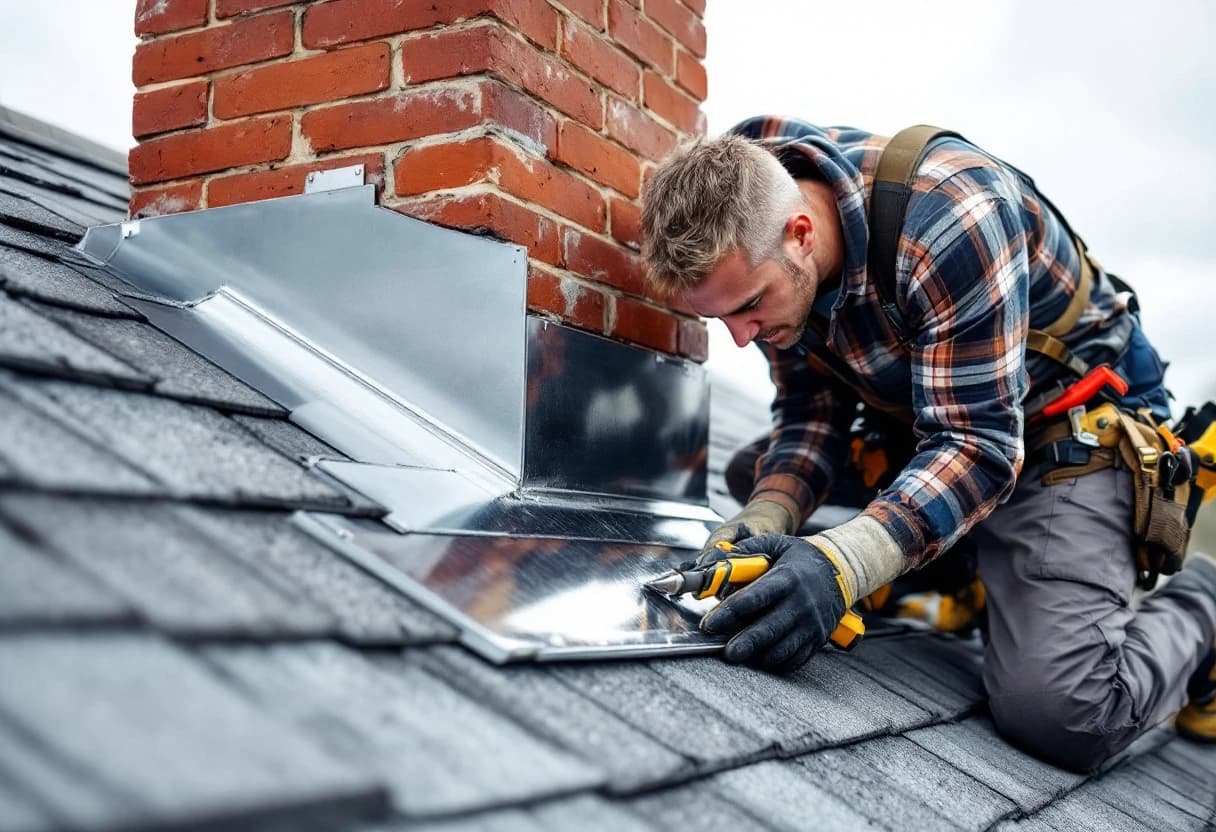
The joint where your chimney meets the roof fails before almost anything else on the house. We rebuild step and counter-flashing the right way — cut into the mortar, not smeared over it.
Typical flashing repairs across Greater Boston run $400–$1,200, with full step-and-counter-flashing rebuilds on large chimneys or steep roofs pushing toward the top of that range.
There is a particular pleasure to the first fire of the season, when the evenings in Stoneham turn crisp and the woodpile finally earns its keep. That first fire is also when a summer's worth of hidden trouble announces itself: a bird's nest in the flue, a damper rusted half-shut, or creosote left over from last winter waiting for a spark. The difference between a cozy October evening and a call to the fire department often comes down to whether anyone looked up the chimney beforehand. Upside Down Chimney Sweeps exists to make sure someone does. We sweep, inspect, and repair chimneys throughout Middlesex County, and we would much rather find a problem in September than have you discover it in January.
Two parts of your house meet at the chimney's base, and they refuse to move together. The roof deck expands, contracts, and flexes with every temperature swing and snow load; the masonry chimney, anchored to its own foundation, barely moves at all. Any rigid seal between them is doomed from the day it is installed. That is the entire reason chimney flashing exists: instead of gluing the two structures together, a properly built flashing system overlaps layers of bent metal so water is shed by gravity while each layer stays free to move. Built right, it outlasts the shingles around it. Built wrong — or smeared over with tar — it becomes the single most common source of chimney leaks we see across Stoneham.
A correct installation has distinct layers with distinct jobs. Step flashing consists of L-shaped pieces of metal, one woven into each course of shingles as the roof climbs past the chimney, so every piece hands water down onto the shingle below it. Counter-flashing is the second layer: metal let into a groove — a reglet — cut into the chimney's mortar joints, then bent down over the tops of the step pieces. This counter-stepped arrangement means water running down the brick face is thrown out over the steps, never behind them, and neither layer depends on adhesive to do its job. An apron protects the downhill face, and on the uphill side a back pan or cricket diverts the water the chimney dams up.
Around Boston, flashing dies in predictable ways. Galvanized steel rusts through — faster near the coast, where salt air is relentless. Counter-flashing that was surface-mounted with caulk instead of cut into the mortar peels away as the sealant fails. Nails back out of step flashing as the decking flexes through the seasons. Ice dams push meltwater up-slope and sideways, finding laps that shed downhill flow perfectly well. And on a remarkable number of roofs we inspect, someone has already answered a leak with roofing cement — a repair that buys a season or two, traps water behind it, and makes the eventual proper repair messier. If your chimney wears a black tar collar, water has been in there before.
Upside Down Chimney Sweeps rebuilds and repairs chimney flashing across Stoneham and the surrounding Greater Boston area from our home base in Melrose. We work both sides of the joint — mason enough to cut and repoint reglets correctly, roof-literate enough to weave steps into shingle courses without wrecking the field around them. Flashing sits exactly at the boundary where roofers and masons tend to point at each other; we take responsibility for the whole intersection instead. If you have stains near the chimney, a visible tar patch on the roof, or a roofer who told you the chimney is the problem, call (781) 653-5644 and we will get experienced eyes on it.
What Our Flashing Repair Service Covers
1Full flashing evaluation
We inspect the entire roof-to-chimney intersection from both sides: on the roof, we check step flashing engagement, counter-flashing seating, apron condition, fastener back-out, and any previous tar or caulk repairs; in the attic, we examine the sheathing and rafters around the chase for staining, delamination, and active moisture with a meter. Because flashing failures mimic crown and masonry leaks, we rule those out rather than assume. You get photos of everything and a straight answer about whether flashing is truly your problem — sometimes it is not, and we say so.
2Step flashing replacement
When steps are rusted, missing, or face-nailed through their vertical legs, we replace them properly. Shingle courses alongside the chimney are carefully lifted or removed, the old metal comes out, and new L-shaped steps go in — one per course, each overlapping the piece below, fastened to the deck rather than the masonry so the roof can move freely. Where conditions warrant, we bed the intersection in self-adhering ice-and-water membrane first, which matters enormously on the snow-loaded, ice-dam-prone rooflines common across Massachusetts.
3Counter-flashing cut into the mortar
This is the detail that separates a proper job from a caulk job. We grind a clean reglet into the mortar joints, following the joint line up the chimney in steps, insert the counter-flashing's bent edge into the groove, wedge it mechanically, and seal the joint with the right sealant — used as a gasket inside a groove, not as glue on a surface. Counter-flashing installed this way is held by the chimney itself and sheds water over the step flashing below it for decades.
4Crickets and saddles for wide chimneys
A chimney more than about 30 inches wide creates a dam on its uphill side, where snow, ice, and debris pile up and water ponds. Building convention and modern code guidance call for a cricket: a small peaked saddle framed behind the chimney that splits the flow and sends it around both sides. We fabricate and flash crickets on chimneys that never had one — common on the older housing stock around Stoneham — and rebuild failed ones. If your leak shows up on the chimney's high side, a missing cricket is a prime suspect.
5Material selection and upgrades
We work in aluminum, galvanized and stainless steel, copper, and lead-coated copper, and we will tell you honestly where each belongs. Aluminum is economical but should not sit against damp mortar for the long haul; copper costs more and can outlive two roofs; stainless shrugs off the coastal salt air that eats galvanized coatings in a decade. On historic homes we match existing copper work rather than mixing metals. The right choice depends on your roof's age, your budget, and your exposure — a coastal cape and an inland colonial do not get the same recommendation.
6Reglet repointing and roof integration
Flashing repair is masonry work as much as metal work. We repoint the joints we cut, match mortar color as closely as the wall allows, and address crumbling joints adjacent to the flashing line while we are up there — there is no sense seating new metal into failing mortar. We also coordinate cleanly with roofers: if your roof is being replaced, we can handle the chimney intersection as part of that project, and if we find shingle or decking problems beyond the flashing, we document them for your roofing contractor rather than pretending they do not exist.
Why Flashing Repair Matters for Stoneham Homes
Roof-to-chimney intersections fail earlier and leak worse than almost any other roof detail, and the damage lands where you cannot see it. Water entering at the flashing line runs down the outside of the chimney inside your walls, soaking sheathing, rotting rafters, and feeding mold in insulation long before any stain reaches the ceiling paint. We have opened attics where a slow flashing leak had been quietly destroying framing for years while the homeowner's only clue was a faint damp smell after storms. Flashing is inexpensive to fix relative to the carpentry it protects, and that ratio only gets worse with time.
Winters around Stoneham test flashing in ways gentler climates never do. Ice dams reverse the rules: instead of shedding downhill, water ponds behind frozen eaves and gets pushed uphill and sideways under laps that were never meant to be submerged. Freeze-thaw cycling works at the mortar joints that hold the counter-flashing, and snow loads flex the roof deck against the immovable masonry, backing fasteners out a fraction at a time. A flashing system that survives here needs mechanical engagement — metal cut into mortar, steps woven into shingle courses — because adhesives and sealants simply do not endure this climate's temperature swings.
The economics punish shortcuts. A tube of roofing cement costs ten dollars and holds for a season or two; every failed patch invites another, and by the time a proper repair finally happens, the bill often includes rotted decking, interior paint, and sometimes mold remediation — multiples of what correct flashing would have cost on day one. Done right, flashing is one of the longest-lived assemblies on your house: quality metal, properly counter-stepped, routinely outlasts the shingle roof around it. Paying once for the durable detail is the genuinely cheap option; it just is not the cheapest-looking quote you will collect.
The single greatest enemy of masonry in Stoneham is not fire; it is water paired with our freeze-thaw climate. Brick and mortar are porous, and every rain or melting snowfall lets moisture soak in. When temperatures drop below freezing, that trapped water expands roughly nine percent, prying the material apart from within. When it thaws, the water sinks deeper into the newly opened pores and waits to freeze again. Massachusetts winters can cycle above and below freezing dozens of times, and each cycle does its increment of damage. The visible result is spalling: brick faces popping off, mortar joints crumbling, and crowns cracking. Keeping water out of the masonry in the first place is why caps, crowns, and waterproofing earn their keep here.
Signs You Need Flashing Repair in Stoneham
- Water stains on ceilings or walls adjacent to the chimney, especially after wind-driven rain.
- Visible tar or roofing cement smeared around the chimney's base — evidence of a previous shortcut repair.
- Rust streaks running from the chimney base down across the shingles.
- Lifted, bent, or missing pieces of flashing after a windstorm.
- Visible gaps between the counter-flashing and the mortar joint it should sit in.
- Popped nails or loose fasteners along the flashing line.
- Shingles that look wavy, curled, or spongy in the courses beside the chimney.
- Attic sheathing that is dark, damp, or delaminating around the chimney — especially on its uphill side.
- Leaks that appear during nor'easters but not during gentle vertical rain.
- Moss or algae concentrated right at the roof-to-chimney intersection.
How the Job Goes, Step by Step
1Inspection from roof and attic
A technician examines the intersection up close on the roof — probing mortar at the reglet line, checking each visible step, photographing tar patches and rust — then verifies from the attic side with a flashlight and moisture meter. Roof-only inspections miss hidden rot; attic-only inspections miss the cause. Doing both in the same visit is how we avoid replacing flashing that was fine, or blessing flashing that was not.
2Findings and options in writing
You get photographs, a plain-language explanation of what failed and why, and priced options: targeted repair of a failed section, full step-and-counter replacement, material upgrades, and a cricket if your chimney needs one. If we conclude the flashing is sound and your leak is actually the crown or the masonry field, we tell you that instead and quote the right repair — the diagnosis drives the work, never the reverse.
3Careful demolition
We lift or remove the shingle courses alongside the chimney with care — brittle older shingles are worked in warm conditions where possible — extract the old step and counter-flashing, and scrape previous tar repairs back to clean substrate. Old reglets are ground clean, and any soft decking discovered at the intersection is documented and replaced before new metal goes down. Demolition done gently is what makes the finished rebuild invisible.
4New steps, membrane, and back pan
Self-adhering ice-and-water membrane goes down at the intersection where conditions call for it. New step flashing is woven in one piece per shingle course, each lapping the one below, nailed to the deck high and out of the water path. The downhill apron and the uphill back pan or cricket are fitted and integrated with the field shingles so every drop of water has a gravity path off the roof.
5Counter-flashing set into fresh reglets
We cut stepped reglets into the mortar joints, following the brick coursing up both sides of the chimney, and set the counter-flashing's hemmed edge into the groove with mechanical wedges. The joint is sealed with an appropriate elastomeric sealant working as a gasket inside the groove, and the reglet line is pointed up cleanly. The finished job reads as tight metal and sound mortar — no smears, no surface caulk beads.
6Water test and documentation
Before we leave, the intersection gets a hose test simulating heavy flow from above while we check the attic side for any moisture. You receive before-and-after photos, a description of the materials used, and our workmanship warranty in writing. We also note anything relevant for the future — roof age, mortar condition higher on the stack — so you know what is coming years before it becomes an emergency.
Local Knowledge: Flashing Repair in Stoneham
Stoneham's housing closely mirrors neighboring Melrose: Victorians and turn-of-the-century homes near Stoneham Square from the town's shoemaking days, surrounded by postwar capes and colonials. Most of the older homes carry original brick chimneys with multiple flues. Chimneys backing onto the Fells side of town take extra wind and weather exposure.
Stoneham borders Melrose directly, which makes it our closest service area; we can often fit Stoneham calls in same-week, and neighbors here see our trucks constantly. The town wraps around Spot Pond and the Middlesex Fells, and homes along the reservation edge sit exposed to gusts coming over the open water and ledge. It is home turf for us in every sense.
We regularly handle flashing repair calls in Stoneham and the surrounding towns of Melrose, Wakefield, Reading, Woburn — so scheduling is fast and our pricing reflects local conditions, not guesswork.
There is a quiet advantage in chimney care: the best time to schedule is precisely when nobody is thinking about chimneys. Spring and summer appointments book quickly and without the fall backlog. If an inspection uncovers something significant, like a failing liner or a deteriorated crown, you have months of good weather to plan and complete the repair instead of scrambling before the holidays. Timelines for masonry work are friendlier when crews are not overbooked. And a clean flue in May means no creosote smell all summer and one less item on the autumn to-do list. Calling a sweep in the off-season feels premature right up until October arrives and proves it was foresight.
Why Choose Upside Down Chimney Sweeps
The chimney trade has an unfortunate reputation for scare tactics, and we decided early on to be the antidote. When Upside Down Chimney Sweeps inspects your chimney, you get three honest categories: what is a safety issue now, what is developing and worth budgeting for, and what is merely cosmetic. Most chimneys we see do not need dramatic intervention, and we say so plainly. When one genuinely does, we show you the cracked tile or the glazed creosote in photographs and explain the mechanism behind the risk, because an informed homeowner makes better decisions than a frightened one. We would rather earn a smaller invoice and a customer for life than win a big job and burn a bridge.
Flashing Repair FAQs — Stoneham, MA
What is chimney flashing, exactly?
What is the difference between step flashing and counter-flashing?
Why not just seal it with roofing tar?
Should I call a roofer or a chimney company for a flashing leak?
Which flashing metal is best, especially near the coast?
What is a cricket, and does my chimney need one?
How long does the repair take, and how long will it last?
My roof is being replaced — should the flashing be redone at the same time?
Book Flashing Repair in Stoneham
A well-maintained chimney is one of those quiet protections a house provides its family, like a sound roof or a dry basement, invisible right up until the moment it matters. Giving your Stoneham home that protection takes remarkably little: an annual inspection, sweeping whenever the flue needs it, and small repairs made before winter can enlarge them. Upside Down Chimney Sweeps would be honored to be the company you trust with that work, and starting is as simple as calling (781) 653-5644. We will treat your home with care, your questions with patience, and your budget with respect. The fires will feel better once you know for certain what condition their chimney is really in.
Book Flashing Repair in Stoneham
Our Melrose shop is 2 miles away — scheduling in Stoneham is fast. Call (781) 653-5644.
Mon–Sat: 7:00 AM – 7:00 PM · Emergency service available