
Tewksbury, MA · Middlesex County
Chimney Masonry Repair & Repointing in Tewksbury, MA
Repointing, tuckpointing, and brick replacement done the old-school way: mortar analyzed and matched to your chimney, joints ground to sound depth, and work that disappears into the original masonry.
Typical chimney repointing projects around Greater Boston run $900–$3,500 depending on chimney height, staging requirements, and how much of the joint profile has failed, with combined repointing-and-brick-replacement scopes quoted individually after inspection.
Most of the homes we service in Tewksbury were built when a chimney was not a decoration but the working heart of the house. Those older flues have real character, and real quirks: unlined sections, undersized clay tiles, and mortar joints that have softened over decades of heat and weather. A modern wood stove or high-efficiency furnace asks a lot of masonry that old, which is why we approach every Tewksbury chimney as a system rather than a smokestack. Our technicians evaluate the firebox, smoke chamber, flue, crown, and flashing together, because a failure in one almost always shows up in another. If your home has some history in its bones, it deserves a sweep who respects that history and understands its construction.
Here is something most homeowners are never told: mortar is supposed to fail. In a properly built masonry chimney, the mortar is deliberately softer than the brick, so that decades of moisture movement, thermal cycling, and settling get absorbed by the joints instead of cracking the brick itself. The joints are the sacrificial layer - the brake pads of the chimney. The system only works if someone renews them on schedule, which for a New England chimney generally means repointing every twenty-five to fifty years. Skip that renewal and the process inverts: open joints funnel water into the wall, freeze-thaw goes to work from the inside, and the brick you were protecting starts to shatter. Repointing is not cosmetic work; it is the maintenance the whole structure was designed around.
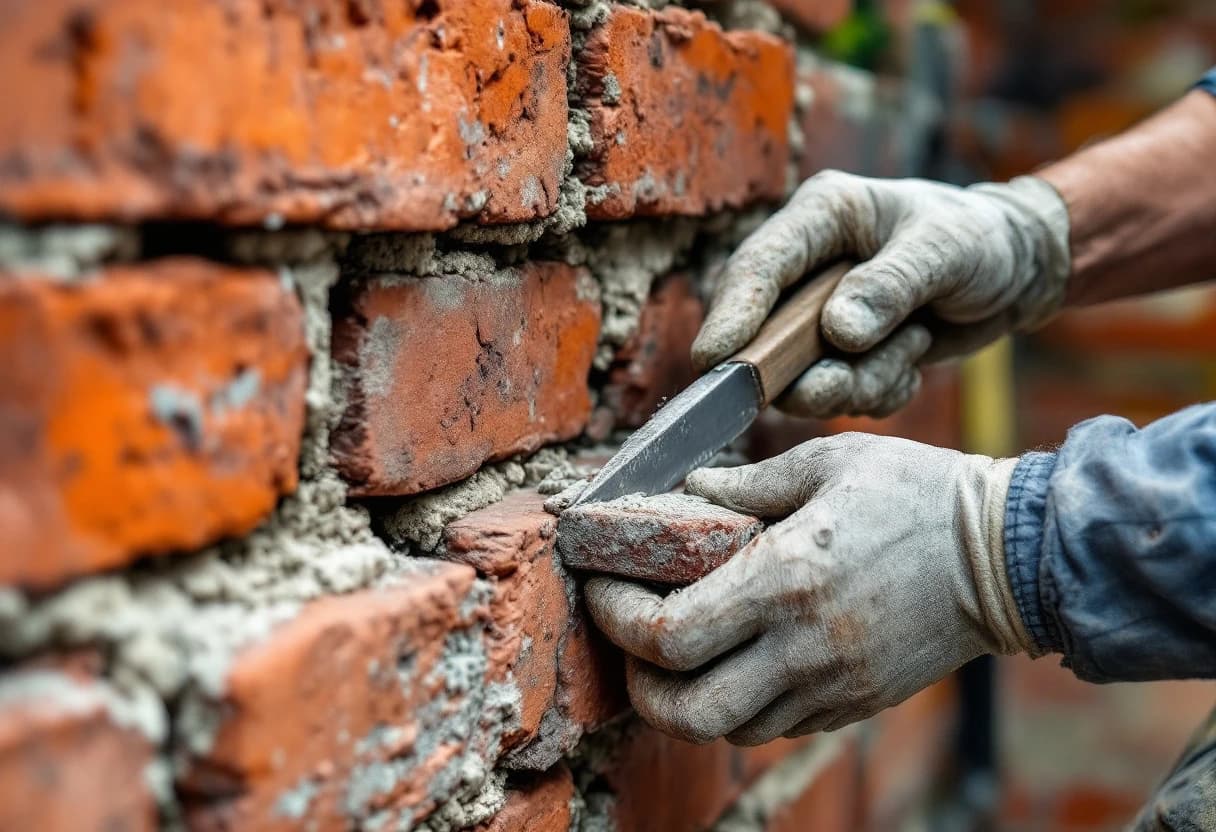
Repointing - called tuckpointing by many masons - is the craft of cutting out failed mortar and packing new mortar into the joints. Done right, it is meticulous: each joint is ground or raked to a depth of roughly two to two-and-a-half times its width, back to sound original mortar, then cleaned, dampened, and refilled in thin compacted layers before being tooled to match the original profile. Done wrong, it is a smear of hard modern mortar over crumbling joints, and it actively damages the chimney. Portland-heavy mortar is harder and less permeable than the lime mortar in most pre-war Massachusetts chimneys, so it traps moisture and forces every freeze-thaw expansion into the brick - which is why badly repointed chimneys often spall within a few winters.
The chemistry matters more here than almost anywhere in the country. A huge share of the housing stock in Tewksbury went up before 1940, when chimneys were laid in soft, breathable lime-based mortar. Match that softness - typically a Type O or Type N blend, depending on the wall - and the repair moves with the original masonry and lasts decades. Ignore it, and the new mortar wins every argument with the old brick. Coastal towns add another variable: salt-laden air drives chlorides into the masonry, accelerating both mortar erosion and the white efflorescence staining that tells you dissolved salts are migrating through the wall. We read those signals before we ever mix a batch.
Upside Down Chimney Sweeps repairs chimney masonry from our shop at 20 Sewall Street in Melrose, covering Tewksbury and towns across Eastern Massachusetts. The portion of the chimney above the roofline is always the worst - it gets weather from every direction and dries slowest - so that is where we concentrate first, but we repoint and rebuild masonry from the firebox to the crown. Every project starts with an honest assessment of what the joints and brick are telling us, follows NFPA 211 guidance on inspection, and ends with work you should struggle to distinguish from the original wall. For a straightforward evaluation and written estimate, call (781) 653-5644.
What Our Masonry Repair Service Covers
1Repointing and Tuckpointing
Our core masonry service: we cut failed mortar joints back to sound material - never just skim the surface - then repack them in compacted lifts with mortar blended to match the original in strength, color, and texture. Joints are tooled to the existing profile, whether concave, grapevine, or weather-struck, so repaired sections blend into the wall instead of announcing themselves. Depth is everything in this trade; shallow "scrub coat" repointing is the most common defect we find in previous work, and it peels within a couple of Tewksbury winters.
2Mortar Analysis and Matching
Before repointing an older chimney we evaluate the existing mortar: its hardness, its lime content, its sand color and grain. Pre-war chimneys laid in soft lime mortar need a compatible soft mix; a mid-century chimney can take a standard Type N. The governing rule is that mortar must always be softer than the surrounding brick, so movement and moisture escape through the joints - the renewable part - rather than through the brick faces. This single step is the difference between a repair that lasts forty years and one that destroys the wall around it.
3Brick Replacement
Where freeze-thaw has spalled brick faces or cracked units through, patching mortar cannot help - the brick must come out. We cut damaged units free without disturbing their neighbors, then lay in replacements matched by dimension, color range, and hardness. For historic homes we source reclaimed brick when the original run is no longer produced, because a modern extruded brick sitting in a hand-molded 1890s wall is visible from the street. Matched replacement keeps both the appearance and the structural behavior of the wall consistent.
4Above-Roofline Rebuild of Deteriorated Courses
The top few courses of a chimney fail first: they catch the most weather, sit closest to the cracked crown feeding them water, and endure the harshest freeze-thaw exposure. When joints up there have eroded past the point of repointing - bricks loose enough to shift by hand - we take down the unsound courses and relay them properly, often reusing the original brick. This targeted rebuild costs a fraction of a full teardown and, combined with a new crown, resets the clock on the chimney's most vulnerable zone.
5Crown Rebuilding
Repointing a chimney under a failed crown is treating the wound while ignoring the faucet. Where the crown is cracked or was originally just mortar troweled flat, we cast a true concrete crown: sloped away from the flues, overhanging the brick with a drip kerf so runoff falls clear of the wall, and separated from the flue tiles by a bond break that absorbs thermal expansion. The crown and the joints work as one water-shedding system, which is why we price and schedule them together whenever both need attention.
6Breathable Water Repellent Application
Once the masonry is sound, we can apply a vapor-permeable siloxane-based water repellent to the chimney exterior. Unlike film-forming sealers - which trap moisture in the wall and accelerate spalling - a breathable repellent soaks into the brick and mortar, dramatically slowing rain absorption while letting internal moisture continue to escape as vapor. On exposed chimneys, and especially in coastal wind-driven rain, this treatment meaningfully extends the life of fresh repointing. We treat it as the final coat of a masonry repair, never as a substitute for one.
Why Masonry Repair Matters for Tewksbury Homes
Mortar joints are the chimney's weather barrier, and the math of neglect is unforgiving. A joint recessed a half inch collects water instead of shedding it; that water migrates into the wall core, freezes, and expands with enough force to crack brick and push courses out of alignment. Each winter in Massachusetts delivers dozens of freeze-thaw cycles, so deterioration is not linear - it accelerates. The difference between repointing at the right time and five years too late is frequently the difference between a two-day repair and a partial rebuild with staging. The joints always send warnings first; repointing is what it looks like to listen to them.
There is also a structural and safety dimension people underestimate. As bed joints erode, the top of the chimney loses the mortar that ties it together, and a stack that has been through enough winters can loosen to the point that bricks shift underfoot on the roof - or come down in a nor'easter onto the roof, a car, or a walkway. Meanwhile, gaps in the masonry can compromise the flue's containment of combustion gases, one of the conditions NFPA 211 inspections are designed to flag. A chimney is a masonry tower, often thirty feet tall, standing over the busiest parts of your property; keeping its joints full is basic structural stewardship.
Finally, good repointing protects the value and character of the house itself. In Tewksbury, chimneys are part of the streetscape - buyers and inspectors notice a stack with eroded joints, mismatched patches, or smeared amateur pointing, and home inspection reports call it out with photos. Craftsman-grade repointing that matches the original mortar and joint profile preserves the architecture, passes inspection scrutiny, and signals a well-maintained home. It is one of the few repairs that is simultaneously preventive maintenance, structural work, and curb appeal - which is why we treat mortar matching and tooling not as fussiness, but as the actual job.
Greater Boston weather asks masonry to survive genuine extremes. A chimney in Tewksbury may face humid ninety-degree afternoons in July and single-digit nights in January, along with the dozens of freeze-thaw crossings in between that make southern New England one of the tougher masonry climates anywhere. Materials expand and contract with every swing, mortar fatigues, sealants age, and metal components like caps, dampers, and flashing corrode faster in our damp air. None of this means chimneys here are doomed; it means maintenance schedules imported from gentler climates simply do not apply. An annual inspection is the standard everywhere under NFPA 211, but around here it earns its keep almost every single year, usually by catching weather damage early.
Signs You Need Masonry Repair in Tewksbury
- Mortar joints that are recessed, crumbly, or soft enough to scratch out with a car key.
- Sandy grit or small mortar chunks collecting at the chimney's base, on the roof, or in gutters.
- White efflorescence blooming across the brick, evidence of water moving through the wall and carrying salts outward.
- Brick faces flaking or popped off, exposing a rough orange core - freeze-thaw spalling in progress.
- Hairline cracks running through joints or stepping diagonally across the brickwork.
- Individual bricks that look shifted, proud of the wall, or loose to the touch.
- Previous repointing that is peeling off in thin sheets, the signature of shallow surface-only work.
- Damp patches or staining on interior walls and ceilings adjacent to the chimney chase.
- Vegetation or moss growing out of the joints, which only happens where moisture is being held.
- A chimney top that looks visibly ragged or uneven against the sky compared to the brickwork lower down.
How the Job Goes, Step by Step
1Masonry Assessment
We inspect every face of the chimney at close range - roof-level, not binocular distance - probing joints for depth of erosion, mapping spalled and cracked brick, and checking the crown and flashing that feed water to the masonry below. Following NFPA 211 practice, we also confirm whether deterioration has reached the flue. You get photos and a candid read on what needs repair now versus what can be monitored.
2Mortar Matching
We assess the original mortar's hardness and composition and blend a repair mix to suit - softer lime-rich mortar for pre-war masonry, standard Type N where appropriate - then match sand color and joint tooling so the repair blends visually. On Tewksbury homes with distinctive older brickwork, we prepare a sample area for your approval before committing to the full chimney.
3Joint Preparation
Failed mortar is cut out to a depth of roughly two to two-and-a-half times the joint width, back to sound material, using grinders and hand tools with care not to widen the joints or scar the brick edges. Dust is brushed and rinsed out, because new mortar will not bond to a dirty joint. Preparation is slow, unglamorous, and completely non-negotiable - it is where repointing jobs are won or lost.
4Repointing and Brick Replacement
Joints are dampened so the wall does not flash-dry the fresh mix, then packed in thin, firmly compacted lifts until full. Spalled or cracked bricks flagged during assessment are cut out and replaced with matched units as we work each section. Once mortar reaches thumbprint hardness, we tool the joints to the original profile so the repaired wall reads as one continuous piece of masonry.
5Curing and Protection
Fresh mortar needs days of moist, moderate-temperature curing to reach strength - hot sun, hard frost, and driving rain are all enemies of a young joint. We schedule around weather windows, mist or cover work when conditions demand it, and use cold-weather methods in the shoulder seasons. Where the scope includes it, breathable water repellent goes on after full cure, locking in the repair.
6Final Walkthrough and Records
We review the finished work with you, side-by-side with the before photos, and deliver written documentation of materials and scope for your house file - useful at resale and for insurance. You also get our honest maintenance forecast: what condition the rest of the chimney is in, and roughly when it will next need attention. Questions later? Call (781) 653-5644 and ask for the technician who did the work.
Local Knowledge: Masonry Repair in Tewksbury
Tewksbury grew fastest in the postwar decades, so its streets are dominated by capes, ranches, and split-levels from the 1950s through the 1970s, most with a single brick chimney serving the heating system and often a modest living-room fireplace. Newer colonial subdivisions and condo developments round out the stock. Original unlined or clay-tile flues in the older homes are frequent candidates for relining.
As a Merrimack Valley town, Tewksbury gets some of the colder winters in our service area, and many homeowners here lean hard on fireplaces and wood or pellet stoves from November through March. Heavy seasonal use combined with aging mid-century flues makes fall sweeps and inspections especially worthwhile in this town.
We regularly handle masonry repair calls in Tewksbury and the surrounding towns of Wilmington, Billerica, Andover, Lowell — so scheduling is fast and our pricing reflects local conditions, not guesswork.
Every fall, the same thing happens across Greater Boston: the first genuinely cold weekend arrives, thousands of homeowners simultaneously remember their chimneys, and every reputable sweep's calendar fills for weeks. The homeowners who called in August or September get their pick of appointments; the ones who call in late October wait, sometimes well past the first fires of the season. There is no downside to beating that rush. A chimney swept in late summer stays clean until burning season, inspection findings leave time for repairs before the cold, and scheduling stays flexible. If a fire on the first cold night matters to you, the honest advice from anyone in this trade is simple: book early, and burn easy.
Why Choose Upside Down Chimney Sweeps
We built this company on the belief that chimney work should follow written standards, not folklore. Our sweeping and inspection procedures track NFPA 211, the National Fire Protection Association's standard for chimneys, fireplaces, and vents, along with the best practices promoted by the Chimney Safety Institute of America. That means we do not eyeball a flue and pronounce it fine; we examine accessible portions methodically, note the condition of liners, crowns, caps, and flashing, and classify creosote honestly by stage. Standards protect you in a second way, too: when we recommend a repair, we can point to the specific condition and the specific guidance behind the recommendation, so you are never asked to take an expensive claim on faith.
Masonry Repair FAQs — Tewksbury, MA
What is the difference between repointing and tuckpointing?
How do I know if my chimney needs repointing?
Why does mortar matching matter so much on older homes?
How long does repointing last?
Can I repoint my chimney myself?
What time of year is best for repointing in Massachusetts?
Will new repointing be visible against my existing chimney?
Does repointing fix a leaking chimney?
Book Masonry Repair in Tewksbury
A well-maintained chimney is one of those quiet protections a house provides its family, like a sound roof or a dry basement, invisible right up until the moment it matters. Giving your Tewksbury home that protection takes remarkably little: an annual inspection, sweeping whenever the flue needs it, and small repairs made before winter can enlarge them. Upside Down Chimney Sweeps would be honored to be the company you trust with that work, and starting is as simple as calling (781) 653-5644. We will treat your home with care, your questions with patience, and your budget with respect. The fires will feel better once you know for certain what condition their chimney is really in.
Book Masonry Repair in Tewksbury
Our Melrose shop is 15 miles away — scheduling in Tewksbury is fast. Call (781) 653-5644.
Mon–Sat: 7:00 AM – 7:00 PM · Emergency service available