
Walpole, MA · Norfolk County
Animal & Nest Removal in Walpole, MA
Humane removal of birds, squirrels, raccoons, bats, and nesting debris from your chimney, followed by a full flue cleanout and exclusion work so wildlife never moves back in.
Most animal and nest removals in the Boston area run a typical range of $249–$595 depending on the species involved, how deep the nesting material sits in the flue, and whether a full cleanout and sanitizing are needed afterward.
Most of the homes we service in Walpole were built when a chimney was not a decoration but the working heart of the house. Those older flues have real character, and real quirks: unlined sections, undersized clay tiles, and mortar joints that have softened over decades of heat and weather. A modern wood stove or high-efficiency furnace asks a lot of masonry that old, which is why we approach every Walpole chimney as a system rather than a smokestack. Our technicians evaluate the firebox, smoke chamber, flue, crown, and flashing together, because a failure in one almost always shows up in another. If your home has some history in its bones, it deserves a sweep who respects that history and understands its construction.
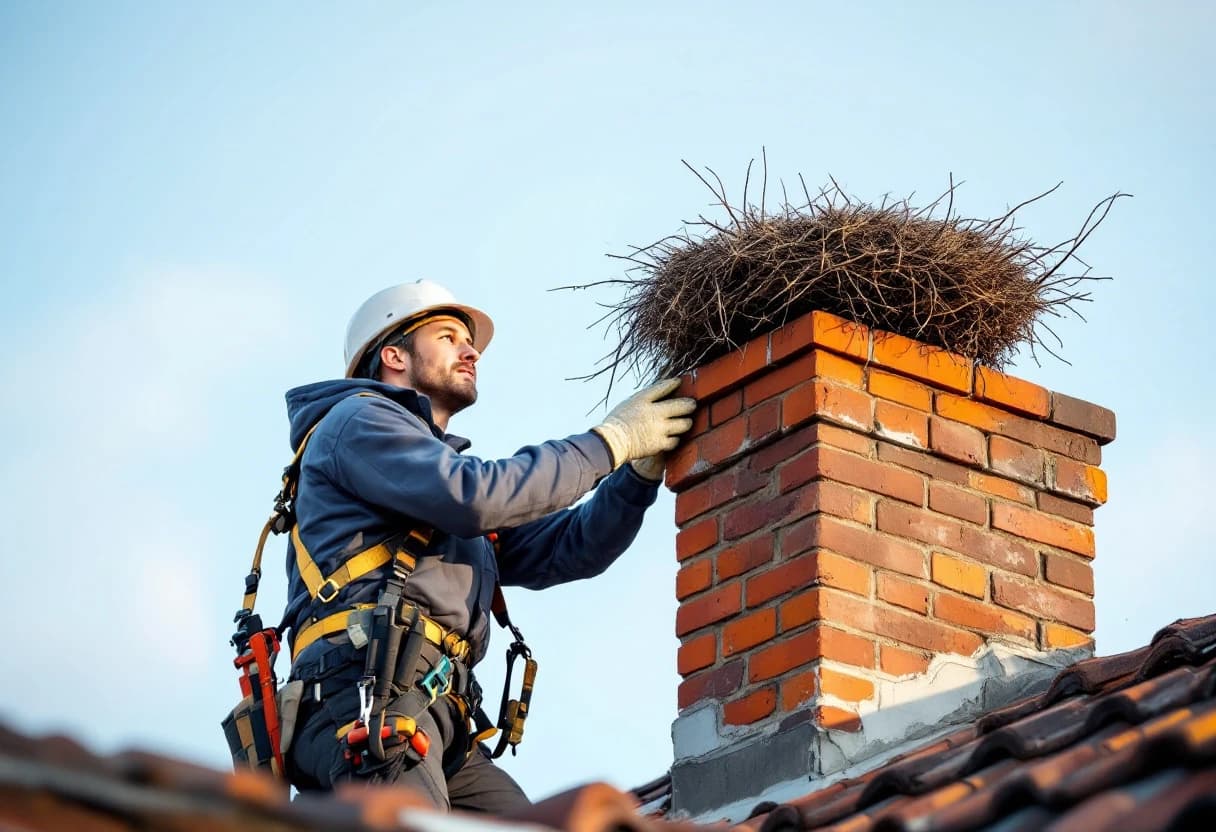
That scratching, chirping, or frantic fluttering coming from behind your fireplace wall is one of the most common calls we take every spring and early summer. A chimney mimics the hollow tree that raccoons, squirrels, chimney swifts, and bats have denned in for thousands of years: tall, dark, sheltered from hawks and weather, and gently warmed by the house below. An uncapped flue in Walpole is an open invitation, and once an animal moves in you are dealing with far more than noise. Nesting material chokes the flue, droppings carry real pathogens, and a mother raccoon guarding kits on the smoke shelf will defend that ledge aggressively. We remove the animals humanely, clear every trace of the nest, and seal the chimney so it never happens again.
Knowing what species you are dealing with changes everything about how the job must be done. Chimney swifts, the small cigar-shaped birds that glue half-cup twig nests to flue walls, are protected under the federal Migratory Bird Treaty Act, so an active nest with eggs or young cannot legally be removed; we document it, protect your home in the meantime, and schedule the cleanout and capping for the day the brood fledges. Bats carry their own protections in Massachusetts and can only be excluded outside of maternity season. Raccoons and gray squirrels, on the other hand, can be removed promptly, but the method matters: separate a mother from her litter carelessly and she will tear through flashing, shingles, and even ridge vents to get back to them.
Please do not try to smoke an animal out. It is the single most dangerous piece of folk advice in this trade. Lighting a fire under a nest of dried twigs ignites a flue blockage directly above your firebox, and lighting one under a trapped animal usually kills it where it sits, leaving you with a carcass wedged above the damper and an odor problem that lasts weeks. Squirrels are a special case: glazed clay flue tiles offer their claws no grip, so a squirrel that falls past the smoke shelf physically cannot climb back out. It is not visiting your chimney at that point; it is trapped, dehydrating, and desperate, and it needs to be lifted out by someone with the right equipment.
Upside Down Chimney Sweeps handles the entire problem end to end, which is what separates a chimney company from a general trapper. We remove the animal, strip out the nest, sweep the flue, sanitize the smoke shelf, verify the damper still seats, and install a properly sized stainless steel cap so the den site is closed permanently. We follow NFPA 211 and Chimney Safety Institute of America (CSIA) guidance on flue inspection during every removal, because nesting activity frequently hides damage you cannot see from the hearth. If you are hearing something in the chimney right now in Walpole, call (781) 653-5644 and we will walk you through what to do before we arrive.
What Our Animal Removal Service Covers
1Humane Wildlife Removal
We identify the species first, because the removal method depends on it. Trapped squirrels are lifted out with padded retrieval poles or a weighted escape rope they can climb. Raccoons are removed with the litter kept together, so the mother relocates her kits instead of ripping her way back into your roofline. Birds resting above the damper are guided up and out rather than into your living room. Every removal is done from the top of the flue and the firebox simultaneously, so the animal has one calm exit path.
2Complete Nest & Debris Cleanout
A nest is never just a nest. Raccoons haul in armfuls of leaves and bark; squirrels pack the smoke shelf with insulation stolen from your own attic; swifts leave twig cups cemented to the tile with saliva. We remove every scrap with brushes, rods, and a HEPA-filtered vacuum, then scan the full flue with a camera to confirm nothing remains lodged at an offset or above the smoke chamber. Organic debris left behind is kindling sitting directly in the path of your exhaust, so partial cleanouts are not something we do.
3Protected Species Compliance
Chimney swifts are federally protected under the Migratory Bird Treaty Act, and several Massachusetts bat species have additional state protections, so timing is part of the job. When we find an active swift nest, we confirm the stage of the brood, give you a realistic fledge date, and return to clean and cap on schedule. Bat exclusions are planned around maternity season, using one-way exclusion devices rather than trapping. You stay legal, the wildlife stays alive, and your chimney still ends up sealed before the burning season.
4Sanitizing & Deodorizing
Animal occupation leaves biological residue that has no business above your firebox. Accumulated bird and bat droppings can host the fungus that causes histoplasmosis, raccoon latrines can carry roundworm, and abandoned nests shed mites and fleas that migrate into the house once their host is gone. After the physical cleanout we treat the smoke shelf, smoke chamber, and firebox with an atomized disinfectant and deodorizer formulated for chimney use. That step is also what breaks down the den scent that would otherwise advertise your flue to the next animal.
5Dead Animal Location & Removal
A sudden fly problem at the fireplace or a sweet, heavy odor that worsens on warm days usually means an animal died above the damper. Carcasses rarely sit where you can see them; they wedge on the smoke shelf, at flue offsets, or behind the damper plate. We locate the remains with an inspection camera, remove them through the firebox or from the top of the flue, and follow with the full sanitizing treatment. In Walpole homes with older throat dampers, we also check that decomposition fluids have not corroded the damper seat.
6Exclusion & Chimney Cap Installation
Removal without exclusion is a subscription, not a solution, because a scent-marked den draws new tenants every season. We close the entry permanently with a stainless steel cap sized to your flue, with mesh tight enough to stop bats and swifts but open enough to preserve draft, per NFPA 211 termination requirements. Multi-flue chimneys get a full-coverage cap; open masonry flues serving oil or gas appliances get screened terminations that will not clog with frost. We also point out roofline gaps and flashing lifts that give animals their approach route.
Why Animal Removal Matters for Walpole Homes
The fire risk is immediate and badly underestimated. A nest is a bundle of oven-dried twigs, grass, and leaves sitting inside your exhaust pipe, and it does not need direct flame to ignite; hot flue gases alone can light it off. When it goes, you get a flash fire inside the flue that can crack clay liners and spread to framing through any existing gap in the masonry. Every fall we meet homeowners who lit the first fire of the season over a summer nest they never knew existed. This is exactly why we follow NFPA 211 guidance calling for the flue to be inspected before each heating season, and always after known animal activity.
The carbon monoxide risk is quieter but just as serious. A blocked or partially blocked flue cannot vent combustion gases, so they spill back into the living space, and this is not just a fireplace problem. Many homes across Walpole and Eastern Massachusetts vent oil or gas heating equipment through the same masonry chimney, which means a nest built in June can push carbon monoxide into bedrooms in November when the boiler ramps up. Birds that fall into open heating flues are one of the most common blockage sources we find. Working CO detectors are essential, but they are the last line of defense, not the plan.
Then there is the damage animals do while they live there. Raccoons bend damper plates and shred chimney crowns getting in and out. Squirrels gnaw wood framing adjacent to the chase, and their stashed acorns hold moisture against masonry through New England freeze-thaw cycles, which accelerates spalling. Nesting debris also traps rainwater in the flue, keeping brick and mortar joints saturated exactly where you want them dry. Every removal we do ends with a documented look at the liner, crown, and damper, because catching that secondary damage early is dramatically cheaper than discovering it during a chimney rebuild.
Snow itself sits gently on a chimney, but what snow becomes is another matter. Roof snow melts against warm flashing and refreezes at night, prying the metal away from the masonry one thin layer of ice at a time. Ice dams back meltwater up the roof slope until it finds the flashing seams at the chimney, one of the most common leak paths we trace in Walpole homes. Meanwhile, snow resting on the crown melts downward into any crack it can find, feeding the freeze-thaw cycle at the chimney's most vulnerable point. If you have ever noticed a water stain near the chimney after a heavy winter, this chain of events is the likely author, and the repair usually starts at the flashing.
Signs You Need Animal Removal in Walpole
- You hear scratching, scurrying, or thumping inside the chimney, especially around dawn and dusk.
- High-pitched chirping or raspy chattering from the flue that gets louder when a parent animal returns to feed young.
- A musky, ammonia-like, or decaying odor drifts from the fireplace and gets worse on humid days.
- Twigs, leaves, grass, or tufts of insulation are poking through the damper or dropping into the firebox.
- Flies keep gathering at the fireplace glass or hearth, which often signals a dead animal above the damper.
- A fireplace that drafted fine last season suddenly pushes smoke back into the room.
- You find droppings, feathers, or shredded nesting material on the smoke shelf or hearth.
- Your chimney cap is missing, visibly damaged, or was never installed in the first place.
- You keep seeing squirrels or a raccoon on the roofline near the flue, particularly in early morning.
- You hear frantic, repetitive scrambling that never progresses upward, the classic sound of a squirrel trapped on slick flue tile.
How the Job Goes, Step by Step
1Inspection & Species Identification
We start at the firebox and the rooftop at the same time, using an inspection camera to locate the animal, count occupants, and identify the species. Sound patterns, droppings, and nest construction tell us whether we have a trapped squirrel, a denning raccoon with kits, an active swift colony, or roosting bats. That identification determines the legal window, the removal method, and the tools we stage before anyone touches the flue.
2Removal Plan & Compliance Check
Before removal begins we confirm what the law allows. Active chimney swift nests are protected under the Migratory Bird Treaty Act and must be left until the young fledge; Massachusetts bat protections dictate exclusion timing. We give you the plan in plain terms: what comes out today, what has to wait, how long, and how we protect your home in the meantime with temporary screening and a sealed damper.
3Humane Removal
Trapped animals are physically lifted out with retrieval poles, escape ropes, or top-down capture, never smoked, poisoned, or left to starve. Raccoon litters are removed together so the mother follows her kits away from the structure instead of tearing back in through the roof. We work calmly and quietly, because a panicked animal in a flue injures itself and wedges deeper, turning a one-hour job into a demolition problem.
4Full Nest Cleanout & Flue Sweep
With the animals out, we strip every trace of nesting material from the flue, smoke shelf, and smoke chamber using rods, brushes, and a HEPA vacuum, then sweep the flue itself. A camera pass confirms the liner is clear top to bottom and lets us document any cracked tiles, gapped joints, or damper damage the occupation caused, following the inspection practices set out in NFPA 211.
5Sanitize & Deodorize
We treat the firebox, smoke shelf, and lower flue with a disinfectant and deodorizer that neutralizes droppings, urine, and den scent. This protects your family from pathogens like histoplasmosis and raccoon roundworm, stops mites and fleas from migrating into the living space, and erases the scent marking that would otherwise draw the next animal straight back to the same flue within a season.
6Exclusion & Prevention
Finally we close the door for good: a stainless steel chimney cap with animal-proof mesh sized to your flue, secured mechanically so raccoons cannot pry it loose. We check adjacent flues, verify the damper seats fully, and flag any crown cracks or flashing lifts that offer another way in. You get photos of the finished work and a clear record for your files, and your chimney goes back to being a chimney.
Local Knowledge: Animal Removal in Walpole
Walpole is a town of distinct villages, and its housing shows it: older mill-era homes cluster in East Walpole and South Walpole, while the rest of town filled in with postwar capes and split-levels followed by larger colonial subdivisions in the 1980s and 1990s. Working fireplaces are standard in the newer stock, and the older village homes often have aging brick chimneys serving converted heating systems.
The Neponset River mill villages give Walpole pockets of genuinely old housing where chimneys have been modified repeatedly over generations, so we frequently find abandoned flues, odd offsets, and undersized liners here. It is a town where a camera inspection before buying or relining pays for itself.
We regularly handle animal removal calls in Walpole and the surrounding towns of Norwood, Westwood, Sharon, Foxborough — so scheduling is fast and our pricing reflects local conditions, not guesswork.
Winter is the season your chimney works hardest, and it deserves some attention even in mid-use. If you burn frequently, deposits accumulate faster than an annual schedule assumes, particularly when the wood is less than fully seasoned; heavy burners sometimes need a mid-season sweep. Winter is also when problems announce themselves: sluggish draft on cold starts, smoke odors migrating through the house, or a damper that suddenly stiffens. None of those should be ignored until spring. And if you ever suspect a chimney fire, however brief, stop using the fireplace and have the flue inspected before lighting the next one. We work straight through the winter for exactly these situations, and prompt attention keeps small issues small.
Why Choose Upside Down Chimney Sweeps
One thing homeowners appreciate about Upside Down Chimney Sweeps is that we handle the whole chimney, not just one slice of it. Sweeping, camera inspections, cap and damper replacement, crown repair, flashing, waterproofing, repointing, liner installation, and full rebuilds all live under one roof. That breadth matters because chimney problems rarely respect trade boundaries: a leak may involve the flashing, the crown, and the mortar joints all at once, and a company that only sells one fix tends to see only one cause. Because we diagnose and repair across the entire system, we can recommend the remedy the chimney needs rather than the one we happen to offer. Fewer handoffs also means one point of accountability from first call to final walkthrough.
Animal Removal FAQs — Walpole, MA
What kind of animal is most likely in my chimney?
The birds in my chimney are chimney swifts. Can you remove them?
Can I just light a fire and drive the animal out?
How much does animal removal from a chimney cost?
What do you do about bats in a chimney?
How do you keep animals from coming back after removal?
I think the animal in my chimney is dead. Now what?
How quickly can you get to my home?
Book Animal Removal in Walpole
From our shop on Sewall Street in Melrose, Walpole is a short and familiar drive, and that proximity is worth something practical to you: prompt scheduling, easy follow-ups, and a company whose reputation lives in the same corner of Massachusetts as your home. When you call (781) 653-5644, you reach people who know these towns, these winters, and these chimneys. We will set an appointment, arrive on time, protect your home while we work, and leave you with a written record of everything we found and everything we did. Local is not a slogan for us; it is the business model. We would be glad to add your chimney to the neighborhood we look after.
Book Animal Removal in Walpole
Our Melrose shop is 24 miles away — scheduling in Walpole is fast. Call (781) 653-5644.
Mon–Sat: 7:00 AM – 7:00 PM · Emergency service available