
Watertown, MA · Middlesex County
Chimney Cleaning & Sweeping in Watertown, MA
Thorough, dust-free chimney sweeping for wood, oil, and gas flues, performed to NFPA 211 standards with a photo condition report on every visit.
Most standard open-fireplace sweeps in the Boston market typically run $189–$349, with wood stove and insert flues usually landing between $249 and $429 depending on access and buildup.
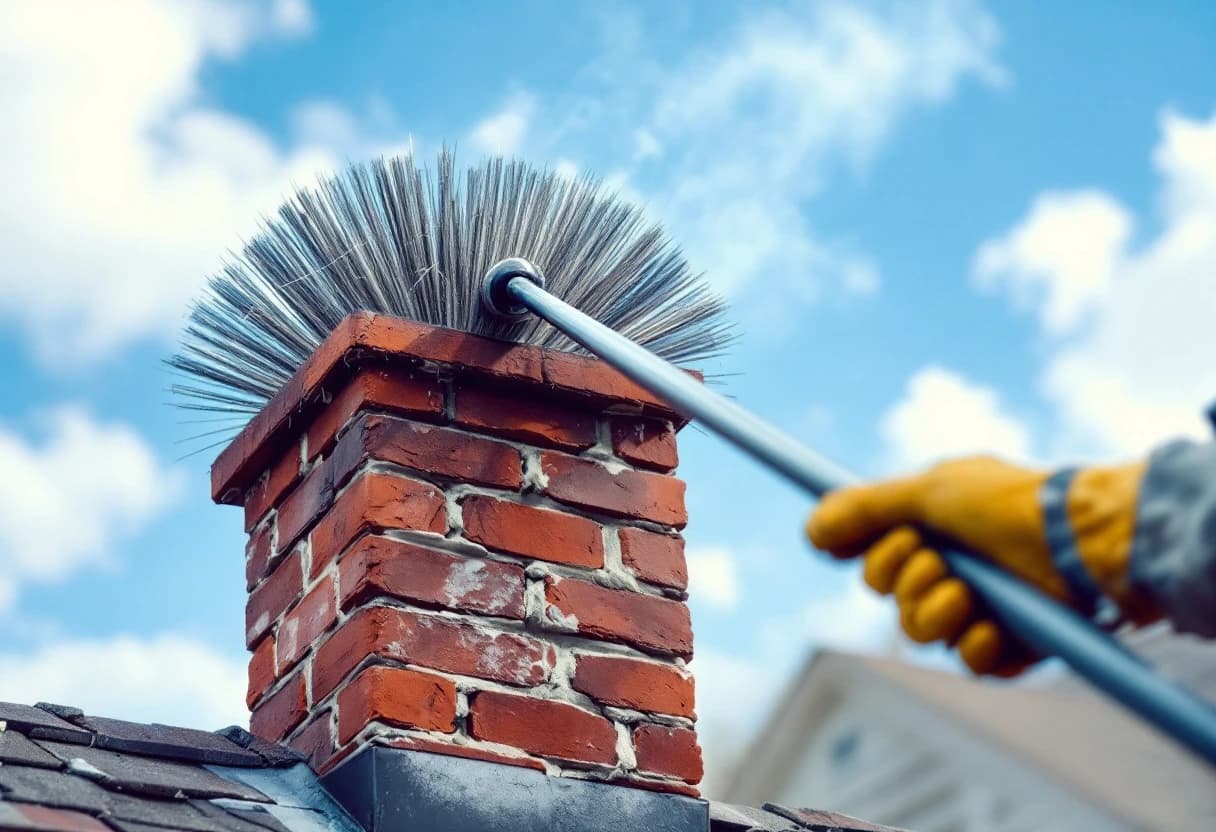
Our shop sits on Sewall Street in Melrose, which means Watertown is not the far edge of some sprawling service map for us; it is part of the neighborhood we drive every week. That proximity shapes how we work. We can schedule promptly, return quickly if a repair needs a second visit, and stand behind our workmanship the way only a local company can, because our reputation lives or dies within a few towns of home. Homeowners in Watertown call us for everything from routine sweeps to full masonry restoration, and every job gets the same treatment: careful protection of your home, a methodical inspection, and straight answers about what your chimney actually needs and what it does not.
Every fire you burn leaves something behind. Wood smoke is a moving mixture of water vapor, unburned gases, and microscopic particles of carbon, and when that mixture rises into a flue whose walls are cooler than roughly 250 degrees, it condenses on the clay tile or stainless steel the same way steam fogs a bathroom mirror. The residue it deposits is creosote, and creosote is flammable at every stage of its development, from soft powdery soot to hardened tar. A professional chimney sweeping is the controlled, methodical removal of that residue, along with the leaf litter, mortar crumbs, and nesting debris that accumulate over a season. Done once a year, it is the least expensive insurance a fireplace owner in Watertown can buy.
The housing stock we work on around Boston makes regular sweeping more important, not less. A large share of the homes we service were built between the 1880s and the 1940s, when chimneys were laid up with soft lime mortar and many flues were never lined at all. Decades of freeze-thaw cycling have opened hairline joints in those old stacks, and countless mid-century oil-heat conversions left oversized flues that run cool and condense creosote and acidic flue gases faster than they should. Add coastal salt air working on exposed brick and nor'easters driving rain straight down uncapped flues, and you get chimneys that collect deposits and deteriorate quicker than the national average homeowner ever expects.
Our sweeping method is built around two priorities: getting the flue genuinely clean, and leaving your home exactly as we found it. We lay canvas drop cloths from the door to the hearth, seal the fireplace opening, and run a HEPA-filtered vacuum the entire time we work, so fine soot never gets a chance to drift into the room. Depending on your chimney's layout we sweep from the firebox up or the crown down, using rotary rod systems fitted with poly whips for ordinary soot and flat-wire heads for stubborn deposits, each sized to your flue's exact dimensions. The smoke chamber, smoke shelf, damper, and firebox all get detailed by hand.
Every sweep we perform includes the basic visual examination that NFPA 211 calls for on an annual basis, so you are not just getting a clean flue, you are getting a trained set of eyes on the whole system. Before we leave, we walk you through photos of what we found, from the firebox to the crown, and put our findings in writing. If everything looks healthy, we tell you so plainly. Most homeowners in Watertown book their sweep in late summer or early fall before the first cold snap fills our calendar; if your fireplace has not been serviced in the last twelve months, call (781) 653-5644 and we will get you on the schedule.
What Our Chimney Cleaning Service Covers
1Full flue sweeping, top to bottom
The heart of the visit is a complete mechanical cleaning of the flue itself. We measure your flue and select the right head for the job: poly whips on a rotary rod system for typical soot and first-stage creosote, or flat-wire brushes for crusted deposits on clay tile. We work the full length of the flue in overlapping passes, from the firebox to the top of the last tile, until the walls come back to bare clay or bright steel. Round, square, and offset flues each get an approach suited to their geometry.
2Smoke chamber and smoke shelf cleaning
Just above your damper sits the smoke chamber, a corbelled brick funnel that narrows the firebox opening into the flue, and behind it the smoke shelf, a flat ledge designed to catch downdrafts and falling debris. These two areas collect more creosote and soot than almost any other part of the system because turbulent smoke slows down there, yet they are invisible from the hearth. We brush and vacuum both by hand, because a flue-only cleaning that skips the smoke chamber leaves the most fire-prone surface in the chimney untouched.
3Firebox, damper, and lintel detailing
We wire-brush the firebox walls and floor, clean out the ash dump, and scrape carbon off the lintel, the steel bar that carries the masonry above your fireplace opening. The damper gets special attention: we clean the plate, frame, and hinge until it opens fully and seats tightly again, because a damper packed with rust flakes and soot is one of the most common causes of both poor draft in winter and cold-air leakage year round. If the damper is warped or the clamp is missing, we note it in your report.
4Dust-free containment, guaranteed
The old cartoon image of a soot-covered sweep is exactly what we engineer out of every job. Fine soot particles are small enough to stay airborne for hours and settle on everything you own, so we treat containment as seriously as the cleaning itself. Drop cloths run from the entry door to the hearth, the fireplace opening is sealed with a dam or plastic barrier, and a triple-filter HEPA vacuum runs continuously, pulling air from the work area the whole time. Your room stays clean enough that most customers cannot tell we were there.
5Wood stove and insert flue service
Stoves and fireplace inserts burn hotter and slower than open fireplaces, which makes them efficient but also makes their smaller flues load up with creosote faster. Servicing them properly means more than running a brush: we remove or reposition the baffle, disconnect and clean the connector pipe on freestanding stoves, sweep the liner full length, and clear the critical junction where the appliance meets the flue. While we are inside the unit we check door gaskets, glass seals, and firebrick, and flag anything worn before it affects how your stove drafts and burns.
6Top-side check and photo report
Whenever roof access is safe, we finish at the top of the chimney, because that is where New England weather does its damage. We photograph the crown for cracks, check the cap and screen, look for spalled brick faces and open mortar joints, and confirm the top flue tile is sound. Everything goes into a written condition report with photos you can keep for insurance records or a future home sale. You will know exactly what shape your chimney is in, in plain language, before we pull out of the driveway.
Why Chimney Cleaning Matters for Watertown Homes
Creosote is the fuel for chimney fires, and it does not take much of it to sustain one. When flue temperatures spike, accumulated deposits can ignite at around 1,100 degrees and burn at over 2,000, hot enough to crack clay flue tiles in minutes and open pathways for flame to reach the wood framing that sits inches from your chimney. National fire data consistently identifies failure to clean as the leading factor in home heating fires. Many chimney fires are not the dramatic, roaring kind; they are slow, quiet burns the homeowner never notices, discovered only later when a sweep finds warped metal, puffed creosote, and fractured tiles.
A dirty flue also threatens the air you breathe. As deposits thicken, the effective diameter of the flue shrinks, draft weakens, and combustion gases, including carbon monoxide, begin to spill back into the living space instead of exiting the top of the stack. This is not only a wood-burning problem: oil and gas appliances venting into masonry chimneys shed soot, scale, and rust that can slump into a pile at the base of the flue and choke the vent connector. In older homes across Watertown, where heating systems have been swapped two or three times over the decades, a blocked or restricted flue is a genuinely common finding.
Finally, sweeping protects your wallet. Soot and creosote are acidic and hygroscopic, meaning they pull moisture out of the air and hold it against your flue walls, quietly dissolving mortar joints and corroding liners between burning seasons. An annual sweep interrupts that chemistry and doubles as an early-warning system: the small crown crack or failing mortar joint we spot during a routine visit costs a fraction of what it becomes after three more winters of freeze-thaw. Most insurers and every fire-safety authority we follow, including NFPA 211 and CSIA guidance, treat annual sweeping and inspection as the baseline standard of care for a working chimney.
Spring is when winter sends Watertown homeowners the bill. As temperatures stabilize, the damage done by months of freeze-thaw cycling becomes visible: hairline crown cracks that widened, mortar joints that crumble at a touch, brick faces flaked off onto the roof, and white mineral staining called efflorescence, which is a chimney's way of announcing that water is moving through its masonry and leaving dissolved salts behind on the surface. None of these symptoms improves on its own, and all of them worsen faster once water has an established path. A spring inspection catches the winter's damage at its cheapest stage, and leaves the whole summer, the best season for masonry work, to repair it properly.
Signs You Need Chimney Cleaning in Watertown
- You have burned a cord of wood or more since the flue was last swept.
- Smoke curls out of the fireplace opening into the room instead of drawing briskly up the flue.
- You notice a sharp campfire or asphalt smell from the fireplace on humid summer days.
- Black flakes, soot, or bits of debris keep appearing in the firebox between fires.
- A flashlight aimed past the damper shows matte black buildup or a shiny, tar-like coating.
- Fires have become hard to light and burn lazily even with dry, seasoned wood.
- It has been more than twelve months since a professional serviced the chimney.
- You hear scratching or chirping in the flue, or find twigs and nesting material on the smoke shelf.
- Dark staining is spreading across the exterior masonry near the top of the chimney.
- Your oil burner technician mentioned soot at the base of the chimney or you have had a puff-back.
How the Job Goes, Step by Step
1Walkthrough and setup
We start with a short conversation: what you burn, how often, and anything odd you have noticed, from smoke smells to sluggish fires. Then we inspect the firebox and damper, look up the flue with a flashlight, and choose the right sweeping direction and equipment for your chimney's height, offsets, and liner type before a single tool comes out of the truck.
2Interior containment
Canvas drop cloths go down from the doorway to the hearth, and the fireplace opening is sealed with a containment barrier. Our HEPA-filtered vacuum starts running before the flue is disturbed and stays on until the last surface is wiped down. This negative-pressure setup is what keeps soot out of your living room and off your furniture.
3Sweeping the flue
Using rotary rods with heads matched to your flue size and liner material, we sweep the entire length in controlled, overlapping passes. Dislodged soot and creosote fall to the smoke shelf and firebox, where the vacuum captures them. We keep working sections until the flue walls read clean, then verify the result visually from below and, when accessible, from the top.
4Smoke chamber, damper, and firebox
With the flue clear, we hand-detail the areas brushes alone cannot reach: the corbelled smoke chamber, the smoke shelf behind the damper, the damper plate and frame, and the firebox itself. These low, turbulent zones hold a surprising share of the total deposit load, and cleaning them is what separates a real sweep from a quick brush-through.
5Top-side visual check
When roof conditions allow safe access, we examine the chimney from above: crown condition, cap and screen, flashing lines, top flue tiles, and the state of the exposed brick and joints. Winters in Eastern Massachusetts are hard on chimney tops, and catching a hairline crown crack now is dramatically cheaper than repairing water damage later.
6Review, photos, and report
Before we leave, we walk you through photographs of your firebox, flue, and chimney top, explain anything we found in plain terms, and leave you a written condition report. If something needs attention, we give you a priority level and a straightforward recommendation. If everything is sound, the report says exactly that, and you are set for the season.
Local Knowledge: Chimney Cleaning in Watertown
Watertown is a classic streetcar suburb built out largely between 1890 and 1930, and its streets are lined with two-families, triple-deckers, and compact colonials on small lots. Nearly all of them were built with brick chimneys that are now approaching or past the century mark. Many original coal-era flues have been repurposed for gas heating equipment and need liners sized for modern appliances.
Density is the story in Watertown: houses sit close together, chimneys are tall to clear neighboring rooflines, and staging a repair often takes more planning than the masonry itself. We work in these tight East End and West End lots regularly and know how to protect adjacent properties while we do it.
We regularly handle chimney cleaning calls in Watertown and the surrounding towns of Cambridge, Belmont, Waltham, Newton — so scheduling is fast and our pricing reflects local conditions, not guesswork.
There is a quiet advantage in chimney care: the best time to schedule is precisely when nobody is thinking about chimneys. Spring and summer appointments book quickly and without the fall backlog. If an inspection uncovers something significant, like a failing liner or a deteriorated crown, you have months of good weather to plan and complete the repair instead of scrambling before the holidays. Timelines for masonry work are friendlier when crews are not overbooked. And a clean flue in May means no creosote smell all summer and one less item on the autumn to-do list. Calling a sweep in the off-season feels premature right up until October arrives and proves it was foresight.
Why Choose Upside Down Chimney Sweeps
The chimney trade has an unfortunate reputation for scare tactics, and we decided early on to be the antidote. When Upside Down Chimney Sweeps inspects your chimney, you get three honest categories: what is a safety issue now, what is developing and worth budgeting for, and what is merely cosmetic. Most chimneys we see do not need dramatic intervention, and we say so plainly. When one genuinely does, we show you the cracked tile or the glazed creosote in photographs and explain the mechanism behind the risk, because an informed homeowner makes better decisions than a frightened one. We would rather earn a smaller invoice and a customer for life than win a big job and burn a bridge.
Chimney Cleaning FAQs — Watertown, MA
How often should a chimney be cleaned in Massachusetts?
How much does chimney cleaning cost in the Boston area?
Will sweeping make a mess in my house?
How long does a chimney sweep take?
Do gas fireplaces and oil flues need cleaning too?
Do chimney sweeping logs actually work?
When is the best time of year to schedule a sweep?
What happens if you find a problem during the sweep?
Book Chimney Cleaning in Watertown
If your chimney is due, or overdue, for attention, the next step is a short phone call. Reach Upside Down Chimney Sweeps at (781) 653-5644 and we will find a time that works, usually sooner than you might expect for Watertown addresses given how close we are. Tell us what you have noticed, or simply tell us it has been a while; either one is a fine place to start. One visit gets you a swept flue, a documented inspection, and straight answers about anything we find along the way. Your fireplace should be the most relaxing thing in your house, not a question mark hanging over it. Let us make sure it stays that way.
Book Chimney Cleaning in Watertown
Our Melrose shop is 11 miles away — scheduling in Watertown is fast. Call (781) 653-5644.
Mon–Sat: 7:00 AM – 7:00 PM · Emergency service available