
Wilmington, MA · Middlesex County
Chimney Crown Repair in Wilmington, MA
Cracked or crumbling chimney crown? We seal, resurface, and rebuild cast-concrete crowns engineered to survive New England freeze-thaw and protect every brick below.
Typical crown work in the Boston market runs $450-$1,200 for resurfacing and elastomeric sealing, while a full cast-in-place crown rebuild usually lands between $1,500 and $3,500 depending on chimney size and roof access.
If you found this page by searching for {keyword}, you are already ahead of most homeowners, because chimney problems reward early attention like few other parts of a house. Upside Down Chimney Sweeps serves Wilmington from our shop in nearby Melrose, and we have built our reputation on doing the unglamorous things correctly: thorough sweeping, honest inspections, and masonry repairs that hold up to Massachusetts weather. We will not pressure you toward work you do not need. Instead, we will show you photographs of what we find in your flue, walk you through what matters now versus what can wait, and leave you with a written record you can keep with the rest of your home's paperwork.
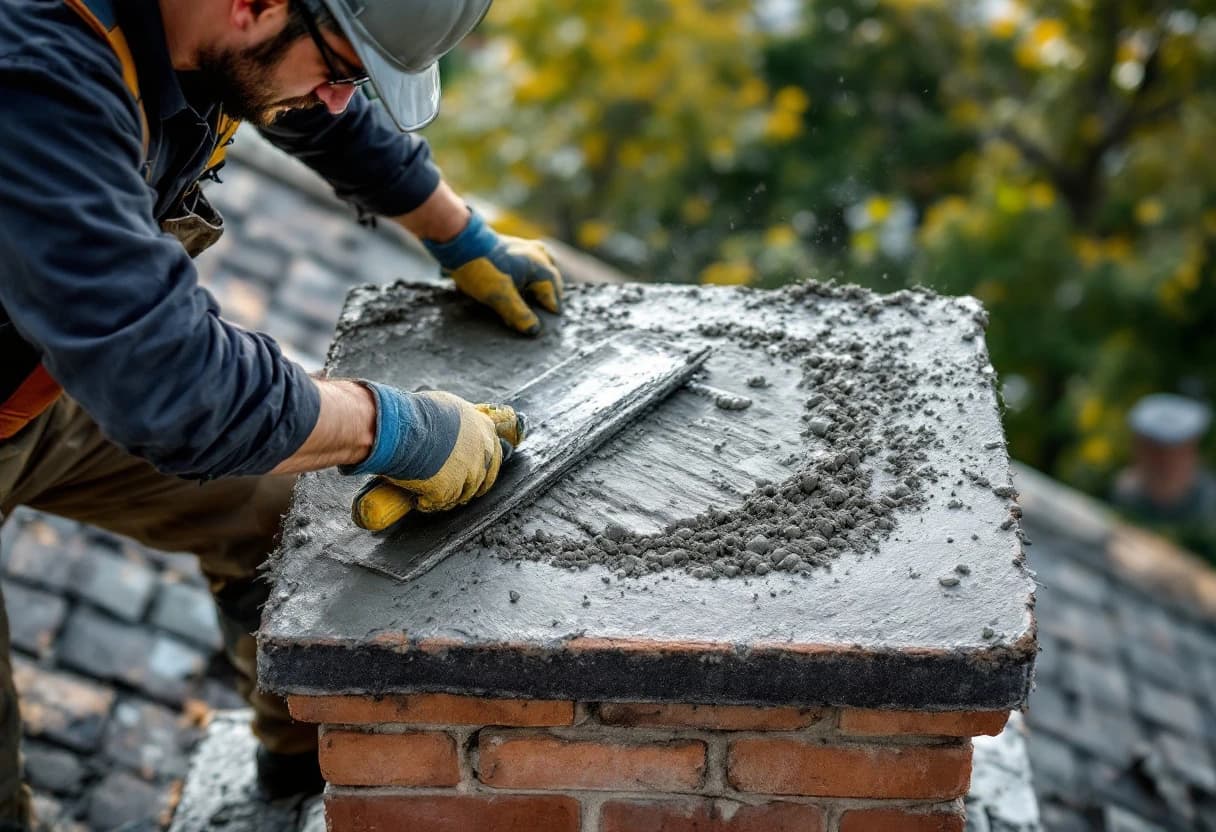
Stand on any roof in Wilmington and look at the very top of the chimney: that sloped slab of concrete capping the brick is the crown, and it is the single most abused piece of masonry on the house. Its whole job is to shed water off the stack and away from the flue, absorbing every hit of sun, rain, sleet, and ice so the brick courses below do not have to. When a crown cracks, every storm that crosses Eastern Massachusetts drives water straight down into the chimney's core, where it goes to work on mortar joints, flue tiles, and brick from the inside out. Upside Down Chimney Sweeps repairs, resurfaces, and completely rebuilds chimney crowns across Greater Boston.
Here is the uncomfortable truth about most crowns we see: they were never built correctly in the first place. On thousands of older homes around Wilmington, the original mason simply troweled a thin wash of leftover mortar over the top course of brick and called it a day. That mortar wash has no reinforcement, no overhang, no drip edge, and often measures less than an inch thick at the edges. Mortar is not designed to be exposed weather-side; it is designed to sit protected between bricks. A proper crown is a separate element: cast concrete, a minimum of two inches thick at the flue, sloped to drain, projecting past the chimney face so water drips clear of the brick.
New England weather is what turns a hairline crack into a structural failure. In a typical Massachusetts winter, the top of a chimney can swing through dozens of freeze-thaw cycles. Water seeps into a crack measured in millimeters, freezes overnight, and expands roughly nine percent, prying the crack wider. The next thaw lets more water in, and the cycle repeats until chunks of crown are lying in your gutters. Saturated brick below the crown suffers the same fate: trapped moisture freezes behind the brick face and pops it clean off, a failure called spalling. Once spalling starts near the top of a stack, the damage accelerates every season it goes untreated.
Our crew works on crowns from Victorian-era stacks in streetcar suburbs to mid-century capes near the coast, where salt-laden air adds its own corrosion load. We follow NFPA 211 guidance on chimney termination and clearances, we document everything with photos you can actually see, and we will tell you plainly whether your crown needs a $500 seal or a full rebuild - and why. If you have never had the top of your chimney looked at, or your last roofer mentioned cracks up there, call (781) 653-5644. A failed crown is the cheapest major chimney problem to fix early and one of the most expensive to fix late.
What Our Crown Repair Service Covers
1Crown Assessment and Moisture Evaluation
Every crown job starts at the top of the ladder, not in a brochure. We measure crown thickness, slope, and overhang, map every crack and delaminated section, and check how the crown meets the flue tile - a joint that must flex, not bond rigidly. We probe the upper brick courses for softness and moisture saturation and photograph everything. You get a clear picture of whether you are dealing with cosmetic crazing, active water entry, or a crown that has structurally failed and is taking the chimney with it.
2Elastomeric Crown Sealing
For crowns that are structurally sound but showing hairline cracks and surface weathering, we apply a brushable elastomeric crown coating engineered for masonry. Unlike roofing tar or paint, these membranes stay flexible through freeze-thaw movement, bridge cracks up to about an eighth of an inch, and remain vapor-permeable so the masonry can dry outward. We clean and prep the surface, fill larger cracks first, mask the flue tiles and brick faces, and build the coating to the manufacturer's specified thickness. Done right, a sealed crown buys you ten to fifteen years.
3Crown Patching and Resurfacing
When cracks have opened wide or edges have broken away but the crown's core is still solid, we resurface. Loose and deteriorated material comes off, cracks are ground out and filled with a polymer-modified structural patching compound, and the entire surface is recapped to restore proper slope so water runs off instead of ponding. Resurfacing is the middle path many Wilmington homeowners never get offered - contractors tend to quote either a smear of caulk or a full rebuild. Where the substrate justifies it, resurfacing delivers most of the benefit at a fraction of the cost.
4Full Cast-in-Place Crown Rebuild
When a mortar-wash crown has disintegrated or a concrete crown has fractured through, we demolish it down to sound masonry and cast a new one the way the trade standards describe: form boards set to create a two-inch overhang with a drip kerf cut underneath, reinforcement in the slab, concrete a minimum of two inches thick sloped away from the flue in all directions. The overhang matters enormously - it throws water clear of the brick face instead of letting it sheet down the stack. This is the permanent fix.
5Flue Expansion Joints and Bond Breaks
Clay flue tiles and concrete expand at different rates, and flue tiles get hot while the crown stays cold. If the crown is poured tight against the tile, thermal movement cracks one or both - which is exactly how many crowns fail from day one. We wrap the flue with a compressible bond-break material before casting, then seal the finished gap with a high-grade elastomeric sealant that flexes with every fire. It is a small detail that determines whether a new crown lasts five years or fifty, and most were never given one.
6Protecting the Masonry Below
A crown repair is only half a water-management plan. Brick that spent years soaking under a failed crown is primed for continued freeze-thaw spalling, so we frequently pair crown work with a breathable siloxane water repellent on the upper stack, repointing of washed-out mortar joints, and a properly sized stainless cap over the flue. We will also flag flashing problems while we are up there. The goal is simple: when we climb down, the entire top third of your chimney should be shedding water the way it was meant to.
Why Crown Repair Matters for Wilmington Homes
Water is the number one destroyer of masonry chimneys, and the crown is the front door it walks through. A chimney is essentially a hollow masonry tower open to the sky; the crown is the only horizontal surface built to keep rain out of its walls. Once water gets inside, it dissolves the calcium compounds in mortar, streaks the stack with white efflorescence, rusts dampers and firebox components, and delaminates flue tiles. By the time you see a stain on a bedroom ceiling in Wilmington, water has usually been working inside the chimney for two or three winters. Crown repair is not cosmetic - it is structural preventive medicine.
The economics are lopsided in your favor if you act early. Sealing a lightly cracked crown costs a few hundred dollars. Ignore it for five New England winters and the repair scope grows in stages: resurfacing, then rebuild, then repointing spalled upper courses, then partial stack rebuild - a project that can run well into five figures once staging and demolition are involved. We have torn down chimney tops in Greater Boston where a fifteen-dollar tube of sealant, applied a decade earlier, would have prevented the entire failure. No other part of the house punishes deferred maintenance quite so predictably.
There is a safety dimension, too. Water entering through a failed crown attacks flue tile joints, and gaps in a flue liner can let flue gases, including carbon monoxide, migrate into the home, and can expose framing to heat it was never meant to see. This is why NFPA 211 calls for annual chimney inspections and why a Level 2 inspection with a camera scan is the standard when a defect like crown failure is found. Fixing the crown protects the liner; protecting the liner protects the people asleep two floors below it.
Spring is when winter sends Wilmington homeowners the bill. As temperatures stabilize, the damage done by months of freeze-thaw cycling becomes visible: hairline crown cracks that widened, mortar joints that crumble at a touch, brick faces flaked off onto the roof, and white mineral staining called efflorescence, which is a chimney's way of announcing that water is moving through its masonry and leaving dissolved salts behind on the surface. None of these symptoms improves on its own, and all of them worsen faster once water has an established path. A spring inspection catches the winter's damage at its cheapest stage, and leaves the whole summer, the best season for masonry work, to repair it properly.
Signs You Need Crown Repair in Wilmington
- Visible cracks, gaps, or missing chunks in the concrete surface at the very top of the chimney.
- White, chalky staining (efflorescence) blooming on the upper courses of brick.
- Brick faces flaking, blistering, or popping off near the top of the stack - classic freeze-thaw spalling.
- Bits of concrete or mortar showing up in your gutters, on the roof, or on the smoke shelf.
- Water stains or peeling paint on ceilings and walls around the chimney chase.
- A damp, musty odor from the fireplace after heavy rain or snowmelt.
- Rust streaks running down from the cap or trickling over the crown edge.
- Moss, lichen, or weeds taking root in crown cracks - plants only grow where water lingers.
- Flue tiles at the termination that look shifted, cracked, or crumbling.
- A crown that is just a thin skim of mortar feathered to nothing at the edges, with no overhang.
How the Job Goes, Step by Step
1Rooftop evaluation and photo documentation
We get on the roof - binocular diagnoses from the driveway miss ninety percent of crown problems. We measure thickness, slope, and overhang, sound the surface for hollow delaminated zones, probe the crown-to-flue joint, and inspect the top brick courses for spalling and soft mortar. Every finding is photographed so you can see exactly what we see without leaving the kitchen table.
2Written scope with honest options
You get a straightforward recommendation matched to the actual condition: seal, resurface, or rebuild, with pricing for each path where more than one is viable. We explain what each option realistically buys you in years of service, and we will tell you when the cheaper option is genuinely good enough. No scare tactics, no pressure - the photos and measurements make the case on their own.
3Surface preparation
Good crown work is eighty percent prep. We remove all loose, delaminated, and crumbling material, grind out open cracks to give patching compound a proper key, clean the surface of dust and biological growth, and mask flue tiles, cap hardware, and the brick faces below. On rebuilds, demolition continues down to sound, well-bonded masonry - patching over rot just relocates the failure.
4Repair, resurface, or form and pour
Depending on the prescribed fix, we apply elastomeric crown coating to spec thickness, trowel polymer-modified resurfacing compound to restore slope, or set form boards and cast a new reinforced concrete crown with a two-inch overhang and drip kerf. In cold months we schedule around temperature windows and use appropriate mixes, because concrete and coatings placed below their cure threshold fail early - New England scheduling is part of the craft.
5Expansion joint and drip edge detailing
Before we call any crown finished, the flue gets a compressible bond break sealed with flexible elastomeric sealant so thermal movement cannot crack the new work, and the drip edge is checked so water falls clear of the brick face. These details are where most crowns - including plenty of professionally built ones - go wrong, and they cost almost nothing to do correctly at this stage.
6Cure, cleanup, and follow-up guidance
We protect fresh work from rain and frost during cure, haul away all demolition debris, and leave your roof and yard the way we found them. You receive after photos, product documentation for any coatings used, and a realistic maintenance timeline. Most crowns we rebuild need nothing but a visual check during your annual sweep for decades - and we put that in writing in your service record.
Local Knowledge: Crown Repair in Wilmington
Wilmington built out rapidly in the 1950s and 1960s, and capes, ranches, and split-levels from that era remain the backbone of its housing, joined by newer colonials on former farmland. Most homes have a single chimney handling both the heating flue and a living-room fireplace. Sixty-plus years on, original crowns and clay tile liners in these homes are reaching the end of their service life together.
Wilmington is a quick run up I-93 from our Melrose shop, and its uniform postwar housing makes problems predictable: we can often tell a homeowner what we will find in their flue before we open the damper, because we have serviced a dozen identical houses in the same neighborhood. That familiarity keeps our estimates here accurate.
We regularly handle crown repair calls in Wilmington and the surrounding towns of Reading, North Reading, Burlington, Billerica — so scheduling is fast and our pricing reflects local conditions, not guesswork.
A chimney runs on a yearly rhythm, and working with that rhythm is easier than fighting it. Late summer and early fall are for sweeping and inspection, ahead of the rush and the first fires. Winter is for burning well: seasoned wood, hot fires, and attention to anything that suddenly changes, from draft to odor. Spring is for assessment, when winter damage is fresh and visible and the flue holds a season's worth of creosote worth removing. Summer is for masonry, when warm weather lets mortar, crowns, and waterproofing cure as designed. Homeowners who follow that cycle rarely face emergencies, because every problem gets noticed in the season before it would have become one.
Why Choose Upside Down Chimney Sweeps
The chimney trade has an unfortunate reputation for scare tactics, and we decided early on to be the antidote. When Upside Down Chimney Sweeps inspects your chimney, you get three honest categories: what is a safety issue now, what is developing and worth budgeting for, and what is merely cosmetic. Most chimneys we see do not need dramatic intervention, and we say so plainly. When one genuinely does, we show you the cracked tile or the glazed creosote in photographs and explain the mechanism behind the risk, because an informed homeowner makes better decisions than a frightened one. We would rather earn a smaller invoice and a customer for life than win a big job and burn a bridge.
Crown Repair FAQs — Wilmington, MA
What is the difference between a chimney crown and a chimney cap?
How much does chimney crown repair cost in the Boston area?
Can you just caulk the cracks instead of doing a full repair?
How long will a rebuilt crown last?
When is the best time of year for crown work in Massachusetts?
Will homeowners insurance pay for chimney crown repair?
How do I know the crown is what is causing my chimney leak?
Do you inspect the rest of the chimney while you are up there?
Book Crown Repair in Wilmington
Not sure what your chimney actually needs? That is the most common way these conversations start, and it is exactly what an inspection is for. Call Upside Down Chimney Sweeps at (781) 653-5644, and we will begin with a thorough look rather than a sales pitch. If the flue just needs sweeping, that is what we will tell you. If something more is developing, you will see it in photographs and hear it explained in plain English, with honest priorities instead of pressure. Homeowners across Wilmington rely on us precisely because the diagnosis comes before the invoice. One appointment turns a vague, nagging worry into a clear plan, and that clarity alone is worth the visit.
Book Crown Repair in Wilmington
Our Melrose shop is 10 miles away — scheduling in Wilmington is fast. Call (781) 653-5644.
Mon–Sat: 7:00 AM – 7:00 PM · Emergency service available